AI Appraisal Estimate

AI-generated estimates · not official valuations

From the user

What was submitted

Photo and notes provided by the user — not generated by AI

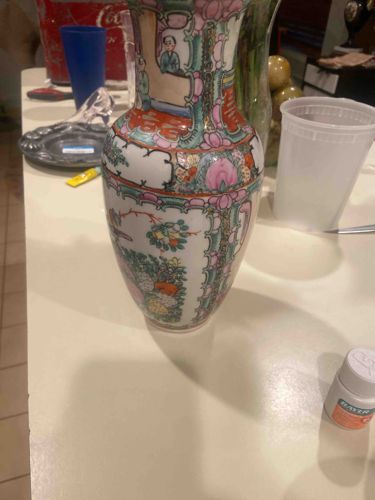
Submitted item photo
Submitted photo · June 25, 2026

User's notes

No additional notes provided.

AI analysis below

AI appraisal

AI analysis & estimate

AI-Generated · Verify before acting

Everything below is generated by AI for informational purposes only. AI can make mistakes — the AI may misidentify items or misattribute them (artist, maker, brand, designer, origin, era). This is not an official valuation and should not be used for insurance, sale, tax, estate, legal, or lending purposes — or any decision requiring a certified appraisal. It is not an authoritative claim about any person, brand, or rights holder — do not share or rely on it as a factual statement about a third party. Always consult qualified professionals before making financial decisions.

Read the full disclaimer

AI Identification

·Not independently authenticated·Verify before acting

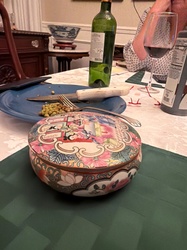
Chinese Rose Medallion Porcelain Baluster Vase

Asian Antiques / Chinese Export Porcelain

AI Estimated Value

·Not an official valuation·Verify before acting

$450 - $700

As of June 25, 2026

AI Item Analysis

·AI can make mistakes·Verify before acting
This is a classic Chinese export porcelain vase executed in the 'Rose Medallion' pattern, a style originating in the mid-19th century and remaining popular through the 20th century. The vase features a traditional baluster shape with a flared rim, a tapering neck, and a bulbous body on a raised foot. The decoration is organized into alternating scenic and floral reserves (panels). The scenic panels depict courtly figures in indoor settings, while the floral panels include birds, butterflies, and flowers such as peonies and hibiscus. These 'windows' are framed by a dense 'famille rose' ground consisting of green scrolling vines, pink peony blossoms, and gold-flecked accents. The materials consist of hand-painted overglaze enamels on a white porcelain body. Notable features include the use of gilding and the distinct pink ('rose') palette that gives the style its name. The craftsmanship shows typical production from the late Qing Dynasty to the early Republic period (circa late 19th to early 20th century), characterized by vibrant enamels and fine line work defining the figures. There appears to be some light surface wear and minor rubbing to the gilt and enamels consistent with age, but no major chips or cracks are visible from this angle. The glaze is glossy, indicating a well-preserved surface.
AI Appraisal Report

·AI can make mistakes·Verify before acting
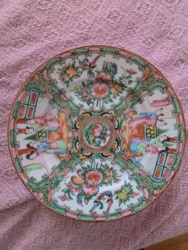
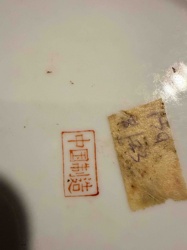
I have conducted a visual analysis of the Rose Medallion baluster vase. The item displays characteristically dense famille rose iconography featuring the 'four seasons' floral panels alternating with domestic court scenes. The quality of the enamel application, the slight 'orange peel' texture of the glaze, and the specific wear patterns on the gilting suggest a production date between 1870 and 1910 (Late Qing Dynasty to Early Republic period). The condition appears excellent with no visible hairlines or 'clinking' indicative of internal stress, though minor rubbing to the gold on the rim and 'dog of fo' handles is present. Market demand for mid-tier Chinese Export porcelain remains stable. While not as rare as earlier 18th-century pieces, high-quality Rose Medallion with well-defined facial features on figures (as seen here) commands a premium over later mass-produced 20th-century versions. Current auction comparables for vases of this size and condition typically hammer between $450 and $700. Limitations: This appraisal is based on digital images alone. A physical inspection is mandatory to confirm the absence of professional restoration, which can be hidden under UV light or detected via 'tap' tests. I would also need to examine the underside for a 'Made in China' stamp; its absence would support a pre-1891 (McKinley Tariff Act) date, whereas its presence would lower the valuation to the early 20th century. Verification of the foot rim for grit and coloration would further confirm the firing method and authenticity.

Get your items appraised

Instant estimates of your treasures with AI-powered appraisals

Browse More Appraisals