AI estimate as of July 20, 2025 · verify with a professional before acting
AI-Generated · Verify before acting
Everything on this page is generated by AI for informational purposes only. AI can make mistakes — the AI may misidentify items or misattribute them (artist, maker, brand, designer, origin, era). This is not an official valuation and should not be used for insurance, sale, tax, estate, legal, or lending purposes — or any decision requiring a certified appraisal. It is not an authoritative claim about any person, brand, or rights holder — do not share or rely on it as a factual statement about a third party. Always consult qualified professionals before making financial decisions.
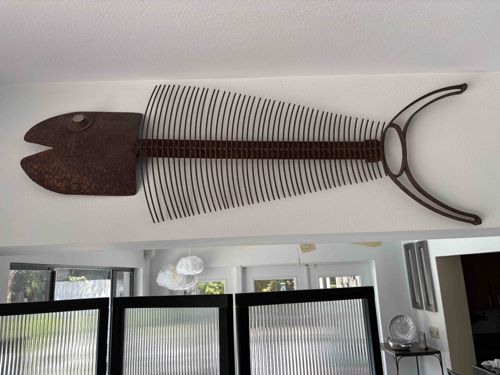
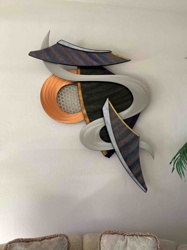
This item is a large-scale, two-dimensional wall sculpture depicting the skeletal remains of a fish, specifically a fishbone structure. It appears to be constructed primarily from metal, likely steel or iron given its rustic appearance and the presence of what looks like natural patina. The piece consists of three main components: a fish head, a central spine, and a tail section. The 'head' is a solid, irregularly shaped piece with an open mouth, colored in a deep, mottled reddish-brown, indicative of rust or a deliberate distressed finish. There's a prominent, circular metallic rivet or eye detail on the side of the head. The central section is formed by a robust horizontal 'spine' from which numerous slender, curved 'ribs' extend upwards and downwards, creating the characteristic fish skeleton form. These ribs appear to be thinner metal rods, possibly painted black or a very dark brown to contrast with the spine. The 'tail' piece is a more abstract, stylized interpretation of a fish caudal fin, also made of what appears to be patinated metal, mirroring the color of the head and spine. The entire piece exhibits a deliberate aged or weathered aesthetic, suggesting it is either genuine antique/vintage metal art or a contemporary piece designed to appear so. The visible condition shows a consistent, intentional rust-like finish across the broader metal sections, which contributes to its rustic charm rather than indicating damage. The craftsmanship appears solid and decorative, intended for visual impact as a statement piece of wall art. Given its size relative to the wall and the surrounding architectural elements, it is a substantial decorative item, likely measuring several feet in length. There are no discernible maker's marks or signatures visible in the provided image. The style leans towards industrial or rustic modern decor, possibly dating from the late 20th century to contemporary.
AI Appraisal Report
Upon visual examination of the provided image, this large-scale Metal Fish Skeleton Wall Sculpture presents as a robust decorative piece. The condition appears excellent, with the prevalent reddish-brown and darker tones indicating an intentional patinated or distressed finish, rather than damage. This rustic aesthetic aligns well with contemporary industrial or farmhouserustic decor trends. While I cannot definitively verify the material without physical inspection, it strongly appears to be steel or iron, contributing to its substantial presence.
From a market perspective, large-scale metal wall art, particularly pieces with unique or abstract forms, consistently finds a buyer. Comparable items, often found in specialty home decor boutiques or online artisan marketplaces, range significantly based on size, material, and artist reputation. Given the absence of a visible signature or maker's mark, it is appraised as a decorative object rather than fine art by a recognized artist.
Demand for such statement pieces is moderate, driven by interior design trends. This item's size makes it a significant focal point, which can increase its appeal for specific spaces while potentially limiting the overall pool of buyers. Rarity is low as similar industrial-style metal sculptures are produced widely, though this specific design may be unique. The lack of provenance or artist attribution limits its potential for higher speculative value.
Limitations regarding authenticity are inherent; without physical inspection, I cannot confirm the exact metal composition, assembly methods (welds, rivets), or the true age. An in-person examination would allow for tactile assessment, a closer look at joinery, and potential discovery of obscured marks. Provenance documentation could establish its history, and scientific testing could pinpoint the metal alloy and age more precisely. Based on visible characteristics and typical market rates for well-executed decorative metalwork of this scale, the valuation reflects its aesthetic appeal and decorative utility.