AI Appraisal Estimate

AI-generated estimates · not official valuations

From the user

What was submitted

Photo and notes provided by the user — not generated by AI

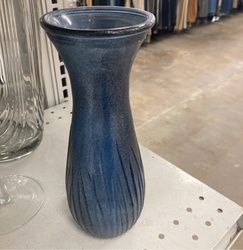
Submitted item photo
Submitted photo · June 10, 2026

User's notes

No additional notes provided.

AI analysis below

AI appraisal

AI analysis & estimate

AI-Generated · Verify before acting

Everything below is generated by AI for informational purposes only. AI can make mistakes — the AI may misidentify items or misattribute them (artist, maker, brand, designer, origin, era). This is not an official valuation and should not be used for insurance, sale, tax, estate, legal, or lending purposes — or any decision requiring a certified appraisal. It is not an authoritative claim about any person, brand, or rights holder — do not share or rely on it as a factual statement about a third party. Always consult qualified professionals before making financial decisions.

Read the full disclaimer

AI Identification

·Not independently authenticated·Verify before acting

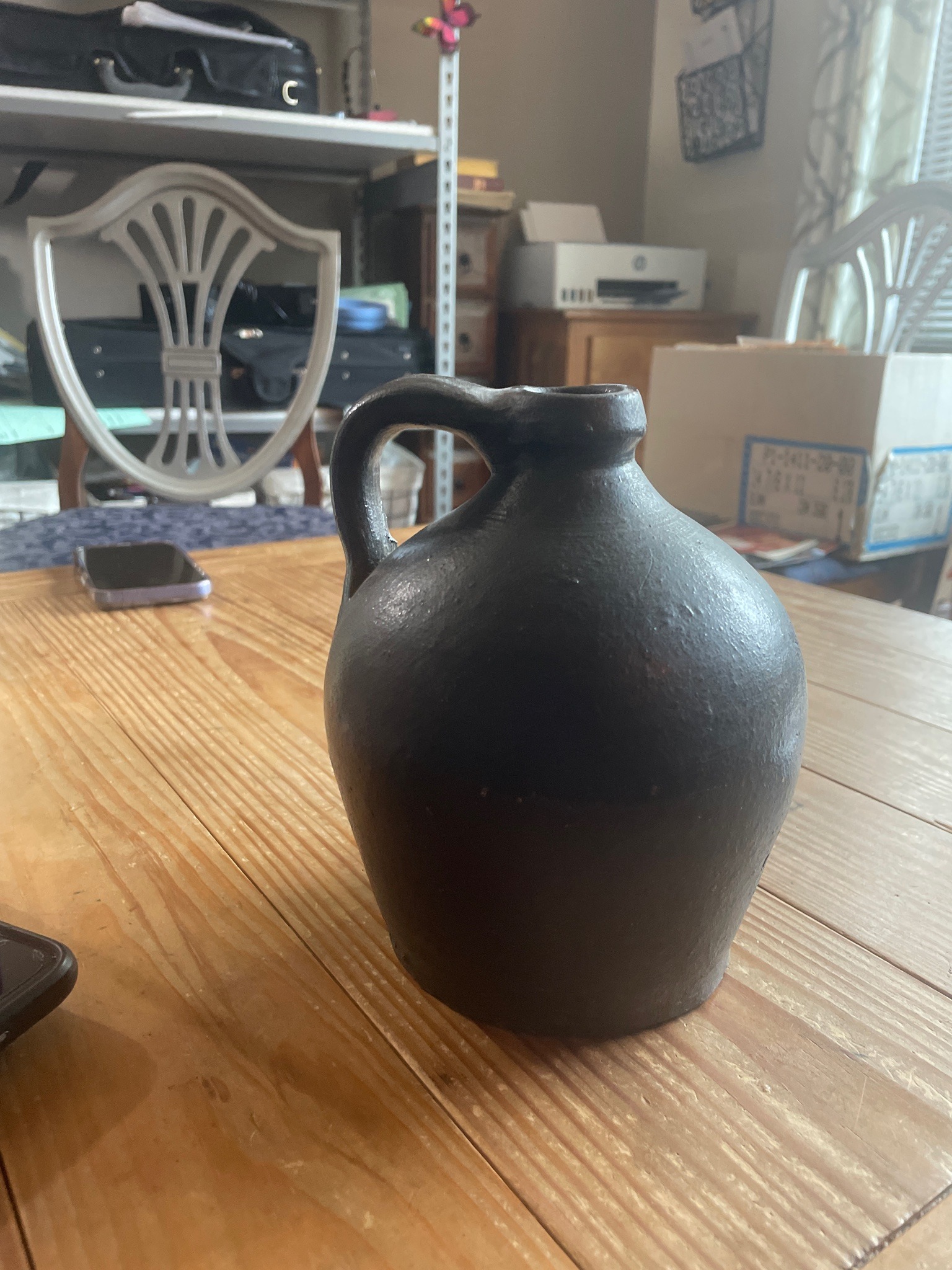
Glazed ceramic alkaline-style stoneware jug

Ceramics and Pottery

AI Estimated Value

·Not an official valuation·Verify before acting

$400 - $850

As of June 10, 2026

AI Item Analysis

·AI can make mistakes·Verify before acting
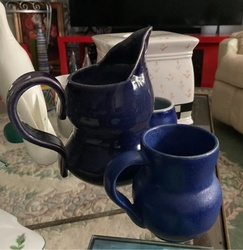
This item is a spherical or ovoid-shaped stoneware jug featuring a single loop handle, narrow neck, and a relatively flat base. The exterior is coated in a dark, textured glaze that appears stylistically consistent with the alkaline or ash glazes often found in 19th-century American folk pottery, particularly from the Southern United States. The surface displays a dark brown to nearly black coloration with a slightly mottled, semi-glossy finish and visible dimpling or 'orange peel' texture common in high-fire stoneware. The handle is hand-formed and attached securely to the shoulder and neck, showing slight irregularities consistent with hand-crafted production. There are no visible maker's marks, signatures, or stamps in the provided image, making a definitive attribution to a specific potter or kiln impossible without physical inspection of the base or interior. The condition appears stable, with minor surface variations and possible shelf wear on the bottom edge. Such vessels were commonly used for liquid storage, such as molasses or spirits. The heavy, thick-walled construction suggests a utilitarian object designed for durability. Because no markings are visible, the identification relies solely on morphological and stylistic indicators, which remain hypotheses subject to forensic verification of clay composition and glaze chemistry.
AI Appraisal Report

·AI can make mistakes·Verify before acting
Based on my visual examination of the provided image, this object appears to be a 19th-century alkaline-glazed stoneware jug, potentially originating from the American South. The ovoid form and characteristic mottled glaze texture are consistent with regional folk pottery traditions. However, I cannot verify the exact origin or age from a photo alone, as I cannot inspect the clay body, the interior, or the base for potential markings or signs of modern reproduction. The estimated value of $400 - $850 is a hypothesis based on the assumption that this is a period piece in stable condition. This valuation reflects general market demand for utilitarian folk pottery, where value is driven by form, glaze quality, and regional scarcity. Because no maker’s mark is visible, I cannot attribute this to a specific potter; if it were associated with a known master such as Dave Drake or members of the Meaders family, the value would likely be significantly higher. Conversely, if physical inspection reveals it to be a later 20th-century revival piece or a modern 'in the style of' reproduction, the value would likely decrease to the $50-$150 range. To establish a more precise valuation, I would need a physical examination to conduct forensic analysis of the glaze chemistry, verify wear patterns on the base, and review any available provenance documentation. The current market for early American stoneware remains stable but is highly sensitive to the nuances of glaze application and regional attribution, both of which require direct inspection to identify beyond a working hypothesis. Use of this estimate should account for the inherent limitations of photographic analysis and the lack of a visible signature or stamp.

Get your items appraised

Instant estimates of your treasures with AI-powered appraisals

Browse More Appraisals