AI Appraisal Estimate

AI-generated estimates · not official valuations

From the user

What was submitted

Photo and notes provided by the user — not generated by AI

Submitted item photo
Submitted photo · July 21, 2026

User's notes

found

AI analysis below

AI appraisal

AI analysis & estimate

AI-Generated · Verify before acting

Everything below is generated by AI for informational purposes only. AI can make mistakes — the AI may misidentify items or misattribute them (artist, maker, brand, designer, origin, era). This is not an official valuation and should not be used for insurance, sale, tax, estate, legal, or lending purposes — or any decision requiring a certified appraisal. It is not an authoritative claim about any person, brand, or rights holder — do not share or rely on it as a factual statement about a third party. Always consult qualified professionals before making financial decisions.

Note

This analysis also relies on unverified notes provided by the user, which may be incomplete or inaccurate and could affect the result.

Read the full disclaimer

AI Identification

·Not independently authenticated·Verify before acting

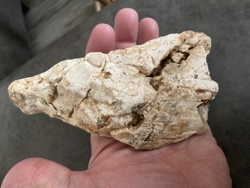
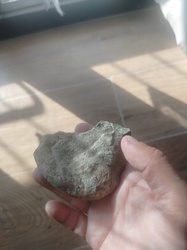
Oblong stone specimen consistent with an encrusted fossil or chert nodule

Geological and Paleontological Specimens

AI Estimated Value

·Not an official valuation·Verify before acting

$10 - $35

As of July 21, 2026

AI Item Analysis

·AI can make mistakes·Verify before acting
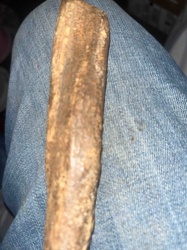
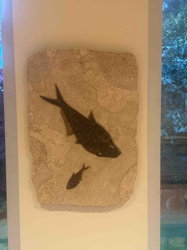
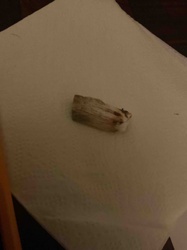
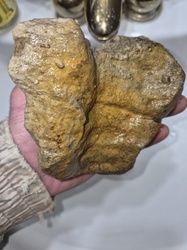
This object is an oblong, semi-cylindrical specimen with a variegated surface texture, resting on a wooden surface. The exterior is primarily composed of a light gray, highly textured, and pitted material that is stylistically consistent with calcareous encrustation or weathered limestone. A significant portion of this outer layer has been removed or broken away, revealing a dark gray to brownish silicate-rich interior core. This core displays a semi-conchoidal fracture pattern and faint concentric banding, which is often observed in lithic materials like chert, flint, or agatized fossil remains. The owner notes the item was 'found,' which suggests it is a natural or geological discovery rather than a manufactured good. No maker's marks, signatures, or inscriptions are visible on any surface. The specimen exhibits natural weathering and physical damage where the outer rind has been stripped away. Based on the visual evidence, it appears to be a geological formation, possibly a silicified fossil or a chert nodule. Without physical testing for hardness or chemical composition, this identification remains a hypothesis based solely on observable morphological features. The craftsmanship is attributed to natural geological processes rather than human manufacture.
AI Appraisal Report

·AI can make mistakes·Verify before acting
Based on my visual analysis of the provided image, this specimen appears to be a geological formation, potentially a chert nodule or a silicified fossil fragment. The exterior displays a textured, light-colored matrix consistent with weathered limestone or a calcareous rind, while the exposed interior shows a dark, silicate core with a semi-conchoidal fracture pattern. As a 'found' object per the owner's description, this item lacks the specific provenance or rarity typically required to command high prices in the paleontological market. The value of $10 to $35 represents a typical range for unclassified geological curiosities or common mineral specimens found in decorative or educational contexts. Value is largely determined by visual appeal and size, rather than scientific rarity, as I cannot verify the specific biological origin or mineral composition from a photograph. The current market for such specimens is stable, though demand is generally limited to collectors of 'oddities' or natural history enthusiasts. A physical hardness test to distinguish it from common slag or simple limestone, as well as an assessment by a professional geologist or paleontologist, would be necessary to identify any specific fossil species that might increase its worth. If this item were discovered to be a rare or significant fossil type, its value could rise, whereas if it is determined to be a common chert nodule or industrial byproduct, its value would likely remain at the lower end of the provided estimate. At present, without documented history or expert verification of a biological origin, it is appraised as a natural curiosity.

Get your items appraised

Instant estimates of your treasures with AI-powered appraisals

Browse More Appraisals