AI Appraisal Estimate

AI-generated estimates · not official valuations

From the user

What was submitted

Photo and notes provided by the user — not generated by AI

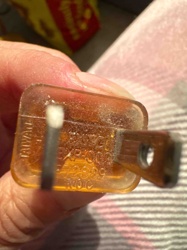
Submitted item photo
Submitted photo · June 12, 2026

User's notes

No additional notes provided.

AI analysis below

AI appraisal

AI analysis & estimate

AI-Generated · Verify before acting

Everything below is generated by AI for informational purposes only. AI can make mistakes — the AI may misidentify items or misattribute them (artist, maker, brand, designer, origin, era). This is not an official valuation and should not be used for insurance, sale, tax, estate, legal, or lending purposes — or any decision requiring a certified appraisal. It is not an authoritative claim about any person, brand, or rights holder — do not share or rely on it as a factual statement about a third party. Always consult qualified professionals before making financial decisions.

Read the full disclaimer

AI Identification

·Not independently authenticated·Verify before acting

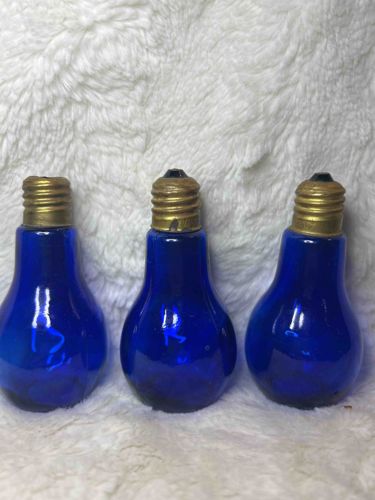
Set of Three Vintage Cobalt Blue Candelabra Light Bulbs

Vintage Lighting and Electrical Components

AI Estimated Value

·Not an official valuation·Verify before acting

$15 - $35

As of June 12, 2026

AI Item Analysis

·AI can make mistakes·Verify before acting
This is a set of three vintage incandescent light bulbs featuring a distinctive deep cobalt blue glass envelope. The bulbs are designed in a classic 'pear' or A-series miniature shape, likely intended for decorative candelabra-style fixtures or holiday lighting. Each bulb features a threaded brass Edison base, which shows a significant amount of aged patina, darkening, and minor surface oxidation consistent with late 1930s to 1950s manufacturing. The glass is richly pigmented, suggesting it is colored glass rather than a surface or dip-coating commonly found on cheaper modern reproductions. While no specific maker's mark is clearly visible on the metal bases in the image, the construction uses a traditional crimped metal-to-glass seal and a dark insulator at the bottom contact point. The condition shows light surface scratching on the glass and some wear on the threads of the brass bases. There are faint white markings or reflections on the exterior surface of the glass, possibly indicating previous inventory numbering or simple light reflections. These bulbs represent mid-20th-century industrial design as utility items shifted toward decorative aesthetics.
AI Appraisal Report

·AI can make mistakes·Verify before acting
Based on my visual examination of these three vintage cobalt blue light bulbs, I assess them to be authentic mid-20th-century decorative electrical components, likely dating from the late 1930s to the 1950s. The deep, rich pigmentation of the glass strongly suggests actual cobalt-infused glass rather than the surface-painted coatings typical of cheaper, later reproductions. The brass bases exhibit genuine age-appropriate oxidation and patina, particularly around the threads and the crimped metal-to-glass seals, which is consistent with manufacturing techniques of that era. While the glass shows minor surface scratching, the filaments appear intact upon cursory view, though functionality cannot be guaranteed without testing. The market for vintage incandescent bulbs is niche but steady, primarily driven by collectors of electrical history and restorationists seeking period-correct lighting for vintage fixtures or holiday displays. These specific bulbs are relatively common in the grand scheme of electrical collectibles but derive value from their specific blue coloration, which was less common than clear or frosted variants. Comparable sales for small lots of colored vintage bulbs typically fall in the range of $5 to $10 per bulb, depending on functionality. It is important to note the limitations of this appraisal based solely on images. Without physical inspection, I cannot verify the integrity of the tungsten filaments or conduct continuity testing to confirm they still light up—a factor that significantly influences value. Furthermore, I cannot inspect the base insulators for specific manufacturer stamps (like GE, Mazda, or Westinghouse) that might be hidden by the patina. An in-person examination would be required to test electrical continuity and identify specific maker's marks to refine this valuation.

Get your items appraised

Instant estimates of your treasures with AI-powered appraisals

Browse More Appraisals