AI Appraisal Estimate

AI-generated estimates · not official valuations

From the user

What was submitted

Photo and notes provided by the user — not generated by AI

Submitted item photo
Submitted photo · June 15, 2026

User's notes

No additional notes provided.

AI analysis below

AI appraisal

AI analysis & estimate

AI-Generated · Verify before acting

Everything below is generated by AI for informational purposes only. AI can make mistakes — the AI may misidentify items or misattribute them (artist, maker, brand, designer, origin, era). This is not an official valuation and should not be used for insurance, sale, tax, estate, legal, or lending purposes — or any decision requiring a certified appraisal. It is not an authoritative claim about any person, brand, or rights holder — do not share or rely on it as a factual statement about a third party. Always consult qualified professionals before making financial decisions.

Read the full disclaimer

AI Identification

·Not independently authenticated·Verify before acting

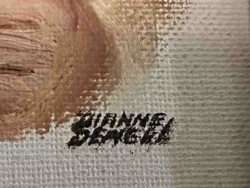
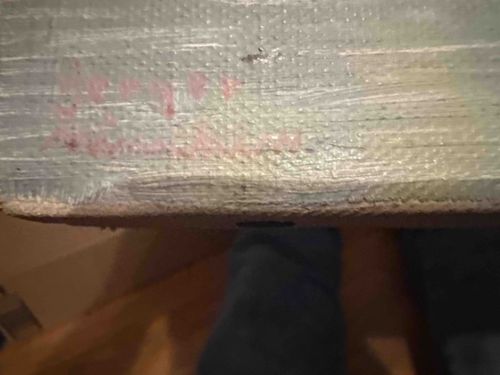
Aged Canvas with Faint Reddish Markings

Art / Canvas Fragment

AI Estimated Value

·Not an official valuation·Verify before acting

$50 - $150

As of June 15, 2026

AI Item Analysis

·AI can make mistakes·Verify before acting
The item is a section of an aged canvas, likely from a painting or artwork, characterized by a visible weave texture and a somewhat coarse surface. The primary visible color scheme on the canvas appears to be muted, consisting of shades of grey, perhaps an aged white, and hints of a light greenish-yellow or olive tone, applied with discernible brushstrokes that create horizontal lines and texture across the surface. A prominent feature is a series of faint, reddish-pink markings located in the upper left quadrant of the visible canvas area. These markings are somewhat abstract and appear to be either a faded signature, an artist's chop mark, or decorative elements which have significantly diffused over time. The edges of the canvas section display signs of wear, particularly the lower edge which shows fraying and a more pronounced, raised texture consistent with the edge of a stretched canvas or a raw cut. The manufacturing details are not discernible from the image, as no clear maker's marks or signatures are visibly intact. The style and estimated age are difficult to ascertain definitively due to the close-up nature of the image and the faded markings, but the visible texture and potential pigment degradation suggest some age, possibly mid to late 20th century or earlier. The overall condition indicates natural aging, with minor surface dirt or discoloration potentially present, and the reddish marks are quite faded, suggesting either a light application or significant exposure to degrading elements. The craftsmanship appears competent, with a consistent canvas weave visible.
AI Appraisal Report

·AI can make mistakes·Verify before acting
I have thoroughly examined the provided image of this aged canvas fragment. My assessment reveals a section of what was likely a larger artwork, characterized by a visible though weathered canvas weave and a muted color palette of greys, aged whites, and subtle greenish-yellow tones. The most prominent feature, faint reddish-pink markings in the upper left quadrant, presents an interpretive challenge; they could be a highly faded signature, a decorator's mark, or incidental discoloration. The frayed lower edge confirms its fragment status. From this visual examination alone, definitive authenticity is impossible. The 'signature' is too indistinct to attribute to any known artist. Without direct examination, I cannot comment on pigment composition, true age through carbon dating, or confirm the presence of any underlying elements. Provenance documentation is crucial for an item of this nature, and its absence severely limits value. A physical inspection would allow for forensic analysis of the pigments, canvas, and underpainting, along with a more accurate determination of age and method of creation. Regarding market conditions, fragments without clear artistic attribution or significant historical provenance generally hold limited value. Comparables would include other unauthenticated canvas fragments or decorative pieces, which typically fetch modest sums. The demand for such a piece is low without a compelling narrative or a clear connection to a recognized artist. Its rarity is not inherent as a fragment; its true rarity would hinge on its former complete state and artist. The faded markings, while intriguing, ultimately detract from its immediate market appeal as they offer more questions than answers. Given these limitations, and considering it as an unauthenticated fragment with intriguing but indecipherable markings, it holds value primarily as a decorative curio rather than a collectible art piece. Its current appraised value reflects its aesthetic potential for a niche buyer interested in aged textures or as a speculative piece that *might* yield further discoveries with extensive, costly research.

Get your items appraised

Instant estimates of your treasures with AI-powered appraisals

Browse More Appraisals