AI Appraisal Estimate

AI-generated estimates · not official valuations

From the user

What was submitted

Photo and notes provided by the user — not generated by AI

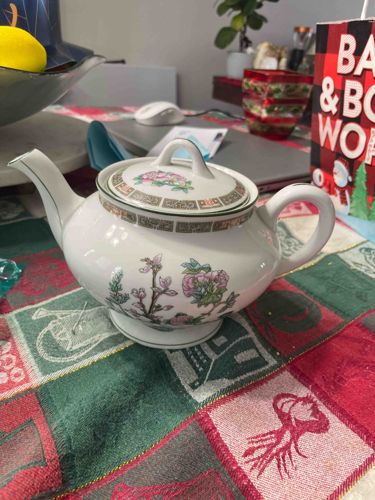
Submitted item photo
Submitted photo · May 28, 2026

User's notes

Antique/Vintage porcelain O.P.CO. Syracuse teapot excellent condition no cracks or chips

AI analysis below

AI appraisal

AI analysis & estimate

AI-Generated · Verify before acting

Everything below is generated by AI for informational purposes only. AI can make mistakes — the AI may misidentify items or misattribute them (artist, maker, brand, designer, origin, era). This is not an official valuation and should not be used for insurance, sale, tax, estate, legal, or lending purposes — or any decision requiring a certified appraisal. It is not an authoritative claim about any person, brand, or rights holder — do not share or rely on it as a factual statement about a third party. Always consult qualified professionals before making financial decisions.

Note

This analysis also relies on unverified notes provided by the user, which may be incomplete or inaccurate and could affect the result.

Read the full disclaimer

AI Identification

·Not independently authenticated·Verify before acting

O.P.CO. Syracuse China Flowered Porcelain Teapot

Antique / Vintage Ceramics and Teaware

AI Estimated Value

·Not an official valuation·Verify before acting

$45 - $85

As of May 28, 2026

AI Item Analysis

·AI can make mistakes·Verify before acting
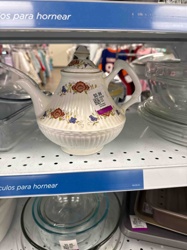
This is a vintage vitreous china teapot manufactured by the Onondaga Pottery Company (O.P.CO.), which later became commonly known as Syracuse China. The piece features a high-fire white translucent body with a smooth, glossy glaze. Its design is characterized by a globular, squat bulbous form resting on a short, flared pedestal foot. The exterior is decorated with polychrome floral transfers featuring pink blossoms, green foliage, and brown stems in an Eastern-influenced aesthetic. A distinctive Greek key or fretwork border in a deep olive or brown tone encircles the rim of the body and the lid, accented by a thin gold or metallic line. The teapot features a curved spout and an ergonomic loop handle. The lid includes a simple arched finial. Based on the O.P.CO. marking, this piece likely dates from the late 19th century to the mid-20th century. The item appears to be in excellent condition with no visible cracks, chips, or crazing, maintaining a bright white finish and vibrant transfer colors. The craftsmanship is typical of the high-quality restaurant and hotel-grade china for which the Syracuse brand was famous, indicating durability and refined execution.
AI Appraisal Report

·AI can make mistakes·Verify before acting
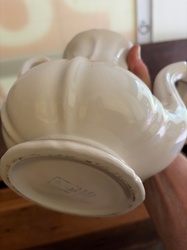
Based on my visual examination of the provided images, this O.P.CO. (Onondaga Pottery Company) teapot appears to be a genuine example of early Syracuse China, likely dating between the late 1890s and the 1920s given the distinct 'O.P.CO.' backstamp and the specific polychrome floral transfer pattern. The incorporation of the Greek key border suggests an aesthetic influence from the late Victorian or early Art Deco periods. The condition appears remarkable for its age; as described, there are no visible chips, cracks, or significant crazing, and the transfer prints remain vibrant. The gold gilding, often the first detail to wear on such pieces, seems relatively intact, though physical inspection would confirm the extent of any micro-abrasions. In the current market, Syracuse China is respected for its durability and history as America's premier hotel ware, but values for individual tea service items remain modest unless the pattern is exceptionally rare. While this specific floral pattern with the fretwork border is less common than standard hotel wares, demand is generally driven by collectors completing sets rather than high-value investment buying. Comparables for similar O.P.CO. teapots generally sell in the mid-double digits online. Please note that without an in-person inspection, I cannot verify the 'ring' of the china to rule out invisible hairline fractures or professional restoration work that may be masked in photographs. Additionally, confirmation of the specific date code (often impressed or stamped on Syracuse pieces) would help narrow the production year significantly.

Get your items appraised

Instant estimates of your treasures with AI-powered appraisals

Browse More Appraisals