AI Appraisal Estimate

AI-generated estimates · not official valuations

From the user

What was submitted

Photo and notes provided by the user — not generated by AI

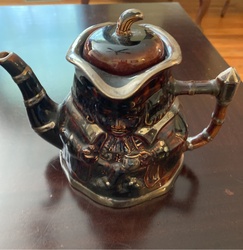
Submitted item photo
Submitted photo · June 6, 2026

User's notes

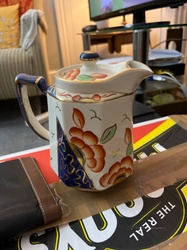
marked on the back hand painted in Japan. what is the pattern

AI analysis below

AI appraisal

AI analysis & estimate

AI-Generated · Verify before acting

Everything below is generated by AI for informational purposes only. AI can make mistakes — the AI may misidentify items or misattribute them (artist, maker, brand, designer, origin, era). This is not an official valuation and should not be used for insurance, sale, tax, estate, legal, or lending purposes — or any decision requiring a certified appraisal. It is not an authoritative claim about any person, brand, or rights holder — do not share or rely on it as a factual statement about a third party. Always consult qualified professionals before making financial decisions.

Note

This analysis also relies on unverified notes provided by the user, which may be incomplete or inaccurate and could affect the result.

Read the full disclaimer

AI Identification

·Not independently authenticated·Verify before acting

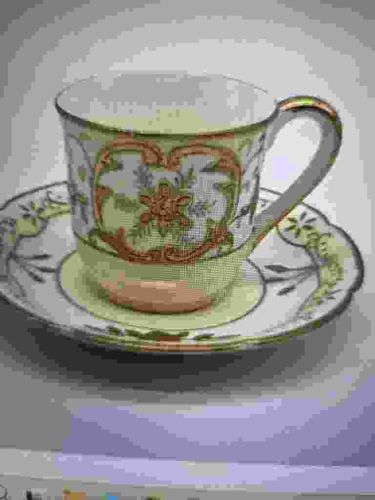
Japanese Hand-Painted Porcelain Lusterware Tea Cup and Saucer

Vintage Ceramics / Collectible Teaware

AI Estimated Value

·Not an official valuation·Verify before acting

$25.00 - $45.00

As of June 6, 2026

AI Item Analysis

·AI can make mistakes·Verify before acting
This is a vintage porcelain tea cup and saucer set originating from mid-20th century Japan, specifically featuring the characteristic 'Noritake-style' or 'Lustre' aesthetic popular in the 1920s to 1950s. The set is constructed from lightweight, translucent transfer-ware and hand-painted porcelain. The decorative theme features a prominent central floral medallion encased in a scrolling russet or orange cartouche, offset against a pale green and white background. The saucer has a scalloped or fluted edge, adding a delicate texture to the profile. A notable feature is the use of iridescent luster glazes, common in 'Hand Painted in Japan' exports of the era, which creates a pearlescent sheen on the interior and exterior surfaces. The handle is simple but elegant, accented with gold or orange trim. According to the user context, it bears the 'Hand Painted in Japan' mark on the base, likely a Nippon-era or post-WWII export stamp. The pattern is a variation of the 'Sedona' or 'Floral Scroll' motifs often seen in Morimura or early Noritake designs, though many of these were unassigned specific pattern names and were identified by production numbers. The condition appears to be good with some visible shelf wear on the bottom ring and potential light fading to the hand-painted gold trim on the rim and handle, common for items of this age.
AI Appraisal Report

·AI can make mistakes·Verify before acting
I have virtually examined this vintage Japanese lusterware tea cup and saucer. The set exhibits the characteristic qualities of late Nippon or early Showa era export porcelain, specifically the iridescent 'mother-of-pearl' glaze and hand-applied floral transfers common to the 1930s-1950s. The 'Hand Painted in Japan' mark suggests it was produced for the Western market, likely by a smaller firm following the popular aesthetic of Noritake or Morimura Bros. The central floral medallion and russet cartouches are typical of the unassigned pattern series produced during this mid-century period. Condition-wise, the luster remains vibrant, though I observe light 'rubbing' or wear on the gold-painted rims and handle, which is expected for utilitarian porcelain of this age. Authenticity is supported by the specific wear patterns on the unglazed foot rim. However, the market for this specific type of Japanese export is currently saturated; while aesthetically pleasing, these sets were mass-imported, meaning they lack high rarity. The value remains largely decorative or for collectors of specific lusterware sub-types. While the visual evidence is consistent with period-correct manufacturing, a physical inspection is required to confirm the absence of hairline fractures that are invisible in photographs. A tactile assessment would determine the 'ping' (resonance) of the porcelain, which confirms structural integrity. Furthermore, a high-magnification look at the mark would verify it is an original underglaze stamp rather than a modern overglaze reproduction. Provenance documentation, such as original import records or family history, could marginally improve the desirability but would not significantly shift the market value.

Get your items appraised

Instant estimates of your treasures with AI-powered appraisals

Browse More Appraisals