AI Appraisal Estimate

AI-generated estimates · not official valuations

From the user

What was submitted

Photo and notes provided by the user — not generated by AI

Submitted item photo
Submitted photo · May 23, 2026

User's notes

No additional notes provided.

AI analysis below

AI appraisal

AI analysis & estimate

AI-Generated · Verify before acting

Everything below is generated by AI for informational purposes only. AI can make mistakes — the AI may misidentify items or misattribute them (artist, maker, brand, designer, origin, era). This is not an official valuation and should not be used for insurance, sale, tax, estate, legal, or lending purposes — or any decision requiring a certified appraisal. It is not an authoritative claim about any person, brand, or rights holder — do not share or rely on it as a factual statement about a third party. Always consult qualified professionals before making financial decisions.

Read the full disclaimer

AI Identification

·Not independently authenticated·Verify before acting

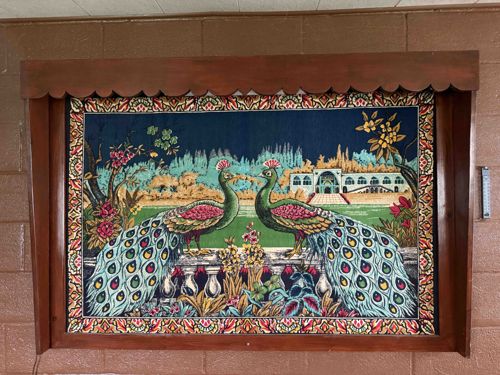
Vintage Loom-Woven Peacock Wall Tapestry in Custom Wooden Shadow Box

Textile Art / Home Decor

AI Estimated Value

·Not an official valuation·Verify before acting

$250 - $450

As of May 23, 2026

AI Item Analysis

·AI can make mistakes·Verify before acting
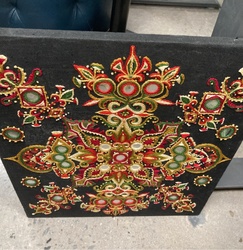
This item is a rectangular loom-woven wall tapestry featuring a symmetrical, mirrored composition of two peacocks facing each other atop a classical balustrade. The textile exhibits a rich color palette dominated by deep indigo blue in the background, with vibrant emerald greens, magentas, and golden yellows defining the peacocks and floral motifs. The peacocks are rendered with elaborate plumage detail, including the characteristic 'eyes' on their long tails which drape over the railing. In the background, a white architectural structure resembling a palace or pergola is visible against a pastoral landscape. The tapestry is framed by a stylized floral border on all four sides. It is mounted within an unusual, custom-built wooden structural frame featuring a scalloped valance or cornice at the top, which creates a shadow-box effect. The wood appears to be a medium-toned stained pine or similar softwood. Regarding condition, the tapestry appears well-preserved with no immediate signs of significant fading, though there is slight sagging in the mounting. The wooden enclosure shows minor surface wear and dust accumulation consistent with mid-20th-century home decor. This style of machine-woven tapestry was highly popular in the 1960s and 1970s, often produced in Italy or Belgium, and is prized for its kitsch aesthetic and bold graphic quality.
AI Appraisal Report

·AI can make mistakes·Verify before acting
I have conducted a visual appraisal of this rectangular loom-woven peacock tapestry. Based on the weave pattern, color saturation, and the specific design motifs, this piece is consistent with mid-century mass-produced textiles, likely manufactured in the 1960s or 1970s. The 'Peacocks at the Palace' design was a popular export from weaving centers in Italy and Belgium during this era. The tapestry retains strong color vibrancy, though minor sagging suggests the tensions have shifted over time. The shadow-box wooden frame is unique; while it adds structural weight and visual interest, it appears to be a custom hobbyist or local shop construction rather than a designer-tier enclosure. Market demand for these textiles has seen a resurgence within the 'Mid-Century Kitsch' and 'maximalist' interior design niches. Comparables for unframed tapestries of this size typically range from $75 to $150. However, the presence of the oversized, scalloped wooden housing significantly increases the value as a ready-to-hang statement piece, placing it in the $250 - $450 range. Limitations of Image-Based Appraisal: A definitive valuation is restricted by the inability to inspect the reverse side of the textile for original manufacturer labels or hallmarks. In-person examination is required to verify the fiber content (likely a cotton/rayon/viscose blend) and to check for hidden pest damage, odors, or dry rot within the shadow box. Furthermore, scientific testing would be necessary to confirm if the pigments used are synthetic or natural, though the latter is highly unlikely for this production era. Documentation of provenance from the original owner would bolster the secondary market appeal.

Get your items appraised

Instant estimates of your treasures with AI-powered appraisals

Browse More Appraisals