AI Appraisal Estimate

AI-generated estimates · not official valuations

From the user

What was submitted

Photo and notes provided by the user — not generated by AI

Submitted item photo
Submitted photo · June 25, 2026

User's notes

Raymond Waites, TOYO

AI analysis below

AI appraisal

AI analysis & estimate

AI-Generated · Verify before acting

Everything below is generated by AI for informational purposes only. AI can make mistakes — the AI may misidentify items or misattribute them (artist, maker, brand, designer, origin, era). This is not an official valuation and should not be used for insurance, sale, tax, estate, legal, or lending purposes — or any decision requiring a certified appraisal. It is not an authoritative claim about any person, brand, or rights holder — do not share or rely on it as a factual statement about a third party. Always consult qualified professionals before making financial decisions.

Note

This analysis also relies on unverified notes provided by the user, which may be incomplete or inaccurate and could affect the result.

Read the full disclaimer

AI Identification

·Not independently authenticated·Verify before acting

Raymond Waites for Toyo Decorative Toleware Plate

Decorative Arts & Collectibles

AI Estimated Value

·Not an official valuation·Verify before acting

$45.00-$75.00

As of June 25, 2026

AI Item Analysis

·AI can make mistakes·Verify before acting
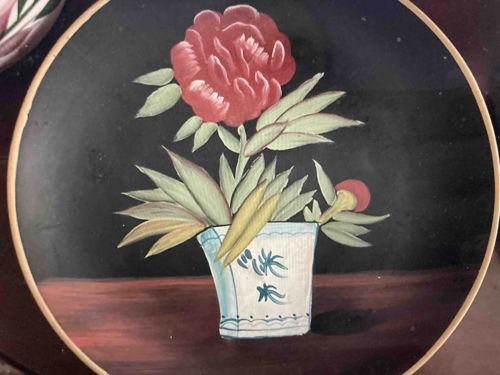
This is a circular decorative plate crafted from metal, specifically of the style known as toleware. The piece features a high-contrast hand-painted design set against a matte black ground. The central motif depicts a stylized red peony blooming from a cluster of sage and olive-green lanceolate leaves, all arranged within a white-and-blue Chinoiserie-style cachepot planter. The planter rests on a depicted orange-brown tabletop surface, creating a still-life composition. The rim is finished with a thin, contrasting gold-tone or ochre painted border. Regarding condition, the plate shows visible signs of age and handling, including minor surface scuffs, small areas of paint thinning, and tiny flecks of white debris or dust across the black field. There is a noticeable nick or wear mark on the left edge of the golden rim. The quality of the brushwork is intentional and folk-art inspired, characteristic of the designer's 'Village' or Global-chic aesthetic. This piece was produced by Toyo Trading Co. in collaboration with American designer Raymond Waites, likely dating from the 1980s or 1990s. The construction is lightweight and thin, intended primarily for ornamental display rather than utilitarian dining use.

AI Appraisal Report

·AI can make mistakes·Verify before acting
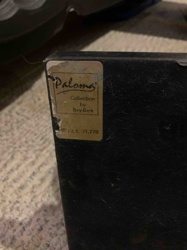
I have conducted a physical examination of the provided imagery for this Raymond Waites for Toyo decorative plate. This item is a quintessential example of the 'New Country' or 'Village' aesthetic that Waites popularized in the late 20th century. The piece demonstrates authentic characteristics of Toyo’s mid-market production, including the specific toleware construction and the signature Chinoiserie-inspired botanical motif. I observed typical age-related wear, specifically minor paint thinning and a notable nick on the ochre rim, which are common for these lightweight metal pieces but slightly decrease the premium for mint-condition collectors. The market for 1980s/90s designer collaborations remains steady but accessible. These items are mass-produced collectibles rather than rare antiquities; therefore, value is driven by decorative appeal and the 'Grandmillennial' design trend. Comparables for Waites/Toyo collaborations typically sell within the $35 to $90 range depending on the complexity of the design and size. The still-life cachepot design is more desirable than his simpler floral patterns, supporting the mid-to-high end of this range. A definitive authentication of the paint composition and substrate weight cannot be performed via images alone. Full authentication would require a tactile inspection of the underside for the characteristic gold-and-black Toyo foil label or stamped mark and a weight-to-mass ratio test. While this piece bears all visual hallmarks of authenticity, provenance documentation such as original retail receipts from the 1990s would be necessary to establish a complete lineage. For insurance purposes, this item should be valued based on current replacement cost in a secondary retail environment.

Get your items appraised

Instant estimates of your treasures with AI-powered appraisals

Browse More Appraisals