Ithyphallic Satyr Figurine
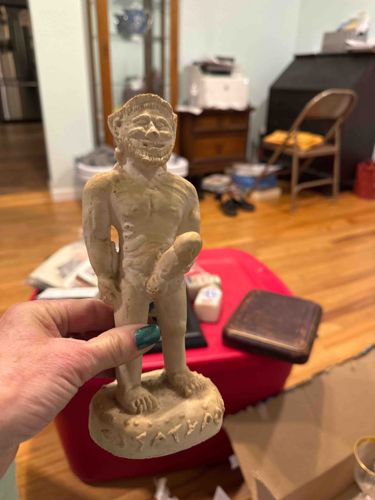
This item is a modern reproduction of an ancient Greek ithyphallic satyr, a mythological figure often associated with Dionysus and fertility. The figurine, approximately 6 to 8 inches in height, appears to be cast from a light-colored composite material or ceramic designed to mimic weathered stone or ancient terracotta. It features the characteristic exaggerated anatomy of a satyr, including an oversized phallus, a bearded face with deep-set eyes, and animalistic ears. The figure is standing on an integral oval base that bears the roughly incised Greek inscription 'ΑΙ ̓ΣΑΤΥΡΑ' or similar, identifying the subject. The construction shows signs of a two-part mold process, with some rough finishing edges visible. The color is a uniform off-white to pale tan with artificial patination and surface grime to suggest age. Condition-wise, it appears structurally sound without significant cracks or chips, though it shows surface dirt consistent with casual display or storage. This is a common souvenir or replica piece, likely manufactured in the late 20th century for the tourist trade, intended to evoke classical antiquity through its folk-art style and use of archaeologically inspired motifs.
AI-Generated Appraisal Disclaimer
Estimated Value
$40 - $80
Basic Information
Category
Antiquities Reproductions & Decorative Arts
Appraised On
December 29, 2025
Estimated Value
$40 - $80
Item Description
This item is a modern reproduction of an ancient Greek ithyphallic satyr, a mythological figure often associated with Dionysus and fertility. The figurine, approximately 6 to 8 inches in height, appears to be cast from a light-colored composite material or ceramic designed to mimic weathered stone or ancient terracotta. It features the characteristic exaggerated anatomy of a satyr, including an oversized phallus, a bearded face with deep-set eyes, and animalistic ears. The figure is standing on an integral oval base that bears the roughly incised Greek inscription 'ΑΙ ̓ΣΑΤΥΡΑ' or similar, identifying the subject. The construction shows signs of a two-part mold process, with some rough finishing edges visible. The color is a uniform off-white to pale tan with artificial patination and surface grime to suggest age. Condition-wise, it appears structurally sound without significant cracks or chips, though it shows surface dirt consistent with casual display or storage. This is a common souvenir or replica piece, likely manufactured in the late 20th century for the tourist trade, intended to evoke classical antiquity through its folk-art style and use of archaeologically inspired motifs.
Get Your Items Appraised
Instant estimates of your treasures with AI-powered instant appraisals