Granite Cobble Specimen
Geological Specimens

Granite Cobble Specimen

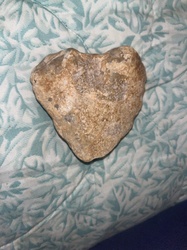
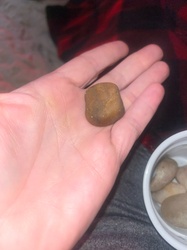
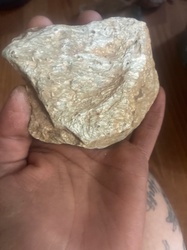
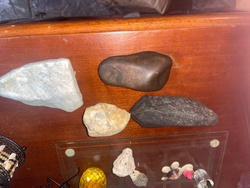
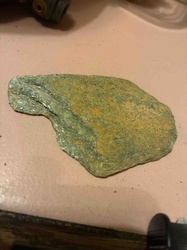
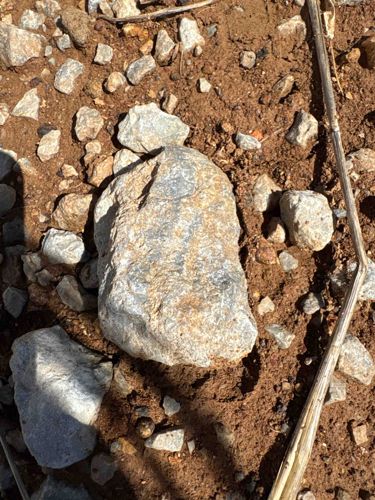
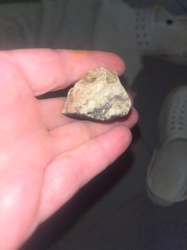
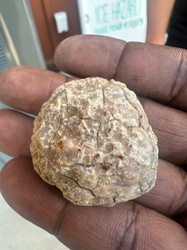
This item is a medium-sized, irregularly shaped cobble found in a terrestrial, soil-heavy environment. Physically, the specimen measures approximately 10-15 centimeters in its longest dimension and appears to be composed of a coarse-grained igneous rock, likely granite or a related leucocratic silicate material. Its color palette is dominated by mottled grays and whites, with significant iron-oxide staining across the surface, resulting in brownish-orange patches. The construction is entirely natural, featuring a rough, non-uniform texture with visible crystalline structures. Notable features include sharp, angular edges suggesting it has not undergone extensive fluvial erosion or 'rounding.' There are no man-made markings, signatures, or stamps, as this is a natural geological object. The condition reflects its 'as-found' state, covered in loose reddish-brown soil and dust, with no signs of human modification or artistic rendering. This is a geological specimen of indeterminate age, likely formed millions of years ago through volcanic cooling but recently weathered into its current clastic form. The craftsmanship is nonexistent, as it is a product of natural geological processes rather than human manufacture.

Estimated Value

$5.00 - $15.00

Basic Information

Category

Geological Specimens

Appraised On

March 28, 2026

Estimated Value

$5.00 - $15.00

Item Description

This item is a medium-sized, irregularly shaped cobble found in a terrestrial, soil-heavy environment. Physically, the specimen measures approximately 10-15 centimeters in its longest dimension and appears to be composed of a coarse-grained igneous rock, likely granite or a related leucocratic silicate material. Its color palette is dominated by mottled grays and whites, with significant iron-oxide staining across the surface, resulting in brownish-orange patches. The construction is entirely natural, featuring a rough, non-uniform texture with visible crystalline structures. Notable features include sharp, angular edges suggesting it has not undergone extensive fluvial erosion or 'rounding.' There are no man-made markings, signatures, or stamps, as this is a natural geological object. The condition reflects its 'as-found' state, covered in loose reddish-brown soil and dust, with no signs of human modification or artistic rendering. This is a geological specimen of indeterminate age, likely formed millions of years ago through volcanic cooling but recently weathered into its current clastic form. The craftsmanship is nonexistent, as it is a product of natural geological processes rather than human manufacture.
Get Your Items Appraised

Instant estimates of your treasures with AI-powered instant appraisals

Browse More Appraisals