AI Appraisal Estimate

AI-generated estimates · not official valuations

From the user

What was submitted

Photo and notes provided by the user — not generated by AI

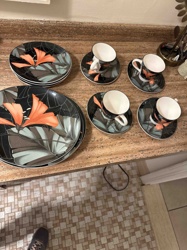
Submitted item photo
Submitted photo · June 6, 2026

User's notes

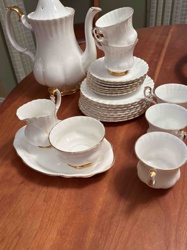
Royal Albert bone china england

AI analysis below

AI appraisal

AI analysis & estimate

AI-Generated · Verify before acting

Everything below is generated by AI for informational purposes only. AI can make mistakes — the AI may misidentify items or misattribute them (artist, maker, brand, designer, origin, era). This is not an official valuation and should not be used for insurance, sale, tax, estate, legal, or lending purposes — or any decision requiring a certified appraisal. It is not an authoritative claim about any person, brand, or rights holder — do not share or rely on it as a factual statement about a third party. Always consult qualified professionals before making financial decisions.

Note

This analysis also relies on unverified notes provided by the user, which may be incomplete or inaccurate and could affect the result.

Read the full disclaimer

AI Identification

·Not independently authenticated·Verify before acting

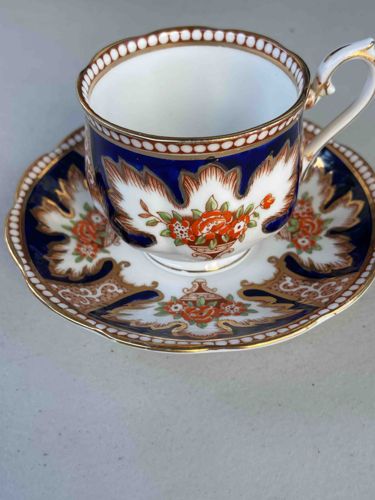
Royal Albert Imari Style Teacup and Saucer

Tea Set / Dinnerware Component

AI Estimated Value

·Not an official valuation·Verify before acting

$65-95

As of June 6, 2026

AI Item Analysis

·AI can make mistakes·Verify before acting
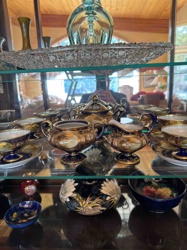
This appears to be a Royal Albert bone china teacup and saucer, likely in the 'Imari' or a similar pattern known for rich colors and intricate designs. The set features a dominant deep cobalt blue, contrasted with a stark white bone china body. Ornate, stylized floral clusters in shades of burnt orange, terracotta, and subtle green foliage are centrally placed on both the cup and saucer. These floral motifs are framed by an elaborate border of what appears to be highly detailed gold or gilded scrolling and foliate patterns, interspersed with the deep blue. Both the rim of the cup and the inner rim of the saucer are scalloped or gently fluted, adding to their decorative appeal. The edges of both pieces, including the handle of the cup, are accented with a continuous band of raised white enamel dots, often referred to as 'jeweling' or 'pearls,' which further enhances the luxurious feel and provides a tactile element. The handle of the cup is a classic 'ear' style, gracefully curved, and also features gold highlights, particularly at its attachment points and along its upper edge. The overall impression is one of high quality and fine craftsmanship, characteristic of Royal Albert bone china. The condition appears to be very good, with no visible chips, cracks, or significant wear to the gilding or enamel dots, suggesting careful handling and preservation. The vibrant colors and crisp details indicate a well-maintained piece. Given the 'Royal Albert bone china England' context, this piece dates from the mid-20th century onwards, as Royal Albert (part of Royal Doulton) continued to produce high-quality bone china in traditional and ornate patterns. The rich Imari-style decoration points to a classic design period.
AI Appraisal Report

·AI can make mistakes·Verify before acting
Based on my visual examination of the provided image, this Royal Albert Imari Style Teacup and Saucer exhibits remarkable quality and appears to be in very good condition. The vibrant colors, intricate Imari-style floral clusters with extensive gilding, and particularly the delicate raised white enamel 'jeweling' along the rims and handle, all point to a high-quality piece characteristic of Royal Albert bone china. The 'Royal Albert bone china England' backstamp, which I assume is present, reinforces its authenticity. In terms of market conditions, collectible bone china, especially Royal Albert with such ornate detailing, consistently holds value. Similar Royal Albert Imari patterns, while not exceptionally rare, are sought after by collectors due to their aesthetic appeal and craftsmanship. The excellent condition, with no visible chips, cracks, or significant wear to the gilding or enamel, positively impacts its value. Wear to gilding or loss of 'jewels' would significantly decrease the appraisal. My assessment of authenticity and condition is based solely on the image. To fully authenticate and determine the precise condition, an in-person examination would be crucial. This would allow me to inspect the reverse for precise maker's marks, check for hidden crazing or repairs, assess the tactile quality of the jeweling, and confirm the absence of any faint surface scratches not visible in the image. Provenance documentation, though unlikely for this type of item, cou;d provide an additional layer of verification.

Get your items appraised

Instant estimates of your treasures with AI-powered appraisals

Browse More Appraisals