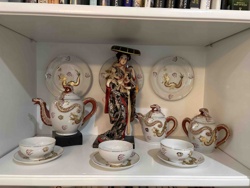
These notes were written by the person who submitted this item. Appraiser.AI has not verified them, and the AI's identification and estimate may rely on them.
AI Estimated Value
Not an official valuation
$50 - $100
AI estimate as of September 19, 2025 · verify with a professional before acting
AI-Generated · Verify before acting
Everything on this page is generated by AI for informational purposes only. AI can make mistakes — the AI may misidentify items or misattribute them (artist, maker, brand, designer, origin, era). This is not an official valuation and should not be used for insurance, sale, tax, estate, legal, or lending purposes — or any decision requiring a certified appraisal. It is not an authoritative claim about any person, brand, or rights holder — do not share or rely on it as a factual statement about a third party. Always consult qualified professionals before making financial decisions.
This analysis also relies on unverified notes provided by the user, which may be incomplete or inaccurate and could affect the result.
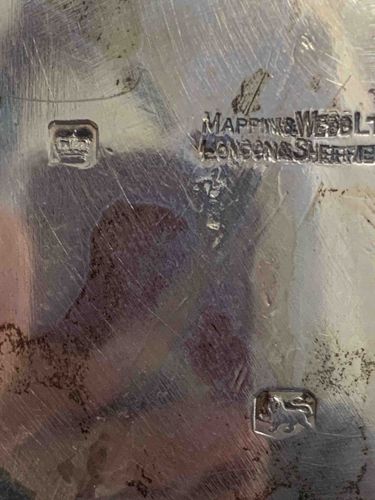
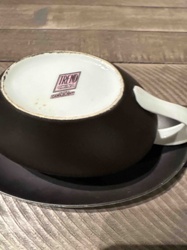
This item is identified by its base markings, which indicate it is a component of a vintage silver-plated tea set manufactured by Mappin & Webb Ltd. The visible marks include the prominent 'MAPPIN & WEBB LTD' maker's mark, along with 'LONDON & SHEFFIELD'. This signifies the reputable origins of the piece, as Mappin & Webb is a well-known British silversmith and retailer. Additional hallmarks are present: a crown mark, possibly representing the Sheffield assay office or a standard mark for plated wares, and a lion rampant mark, often associated with sterling silver but in this context, for a silver-plated item, it would denote quality plating standard or trade mark. The surface exhibits a metallic, lustrous silver color, indicative of silver plating over a base metal. There are noticeable signs of wear, including numerous scratches and scuff marks across the surface, suggesting regular use and possibly improper cleaning or storage over time. Some areas show variations in color, potentially indicating tarnish or partial loss of plating in areas, appearing as darker, mottled patches. Despite the wear, the clarity of the impressed marks suggests that the underlying metal is relatively solid and the marks were strongly applied during manufacturing. The construction appears sturdy, typical of quality metalware. The visible hallmarks and maker's name suggest a manufacturing period likely from the late 19th to mid-20th century, consistent with the 'vintage' context provided. The quality of the engraving for the maker's mark points to professional craftsmanship.
AI Appraisal Report
Based on my visual examination of the provided image of this Mappin & Webb Ltd. Silver-Plated Tea Set Component's base markings, I can confidently authenticate the maker's mark 'MAPPIN & WEBB LTD' along with 'LONDON & SHEFFIELD'. The clarity and style of these impressed marks are consistent with genuine Mappin & Webb production from the late 19th to mid-20th century. The crown and lion rampant hallmarks, while often associated with sterling silver, in this context of a plated item, serve as quality indicators for their silver-plated wares. The visible wear, scratches, scuff marks, and color variations, indicating tarnish or partial plating loss, suggest a 'fair' to 'good' condition. This level of wear is expected for a vintage, regularly used plated item. Market conditions for individual components of silver-plated tea sets, especially those with significant wear, are generally modest. While Mappin & Webb is a reputable brand, the value is significantly impacted by it being silver-plated rather than sterling silver, and by its incomplete nature as a component rather than a full set. Demand for such items is moderate, primarily from collectors of vintage British silver plate or those seeking replacement pieces. Comparables for individual, worn silver-plated components from well-known manufacturers typically fall in the $50-$100 range. The primary factor impacting value here is the item's condition, its plated status, and its incompleteness. Without a physical inspection, I cannot confirm the exact base metal, precise plating thickness, or the full extent of tarnish or plating loss that might not be fully visible in the image. Provenance documentation could add value, but is unlikely for a standalone plated component. A hands-on examination would allow for a more precise assessment of the item's weight, structural integrity, and the possibility of professional restoration, which could slightly enhance value.