AI Appraisal Estimate

AI-generated estimates · not official valuations

From the user

What was submitted

Photo and notes provided by the user — not generated by AI

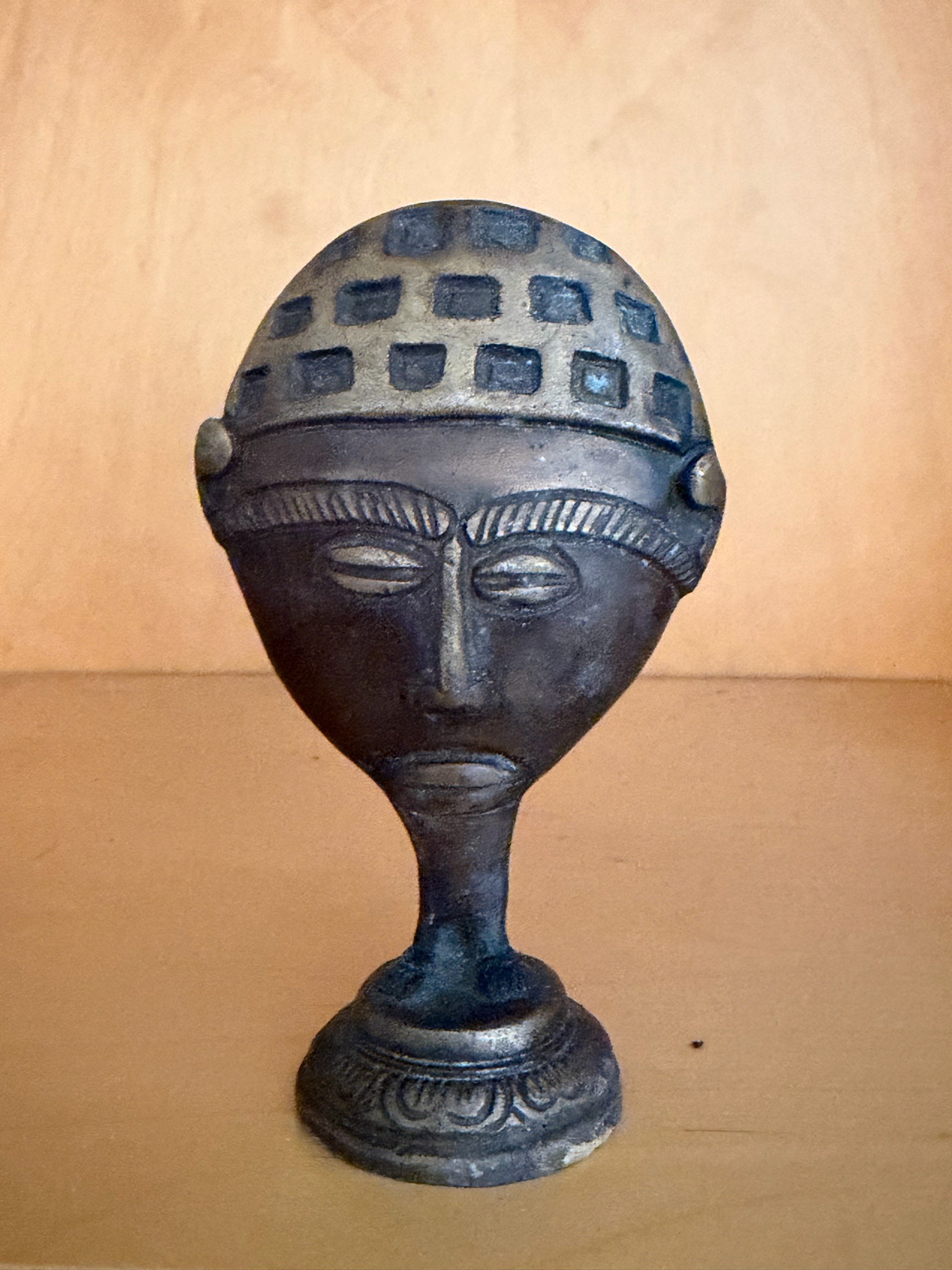
Submitted item photo
Submitted photo · June 20, 2026

User's notes

No additional notes provided.

AI analysis below

AI appraisal

AI analysis & estimate

AI-Generated · Verify before acting

Everything below is generated by AI for informational purposes only. AI can make mistakes — the AI may misidentify items or misattribute them (artist, maker, brand, designer, origin, era). This is not an official valuation and should not be used for insurance, sale, tax, estate, legal, or lending purposes — or any decision requiring a certified appraisal. It is not an authoritative claim about any person, brand, or rights holder — do not share or rely on it as a factual statement about a third party. Always consult qualified professionals before making financial decisions.

Read the full disclaimer

AI Identification

·Not independently authenticated·Verify before acting

West African Bronze Portrait Bust on Pedestal

Tribal Art and Artifacts

AI Estimated Value

·Not an official valuation·Verify before acting

$450 - $700

As of June 20, 2026

AI Item Analysis

·AI can make mistakes·Verify before acting
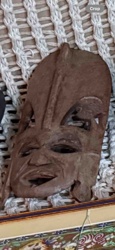
This item is a stylized bronze portrait bust, likely of West African origin, possibly inspired by Benin or Yoruba metalworking traditions. The sculpture is cast using the lost-wax technique and features a dark, aged patina with silvery-grey highlights on the raised surfaces. The head is characterized by an inverted pear shape, featuring large almond-shaped eyes with heavy lids, a slender nose, and a downturned, linear mouth. Above the eyes are prominent, textured eyebrows rendered with vertical incisions. The figure wears a distinctive, skullcap-like headpiece or coiffure with a grid-like or checkered pattern of recessed squares, flanked by small circular ornaments near the temples. The head transitions into a narrow, elongated neck that rests upon a circular, flared pedestal base. The base is decorated with a low-relief frieze of repeating floral or scalloped motifs. In terms of condition, the piece shows surface wear consistent with age, including minor pitting, oxidation, and small areas of lighter metal showing through the darker finish. There are no visible maker's marks, though the uneven texture suggests hand-finishing. The craftsmanship displays a balance of geometric abstraction and traditional figurative representation, reflecting mid-to-late 20th-century artisanal production aimed at the decorative or ethnographic market.
AI Appraisal Report

·AI can make mistakes·Verify before acting
I have virtually examined this West African bronze portrait bust, likely originating from Nigerian artisanal traditions (Edo/Benin or Yoruba influence). The piece utilizes the cire perdue (lost-wax) casting method, evidenced by the unique surface textures and manual finishing. The inverted pear-shaped visage and geometric coiffure are hallmarks of West African aesthetic conventions. My visual inspection reveals a dark, chemically induced or heat-treated patina with localized 'silvery' highlights—likely indicating a high-zinc copper alloy (brass or 'bronze') common in 20th-century workshop production. Condition is good, with age-appropriate surface oxidation and minor pitting that does not detract from the form. This bust is characteristic of high-quality mid-to-late 20th-century decorative art produced for the international export or ethnographic market rather than a pre-colonial ritual artifact. While the craftsmanship is excellent, the lack of deep mineralized crusting and the specific styling of the pedestal indicate modern manufacture. Comparable pieces from this period frequently sell in the $400 to $800 range at boutique auctions specializing in global decor. Demand for such pieces remains stable among collectors of interior design and neo-traditional tribal art. Limitations: This appraisal is based solely on digital images. A definitive valuation and authentication would require a physical inspection to evaluate weight, interior core residue, and metallurgical composition. To confirm an older provenance, thermoluminescence (TL) testing of any remaining clay core or documentable chain of custody (provenance) prior to 1970 would be necessary to distinguish it from more recent tourist-grade reproductions.

Get your items appraised

Instant estimates of your treasures with AI-powered appraisals

Browse More Appraisals