Papuan Sepik River Ancestor Mask
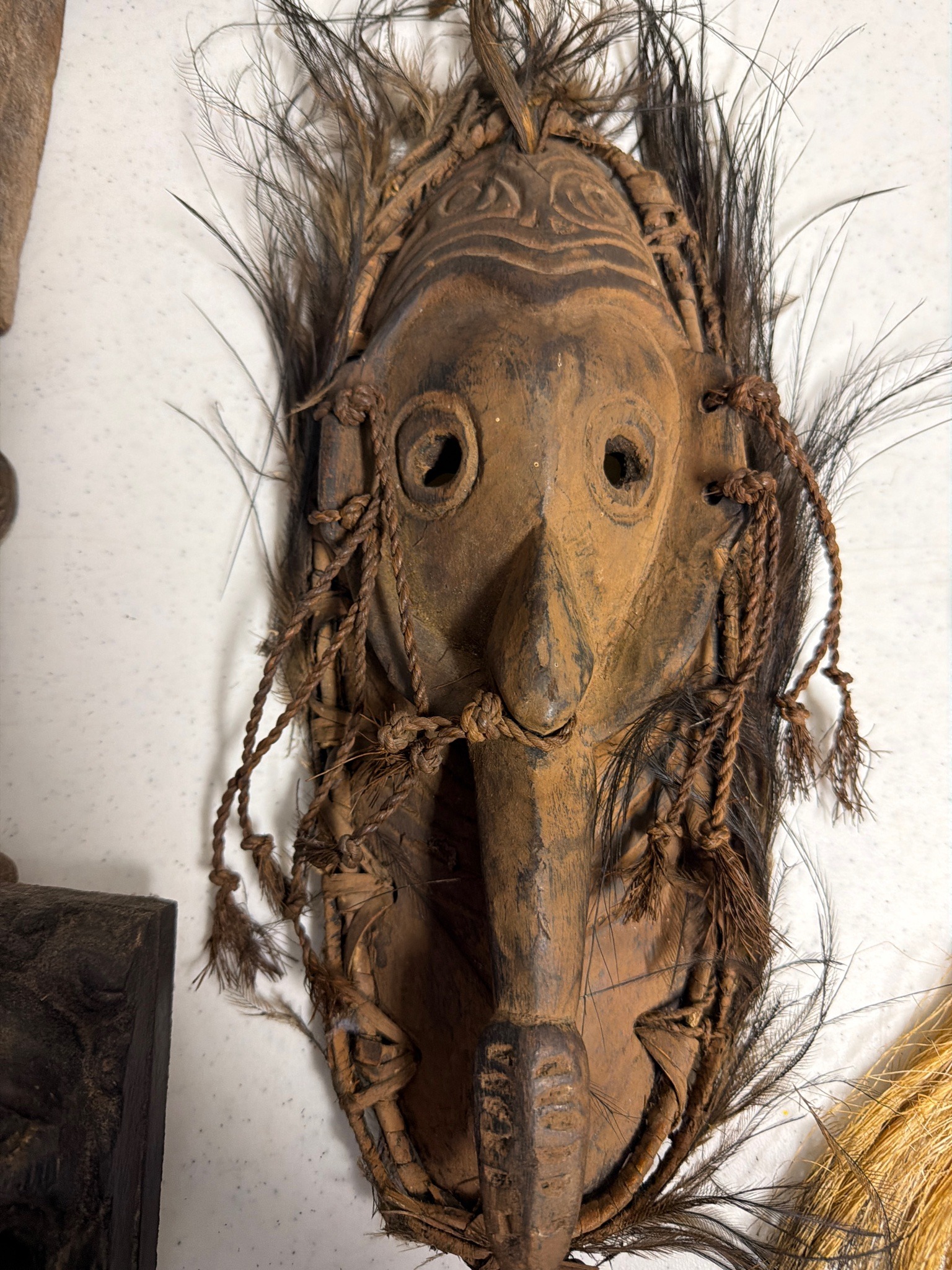
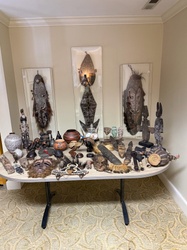
This is a hand-carved ceremonial ancestor mask originating from the Sepik River region of Papua New Guinea. The mask is elongated with a prominent, downward-reaching nose, characteristic of the local artistic style representing lineage and ancestral spirits. It is constructed from aged wood, bearing a deep, earthy brown patina. The piece is highly textured, featuring intricate incised carvings on the forehead and the tip of the proboscis. A distinctive frame of woven plant fibers or rattan encircles the perimeter, embellished with dark cassowary feathers and several braided vegetable fiber cords that hang or loop from the sides. The craftsmanship displays traditional tribal techniques, including hand-drilled orbital sockets and hand-twisted cordage. Condition-wise, the mask shows significant signs of age and authentic use; there is visible surface wear, dust accumulation within the crevices, and some fraying or loss to the delicate feather elements. The wood exhibits minor desiccation cracks, adding to its character as a mid-20th-century ethnographic artifact. The overall aesthetic is one of powerful ritual significance and high-quality indigenous artistry.
AI-Generated Appraisal Disclaimer
Estimated Value
$400 - $600
Basic Information
Category
Tribal Art / Ethnographic Artifacts
Appraised On
May 8, 2026
Estimated Value
$400 - $600
Item Description
This is a hand-carved ceremonial ancestor mask originating from the Sepik River region of Papua New Guinea. The mask is elongated with a prominent, downward-reaching nose, characteristic of the local artistic style representing lineage and ancestral spirits. It is constructed from aged wood, bearing a deep, earthy brown patina. The piece is highly textured, featuring intricate incised carvings on the forehead and the tip of the proboscis. A distinctive frame of woven plant fibers or rattan encircles the perimeter, embellished with dark cassowary feathers and several braided vegetable fiber cords that hang or loop from the sides. The craftsmanship displays traditional tribal techniques, including hand-drilled orbital sockets and hand-twisted cordage. Condition-wise, the mask shows significant signs of age and authentic use; there is visible surface wear, dust accumulation within the crevices, and some fraying or loss to the delicate feather elements. The wood exhibits minor desiccation cracks, adding to its character as a mid-20th-century ethnographic artifact. The overall aesthetic is one of powerful ritual significance and high-quality indigenous artistry.

Related Tags
Get Your Items Appraised
Instant estimates of your treasures with AI-powered instant appraisals