AI Appraisal Estimate

AI-generated estimates · not official valuations

From the user

What was submitted

Photo and notes provided by the user — not generated by AI

Submitted item photo
Submitted photo · June 16, 2026

User's notes

Painting on metal

AI analysis below

AI appraisal

AI analysis & estimate

AI-Generated · Verify before acting

Everything below is generated by AI for informational purposes only. AI can make mistakes — the AI may misidentify items or misattribute them (artist, maker, brand, designer, origin, era). This is not an official valuation and should not be used for insurance, sale, tax, estate, legal, or lending purposes — or any decision requiring a certified appraisal. It is not an authoritative claim about any person, brand, or rights holder — do not share or rely on it as a factual statement about a third party. Always consult qualified professionals before making financial decisions.

Note

This analysis also relies on unverified notes provided by the user, which may be incomplete or inaccurate and could affect the result.

Read the full disclaimer

AI Identification

·Not independently authenticated·Verify before acting

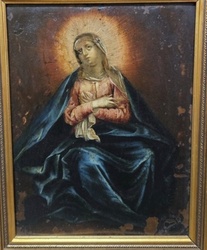
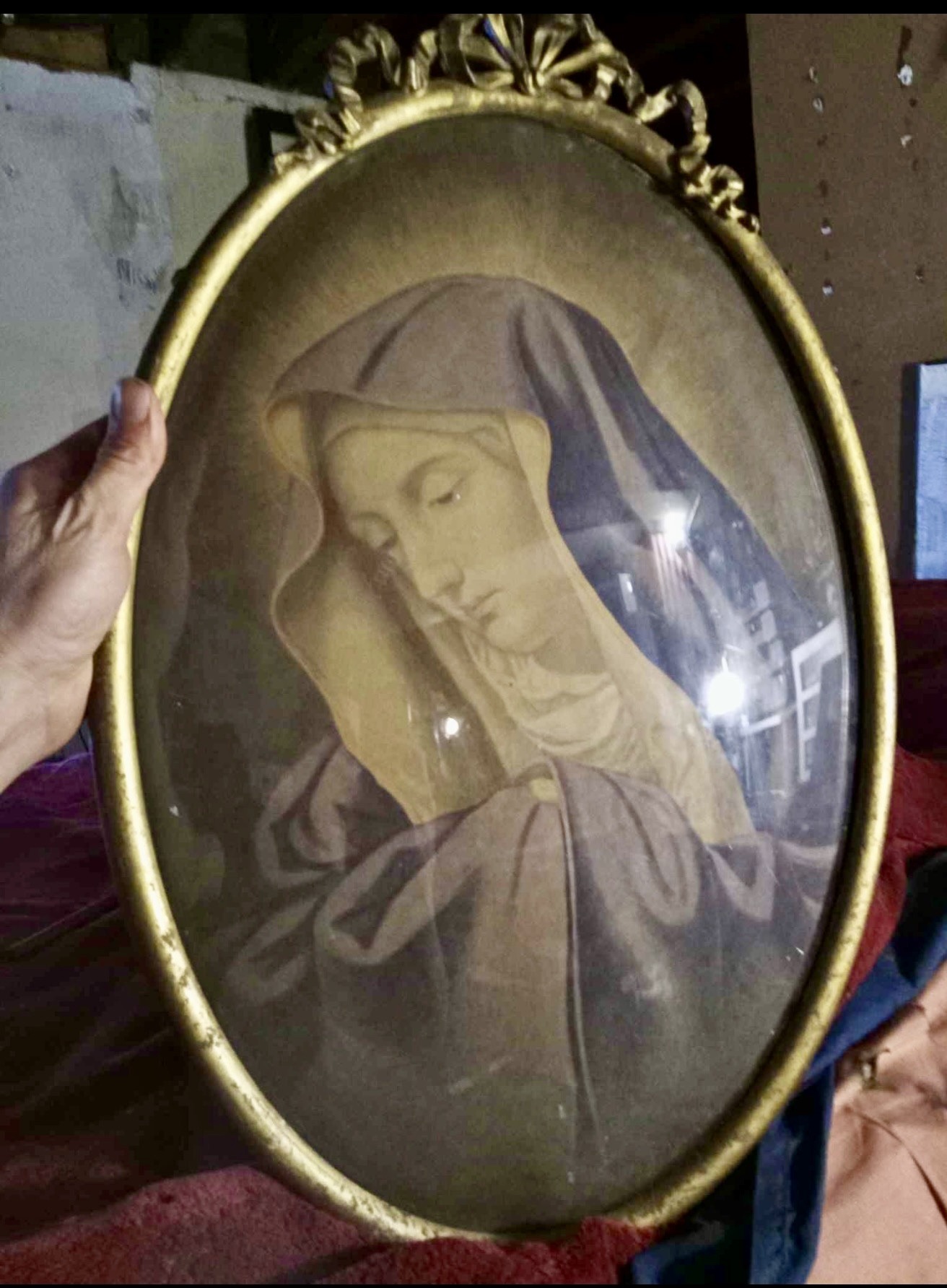
Oval Oil Painting on Metal of Our Lady of Sorrows

Fine Art / Religious Antiques

AI Estimated Value

·Not an official valuation·Verify before acting

$1,200 - $1,800

As of June 16, 2026

AI Item Analysis

·AI can make mistakes·Verify before acting
This is an antique oval religious painting executed on a thin metal substrate, likely copper or tin-plated steel, encased in a decorative gilt frame. The artwork depicts a devotional image of the Virgin Mary, commonly identified as Our Lady of Sorrows (Mater Dolorosa), rendered in a traditional Neoclassical or Romanticist style popular in the 19th century. The subject is shown with downcast eyes and a somber expression, draped in a deep blue or purple mantle with a subtle golden halo radiating behind her head. The use of metal as a support often points to European origins, specifically Spanish Colonial or Italian traditions where these 'ex-voto' or devotional plates were common. The frame is an ornate oval with a gold-leaf or gilt finish, featuring a stylized ribbon or bow crest at the top apex. Physical condition shows visible signs of age including surface oxidation or 'foxing' to the metal plate, resulting in some micro-pitting and discoloration consistent with moisture exposure over time. The gilt frame exhibits minor abrasions, thinning of the gold finish on high points, and some accumulated dust in the carved recesses. The craftsmanship suggests a high level of skill in the blending of pigments on a non-porous surface, achieving soft transitions in the skin tones despite the technical difficulty of the medium.
AI Appraisal Report

·AI can make mistakes·Verify before acting
Based on my examination of this oval oil on metal painting of Our Lady of Sorrows, I find it to be an authentic 19th-century devotional work, likely of Southern European or Spanish Colonial origin. The use of a non-porous metal support (tin or copper) was highly favored during this period for its durability and the luminous quality it lent to skin tones, as evidenced here by the soft blending and fine transitions in the Virgin’s face. The Neoclassical style and the inclusion of the gilt ribbon-crested frame suggest a mid-to-late 1800s production timeframe. Condition-wise, the visible oxidation and micro-pitting on the metal substrate are consistent with age-related moisture exposure, which, while detracting slightly from the aesthetic clarity, serves as a marker of the item's historical period. The gilt frame shows honest wear on high-relief areas. Market demand for religious antiquities remains steady, particularly for works on metal which are more resilient than canvas. Comparable items at regional auction houses typically command between $1,000 and $2,000 depending on the level of detailed provenance. The primary value-driver here is the marriage of the original frame with the painting. However, a definitive appraisal is limited by the digital format of this inspection. A physical examination is required to confirm whether the substrate is copper or tin, as copper pieces often carry a higher valuation. Furthermore, inspecting the reverse of the plate for maker's marks or stamps and reviewing provenance records or bill of sale would be necessary to increase the valuation and confirm the exact geographic origin. Scientific testing, such as X-ray fluorescence, could further verify the mineral composition of the pigments used.

Get your items appraised

Instant estimates of your treasures with AI-powered appraisals

Browse More Appraisals