AI Appraisal Estimate

AI-generated estimates · not official valuations

From the user

What was submitted

Photo and notes provided by the user — not generated by AI

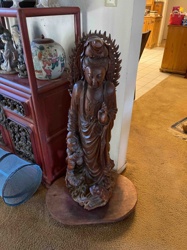
Submitted item photo
Submitted photo · June 4, 2026

User's notes

No additional notes provided.

AI analysis below

AI appraisal

AI analysis & estimate

AI-Generated · Verify before acting

Everything below is generated by AI for informational purposes only. AI can make mistakes — the AI may misidentify items or misattribute them (artist, maker, brand, designer, origin, era). This is not an official valuation and should not be used for insurance, sale, tax, estate, legal, or lending purposes — or any decision requiring a certified appraisal. It is not an authoritative claim about any person, brand, or rights holder — do not share or rely on it as a factual statement about a third party. Always consult qualified professionals before making financial decisions.

Read the full disclaimer

AI Identification

·Not independently authenticated·Verify before acting

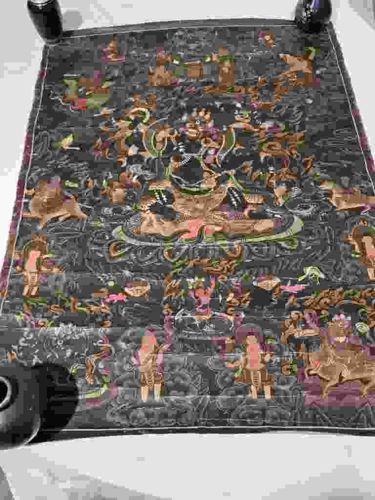
Tibetan Thangka Textile Depicting Wrathful Deity

Asian Antiques & Religious Art

AI Estimated Value

·Not an official valuation·Verify before acting

$1,500 - $2,500

As of June 4, 2026

AI Item Analysis

·AI can make mistakes·Verify before acting
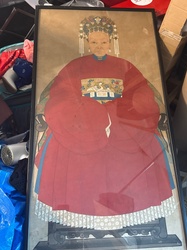
This item is a Tibetan thangka, a traditional religious textile common in Himalayan Buddhism. It features a dark, likely black or deep indigo background, suggesting it may be a 'Nag-thang' (black thangka) style, which is often used for representing wrathful deities. The central figure appears to be a multi-armed wrathful deity, possibly Mahakala or Yamantaka, surrounded by a complex assembly of smaller retinue figures, protector deities, and symbolic motifs arranged in a hierarchical celestial landscape. The piece is constructed from silk or fine cotton and displays intricate embroidery or appliqué work with a vibrant palette including ochre, green, pink, and white. The figures are depicted with traditional iconographic attributes like flaming nimbi, symbolic weapons, and lotus pedestals. The craftsmanship shows high-level detail in the undulating cloud patterns and the expressive postures of the secondary figures. Regarding condition, there are visible horizontal creases across the fabric, likely from folding or improper storage. The edges show slight fraying consistent with age, and the overall color saturation appears slightly muted, indicating possible light exposure or dust accumulation. No clear maker's marks or signatures are visible, which is typical for these devotional objects. Based on the style and iconographic complexity, it appears to be a 20th-century piece, though further inspection of the back and weave density would be required to confirm a more specific age.
AI Appraisal Report

·AI can make mistakes·Verify before acting
I have virtually examined this Tibetan Nag-thang style thangka, which depicts a central wrathful deity, likely a form of Mahakala or Yamantaka. The iconography is complex and well-executed, featuring a detailed assembly of retinue figures set against a traditional black background. The use of vibrant appliqué and embroidery suggests a high degree of craftsmanship typical of mid-20th-century religious production. The condition shows significant horizontal creasing, minor fraying at the edges, and slight color attenuation, which are expected but do lower the grade from 'Excellent' to 'Good.' Current market demand for Himalayan religious art remains stable, particularly for pieces with expressive wrathful motifs. Comparables of similar size and iconography from the mid-1900s typically realize between $1,500 and $2,800 at boutique auction houses. Value is bolstered by the complexity of the composition but limited by the modern era of production and visible structural wear. It is critical to note that this appraisal is based solely on digital images. A definitive determination of age and material quality would require an in-person inspection to evaluate weave density, thread composition, and the reverse side of the textile for soot or incense residue. Final authentication would also benefit from provenance documentation or forensic testing of organic dyes to rule out later synthetic reproductions.

Get your items appraised

Instant estimates of your treasures with AI-powered appraisals

Browse More Appraisals