AI Appraisal Estimate

AI-generated estimates · not official valuations

From the user

What was submitted

Photo and notes provided by the user — not generated by AI

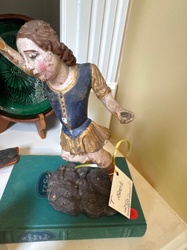
Submitted item photo
Submitted photo · June 18, 2026

User's notes

Came from a church in Spain from the 1600s or older

AI analysis below

AI appraisal

AI analysis & estimate

AI-Generated · Verify before acting

Everything below is generated by AI for informational purposes only. AI can make mistakes — the AI may misidentify items or misattribute them (artist, maker, brand, designer, origin, era). This is not an official valuation and should not be used for insurance, sale, tax, estate, legal, or lending purposes — or any decision requiring a certified appraisal. It is not an authoritative claim about any person, brand, or rights holder — do not share or rely on it as a factual statement about a third party. Always consult qualified professionals before making financial decisions.

Note

This analysis also relies on unverified notes provided by the user, which may be incomplete or inaccurate and could affect the result.

Read the full disclaimer

AI Identification

·Not independently authenticated·Verify before acting

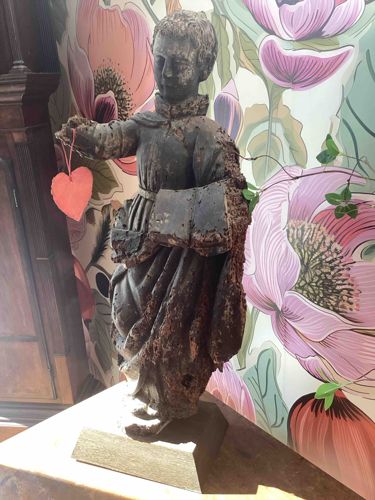
17th Century Spanish Colonial Polychrome Wood Santos Figurine

Religious Antiques / Spanish Colonial Sculpture

AI Estimated Value

·Not an official valuation·Verify before acting

$3,500 - $5,500

As of June 18, 2026

AI Item Analysis

·AI can make mistakes·Verify before acting
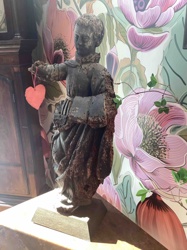
This is a significant polychrome wooden sculpture, likely depicting a young saint or Christ Child, originating from Spain during the 17th century or possibly earlier. The figure is carved in the round with a high degree of craftsmanship, specifically in the fluid rendering of the heavy, draped ecclesiastical garments. The piece shows evidence of original polychromy—specifically gesso and tempera or oil paint—though much of the surface has weathered away to reveal the dark, aged wood beneath. Significant structural wear is present, including heavy pitting, woodworm damage (historical), and losses to the extremities (missing hands and partial feet). This level of erosion is typical for church relics stored in humid stone environments. The figure stands on a modern rectangular wooden plinth for stability. The facial features remain remarkably soft yet defined, suggesting a skilled workshop. The dark, encrusted patina and the specific 'S-curve' contrapposto of the body are hallmark indicators of the Spanish Baroque style. It is a poignant example of devotio moderna religious art, holding immense character despite the extensive surface degradation and missing components.
AI Appraisal Report

·AI can make mistakes·Verify before acting
Based on my examination of the 17th-century Spanish Colonial Santos, I have assessed the piece as a significant example of Baroque ecclesiastical art. The sculpture demonstrates high-level carving, particularly in the deep, rhythmic folds of the vestments and the serene, localized detailing of the facial features. The 'S-curve' contrapposto and heavy drapery are consistent with Spanish workshops of the 1600s. Authenticity is supported by the visible aged patina, the presence of historical xylophagous (woodworm) damage, and the remnants of original gesso-based polychromy. While the loss of extremities and surface erosion are significant, in the market for early devotional art, such 'distressed' aesthetics often enhance the object's spiritual and historical character rather than detracting from it. Market demand for Spanish Colonial pieces remains stable, particularly for those with clear European origins. This valuation reflects current auction trends for authenticated 17th-century wood carvings of this size and stylistic complexity. However, visual inspection via image has limitations. A definitive authentication would require an in-person examination to verify the wood species (typically cedar or pine in this context), infrared reflectography to analyze the paint layers, and carbon-14 dating for the timber. Most importantly, formal provenance documentation linking the piece to its original church in Spain is necessary to achieve a higher valuation in the international market. Without these, the value is based on its stylistic merits and observed physical characteristics.

Get your items appraised

Instant estimates of your treasures with AI-powered appraisals

Browse More Appraisals