AI estimate as of September 27, 2025 · verify with a professional before acting
AI-Generated · Verify before acting
Everything on this page is generated by AI for informational purposes only. AI can make mistakes — the AI may misidentify items or misattribute them (artist, maker, brand, designer, origin, era). This is not an official valuation and should not be used for insurance, sale, tax, estate, legal, or lending purposes — or any decision requiring a certified appraisal. It is not an authoritative claim about any person, brand, or rights holder — do not share or rely on it as a factual statement about a third party. Always consult qualified professionals before making financial decisions.
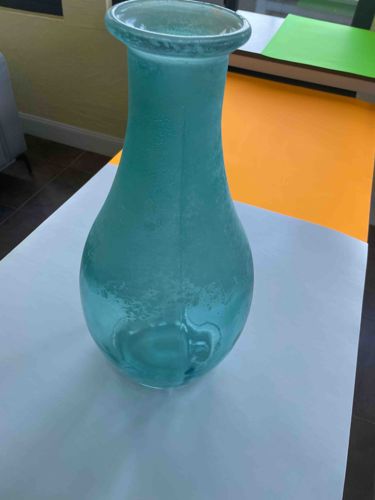
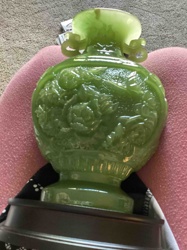
This item is a decorative vase, likely crafted from glass, exhibiting a distinct teal or aqua color. The surface of the vase appears to be frosted or textured, giving it a diffused, milky appearance rather than a completely clear or glossy finish. Its form is classic and elegant, featuring a gently flared lip at the top, a slender neck that gradually widens, and a substantial, rounded body that tapers towards the base. The overall silhouette suggests a design suitable for holding floral arrangements, with sufficient stability provided by its wider base. Notable features include visible seams or mold lines running vertically along the body, indicating it was likely produced using a two-part or hinged mold. The frosting is uneven in some areas, particularly towards the bottom, where clearer patches or variations in texture are discernible, suggesting either a deliberate artistic choice or a byproduct of the manufacturing process. The interior of the vase is not clearly visible but appears to reflect a similar frosted texture. There are no obvious chips, cracks, or significant damage from the provided images; however, the textured surface would effectively conceal minor wear. No distinct maker's marks, signatures, or stamps are visible. The style leans towards a contemporary or transitional aesthetic, possibly dating from the late 20th century to early 21st century. The craftsmanship appears to be commercial grade, characterized by its consistent shape and overall pleasing presentation, although the slight irregularities in the frosting add a touch of handcrafted appeal.
AI Appraisal Report
I have examined the provided images of this teal frosted glass vase. The item appears to be in good overall condition, with no obvious chips, cracks, or significant damage visible. The frosted finish, while exhibiting some minor inconsistencies, particularly towards the base, seems to be an inherent characteristic of the manufacturing process rather than post-production wear. The visible mold lines confirm it was machine-made, indicating commercial-grade production. Authenticity, in terms of it being a glass vase, is clear from the visual evidence, but specific maker or origin cannot be determined without physical inspection for marks or labels.
Market conditions for decorative glass vases of this type are generally stable. This piece falls into a broad category of contemporary decorative glassware. Comparables in online marketplaces and retail settings for new or pre-owned decorative glass vases of similar size, style, and material typically range from $20 to $100. The appealing teal color and classic form contribute positively to its desirability.
While attractive, this vase is not particularly rare. Its commercial production suggests a relatively large quantity was likely made. Demand is consistent for aesthetically pleasing home decor items, but it doesn't possess specific characteristics (e.g., renowned maker, unique artistry, historical significance) that would drive high collector demand or premium pricing. Key factors impacting value include its good condition and pleasing aesthetic, counterbalanced by its commercial origin and lack of rarity.
Limitations in authenticity verification are significant. Without a physical examination, I cannot confirm the exact material composition (e.g., if it's indeed glass or a synthetic equivalent), detect subtle hairline cracks or internal flaws, or locate any hidden maker’s marks, signatures, or production labels that would definitively establish its origin, manufacturer, or age. Provenance documentation could also shed light on its history and origin.