AI Appraisal Estimate

AI-generated estimates · not official valuations

From the user

What was submitted

Photo and notes provided by the user — not generated by AI

Submitted item photo
Submitted photo · June 19, 2026

User's notes

No additional notes provided.

AI analysis below

AI appraisal

AI analysis & estimate

AI-Generated · Verify before acting

Everything below is generated by AI for informational purposes only. AI can make mistakes — the AI may misidentify items or misattribute them (artist, maker, brand, designer, origin, era). This is not an official valuation and should not be used for insurance, sale, tax, estate, legal, or lending purposes — or any decision requiring a certified appraisal. It is not an authoritative claim about any person, brand, or rights holder — do not share or rely on it as a factual statement about a third party. Always consult qualified professionals before making financial decisions.

Read the full disclaimer

AI Identification

·Not independently authenticated·Verify before acting

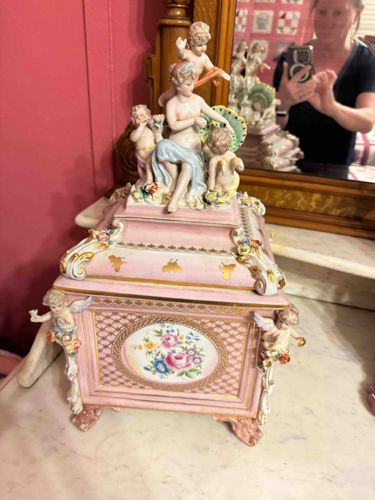
Antique Capodimonte Style Hand-Painted Porcelain Jewelry Casket

Antique Ceramics and Porcelain

AI Estimated Value

·Not an official valuation·Verify before acting

$650 - $950

As of June 19, 2026

AI Item Analysis

·AI can make mistakes·Verify before acting
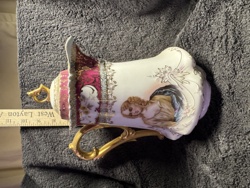
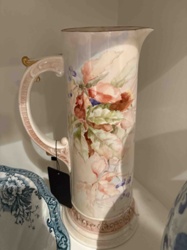
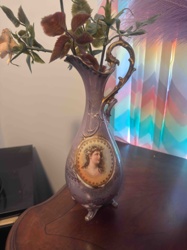
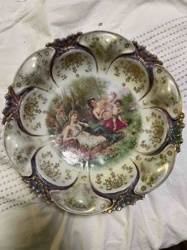
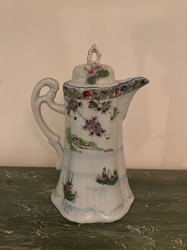
This is a substantial and ornate hand-painted porcelain jewelry or trinket box, executed in the elaborate Capodimonte or Dresden 'Rococo Revival' style. The piece features a soft powder-pink ground adorned with extensive gilt-gold highlights and 'beehive' or trellis-patterned diapering. The lid serves as a dramatic pedestal for a group of hand-sculpted mythological or allegorical figures, including a seated central female figure (possibly Venus) surrounded by three playful cherubs or putti. The corners of the main body are further embellished with high-relief winged cherubs holding floral garlands. Each side panel features an oval reserve containing a finely painted floral bouquet consisting of roses, forget-me-nots, and yellow field flowers. The construction includes a tiered, removable lid and a rectangular body supported by four scroll-molded feet. While no maker's mark is visible from this angle, the style is consistent with late 19th to early 20th-century European porcelain manufacturing, likely from Italy or Germany. The craftsmanship shows high-quality modeling of the figures, though there are visible signs of aging including some wear to the gilt enamel along the edges and potential minor chips or repairs to the delicate outstretched limbs of the winged figures, which is common for such intricate porcelain. The overall condition appears fair to good for its age, retaining vibrant coloration and most of its complex sculptural elements.
AI Appraisal Report

·AI can make mistakes·Verify before acting
I have conducted a visual inspection of this porcelain jewelry casket, which demonstrates the elaborate 'Rococo Revival' aesthetics typical of high-end continental porcelain from the era of 1880–1920. The sculptural complexity—particularly the high-relief putti and the seated Venus figure—indicates a manufacturing origin in the Capodimonte (Doccia) or Dresden tradition. The hand-painted floral reserves and powdered pink ground remain vibrant, though the expected gilt loss on high-contact points and potential repairs to the delicate extremities of the cherubs suggest a condition grade of 'Fair to Good.' The market for 19th-century decorative ceramics is currently stable but selective. Large, sculptural pieces such as this ‘casket’ format are more desirable than standard flatware. Comparables for unsigned Italian or German porcelain boxes of this scale typically range between $500 and $1,200 at auction, depending on the integrity of the figural elements. The absence of a visible 'Crown over N' or 'Blue Beehive' mark limits the valuation to decorative status rather than a specific attributed workshop (like Ginori). Limitations: My assessment is based solely on digital imagery. Verification of authenticity requires an in-person examination to inspect the underside for maker’s marks and to use UV (blacklight) testing to identify professional restoration on the porcelain limbs, which can significantly devalue the piece by 30-50% if extensive. Translucency tests under high-intensity light would further confirm whether the body is true hard-paste porcelain or a softer earthenware. Provenance documentation or original purchase receipts would be necessary to elevate this to a fine-art insurance valuation.

Get your items appraised

Instant estimates of your treasures with AI-powered appraisals

Browse More Appraisals