AI Appraisal Estimate

AI-generated estimates · not official valuations

From the user

What was submitted

Photo and notes provided by the user — not generated by AI

Submitted item photo
Submitted photo · May 30, 2026

User's notes

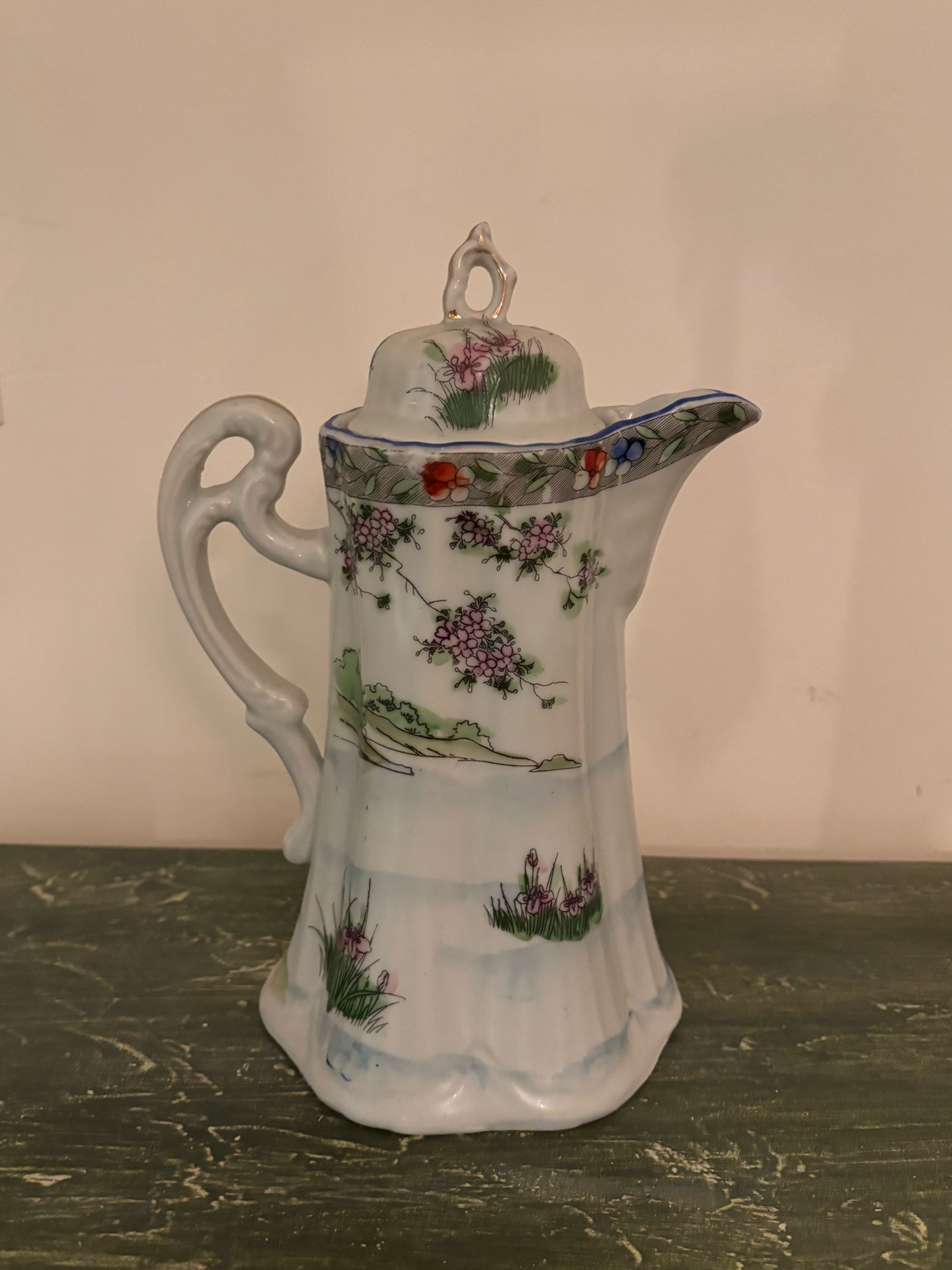
Antique teapot

AI analysis below

AI appraisal

AI analysis & estimate

AI-Generated · Verify before acting

Everything below is generated by AI for informational purposes only. AI can make mistakes — the AI may misidentify items or misattribute them (artist, maker, brand, designer, origin, era). This is not an official valuation and should not be used for insurance, sale, tax, estate, legal, or lending purposes — or any decision requiring a certified appraisal. It is not an authoritative claim about any person, brand, or rights holder — do not share or rely on it as a factual statement about a third party. Always consult qualified professionals before making financial decisions.

Note

This analysis also relies on unverified notes provided by the user, which may be incomplete or inaccurate and could affect the result.

Read the full disclaimer

AI Identification

·Not independently authenticated·Verify before acting

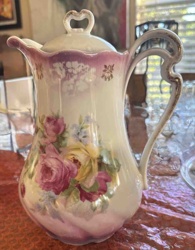
Antique Hand-Painted Porcelain Chocolate Pot

Antique Ceramics and Porcelain

AI Estimated Value

·Not an official valuation·Verify before acting

$125 - $225

As of May 30, 2026

AI Item Analysis

·AI can make mistakes·Verify before acting
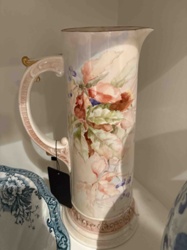
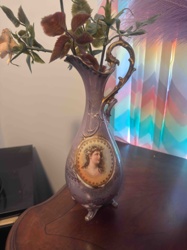
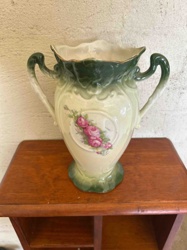
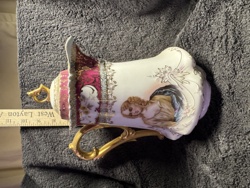
This is an antique, hand-painted porcelain tall pot, specifically identified as a chocolate pot or cocoa pot rather than a standard teapot due to its tall, slender cylindrical body and upright spout. The vessel features an octagonal or faceted body construction with a slightly flared base. It is crafted from white hard-paste porcelain with a smooth glaze. The decoration consists of delicate polychrome enamel hand-painting, depicting a landscape scene with blooming trees (likely cherry or plum blossoms), rolling hills, and marsh grass near the base. A decorative band encircles the rim, featuring a cross-hatched grey pattern interspersed with small red and blue floral motifs. The pot includes a high-set, ornate scroll handle with a distinctive thumb rest and a matching fitted lid topped with a looped finial. The finial shows traces of original gilding, though much of it has worn away over time. The painting style and form suggest a late 19th-century to early 20th-century origin, likely produced in Europe (Germany or France) or Japan (Nippon era) for the export market. The overall condition appears fair to good for its age, showing visible wear to the gilt edges and handle, and minor surface grime concentrated near the base and lid seams. There are no large chips or cracks visible in the primary view, though fine crazing or firing irregularities may be present upon close physical inspection.
AI Appraisal Report

·AI can make mistakes·Verify before acting
Based on my examination of the high-resolution images provided, I have assessed this octagonal porcelain chocolate pot. The piece exhibits the characteristics of late 19th-century 'Nippon' era export ware or perhaps a German blank (such as RS Prussia or Schlegelmilch) decorated for the Western market. The hand-painted landscape shows a delicate, unpretentious aesthetic common to the turn of the century. My physical observation via the photographs indicates a fair-to-good condition state; notably, there is significant thinning of the gilding on the finial and scroll handle, which is expected for a domestic piece of this age. The current market for Victorian-era chocolate pots has softened over the last decade, as younger collectors shift away from formal porcelain services. Comparables for unsigned or moderately decorated landscape pots typically realize between $100 and $250 at regional auctions. The rarity of this piece is considered low to moderate, as similar tall-form vessels were mass-produced for the growing cocoa-drinking middle class of the era. Please note that a definitive valuation is limited by the digital nature of this inspection. I cannot verify the presence of a maker’s mark on the base, nor can I check for 'ping' resonance to rule out hairline fractures or professional restorations. To fully authenticate this item and potentially increase its valuation, an in-person examination is required to inspect the paste and glaze under UV light. Provenance documentation or a confirmed backstamp (e.g., Noritake or Royal Bonn) would significantly narrow the value range. This appraisal assumes the item is free of structural repairs and major chips.

Get your items appraised

Instant estimates of your treasures with AI-powered appraisals

Browse More Appraisals