From the user

What was submitted

Photo and notes provided by the user — not generated by AI

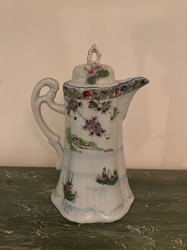
Submitted item photo
Submitted photo · May 15, 2026

User's notes

No additional notes provided.

AI analysis below

AI appraisal

AI analysis & estimate

AI-Generated · Verify before acting

Full Disclaimer

Everything below is generated by AI for informational purposes only. The AI may misidentify items or misattribute them (artist, maker, brand, designer, origin, era). This is not an official valuation and is not an authoritative claim about any person, brand, or rights holder — do not share or rely on it as a factual statement about a third party. Always consult qualified professionals before making financial decisions.

AI identification

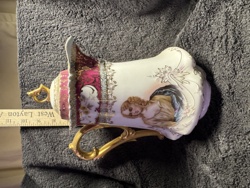
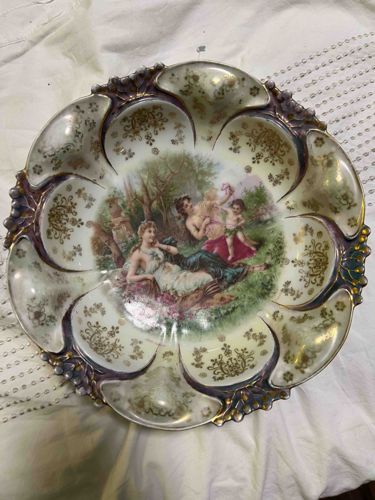
Victorian-Style Porcelain Centerpiece Bowl with Fragonard Courting Scene

Antique Ceramics and Porcelain

Estimated value

$125.00 - $225.00

As of May 15, 2026

Item analysis

This is an ornate circular porcelain centerpiece bowl, likely dating from the late 19th to early 20th century. The bowl features a deeply lobed and scalloped rim with relief-molded edge detailing finished in a purple and gold iridescent luster. The interior displays a central polychrome transfer-ware scene depicting a classical pastoral or romantic 'courting' motif inspired by Jean-Honoré Fragonard, featuring three figures (two women and one child) in an idyllic forest setting. The inner walls of the bowl are divided into eight segments, each accented with delicate gilded floral and scrollwork patterns against a cream-colored ground. The construction appears to be high-quality glazed porcelain or fine earthenware. Notable features include the heavy use of gilding and the iridescent 'pearlized' finish on the rim's elevated sections. Regarding condition, there is visible surface wear to the central imagery, particularly consistent with age and occasional use. Some minor gilding loss is evident along the high points of the scalloped edges, and a faint patina of dust or residue suggests the piece has been in storage. There are no conspicuous cracks or large chips visible in this view, though some crazing may be present upon closer tactile inspection. The overall craftsmanship suggests a European origin, likely German, Austrian, or French, consistent with the Rococo Revival style popular during the Victorian era.
Detailed appraisal report

I have conducted a visual examination of the Victorian-style porcelain centerpiece bowl. The item exhibits typical characteristics of late 19th-century Rococo Revival wares, likely produced in Germany or Austria (e.g., RS Prussia or similar factories). The central decal—a courting scene in the style of Fragonard—and the iridescent luster glazes were popular decorative techniques targeting the upper-middle-class market of that era. The condition appears consistent with age; however, the visible wear to the central transfer-ware and thinning of the gilding on the scalloped edges suggest frequent handling and past use as a functional piece rather than a strictly cabinet display. The lack of visible structural cracks or major chips is a positive factor for its value, though the potential for fine crazing remains a concern for long-term stability. Market demand for late-Victorian transfer-ware has softened significantly in recent years as younger collectors shift toward more minimalist aesthetics. This has created a high supply of similar European porcelain bowls, keeping prices relatively modest. Comparables often sell at local estate auctions or online marketplaces within the $150 range unless backed by a prestigious maker’s mark like Meissen or Sevres. Limitations of this appraisal include the inability to inspect the underside for hallmarks or signatures, which are critical for definitive manufacturer identification. A physical inspection is required to check for 'ringing' (sonic resonance to detect hidden cracks), professional restorations, or tactile evidence of chemical composition. Full authentication would require verifying the backstamp and cross-referencing factory records or catalogs. Without a physical sighting of a mark, this valuation reflects 'decorative value' rather than 'fine art' provenance.

Get your items appraised

Instant estimates of your treasures with AI-powered appraisals

Browse More Appraisals