AI Appraisal Estimate

AI-generated estimates · not official valuations

From the user

What was submitted

Photo and notes provided by the user — not generated by AI

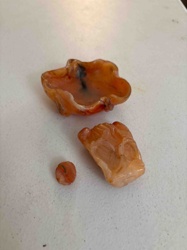
Submitted item photo
Submitted photo · May 25, 2026

User's notes

No additional notes provided.

AI analysis below

AI appraisal

AI analysis & estimate

AI-Generated · Verify before acting

Everything below is generated by AI for informational purposes only. AI can make mistakes — the AI may misidentify items or misattribute them (artist, maker, brand, designer, origin, era). This is not an official valuation and should not be used for insurance, sale, tax, estate, legal, or lending purposes — or any decision requiring a certified appraisal. It is not an authoritative claim about any person, brand, or rights holder — do not share or rely on it as a factual statement about a third party. Always consult qualified professionals before making financial decisions.

Read the full disclaimer

AI Identification

·Not independently authenticated·Verify before acting

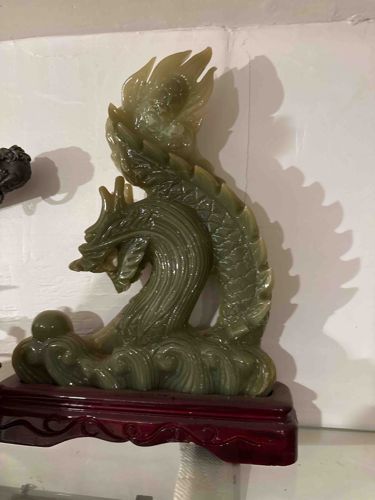
Chinese Hand-Carved Jadeite Dragon Sculpture with Wooden Stand

Asian Antiques & Decorative Arts

AI Estimated Value

·Not an official valuation·Verify before acting

$1,200 - $1,800

As of May 25, 2026

AI Item Analysis

·AI can make mistakes·Verify before acting
This is a detailed hand-carved sculpture depicting a traditional Chinese dragon rising from crashing waves, mounted on a custom-fitted rosewood-finished wooden base. The sculpture is crafted from a translucent to semi-opaque mineral, likely a form of jadeite or bowenite serpentine, exhibiting a range of sage and moss-green hues with subtle yellowish undertones. The dragon features intricate scale work along its serpentine body, which curves upward into a flaming tail characteristic of late 20th-century artisanal Chinese carvings. The head of the dragon is sculpted in a classic profile with prominent horns, almond-shaped eyes, and a flared mane. Below the creature, the turbulent water is rendered with rhythmic, stylized swirling foam. The piece shows high levels of craftsmanship, particularly in the deep relief and pierced sections that allow light to pass through the thinner segments of the stone. The surface appears to have a high-luster polish. In terms of condition, the sculpture appears well-maintained with no visible major chips or structural fractures, though some natural inclusions and internal fissures are visible within the stone. These are intrinsic to the material and not damage. There is light dust accumulation in the crevices of the carvings. The wooden stand features scrolled cloud-motif carvings and appears to be in good condition with minor surface wear on the finish. This piece is estimated to be from the mid-to-late 20th century, likely produced in a regional Chinese carving center for export or high-end decoration.
AI Appraisal Report

·AI can make mistakes·Verify before acting
Based on my visual examination of the Chinese hand-carved dragon sculpture, I note a high degree of artisanal skill in its execution. The piece, likely a nephrite or high-quality bowenite serpentine, displays the classic sage-to-moss green coloration sought after in mid-to-late 20th-century decorative carvings. The depth of the relief and the intricate piercing of the stone demonstrate significant labor and technical proficiency. The condition appears excellent; the internal fissures noted are consistent with natural mineral formations rather than impact damage. The custom rosewood-finished stand significantly enhances its presentation value. Currently, the market for large, well-executed late 20th-century Chinese carvings remains stable, particularly for items depicting auspicious symbols like the dragon. While not an ancient artifact, its value is driven by craftsmanship and the scale of the material. However, a definitive valuation is limited by the digital format. In-person inspection is required to confirm the specific mineral identity (distinguishing between jadeite, nephrite, and bowenite) and to check for hidden structural repairs or polymer injections. I would also need to examine the stone under UV light to detect potential dye treatments which would negatively impact value. Provenance documentation or a purchase receipt from a recognized export guild would further solidify the appraisal. For insurance purposes, this item represents a fine example of modern lapidary art.

Get your items appraised

Instant estimates of your treasures with AI-powered appraisals

Browse More Appraisals