AI Appraisal Estimate

AI-generated estimates · not official valuations

From the user

What was submitted

Photo and notes provided by the user — not generated by AI

Submitted item photo
Submitted photo · May 25, 2026

User's notes

Cloisonné

AI analysis below

AI appraisal

AI analysis & estimate

AI-Generated · Verify before acting

Everything below is generated by AI for informational purposes only. AI can make mistakes — the AI may misidentify items or misattribute them (artist, maker, brand, designer, origin, era). This is not an official valuation and should not be used for insurance, sale, tax, estate, legal, or lending purposes — or any decision requiring a certified appraisal. It is not an authoritative claim about any person, brand, or rights holder — do not share or rely on it as a factual statement about a third party. Always consult qualified professionals before making financial decisions.

Note

This analysis also relies on unverified notes provided by the user, which may be incomplete or inaccurate and could affect the result.

Read the full disclaimer

AI Identification

·Not independently authenticated·Verify before acting

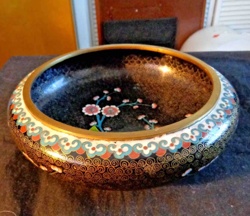
Vintage Chinese Black Ground Cloisonné Floral Vase

Asian Antiques / Decorative Arts

AI Estimated Value

·Not an official valuation·Verify before acting

$450 - $650

As of May 25, 2026

AI Item Analysis

·AI can make mistakes·Verify before acting
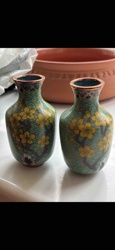
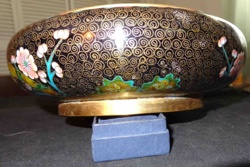
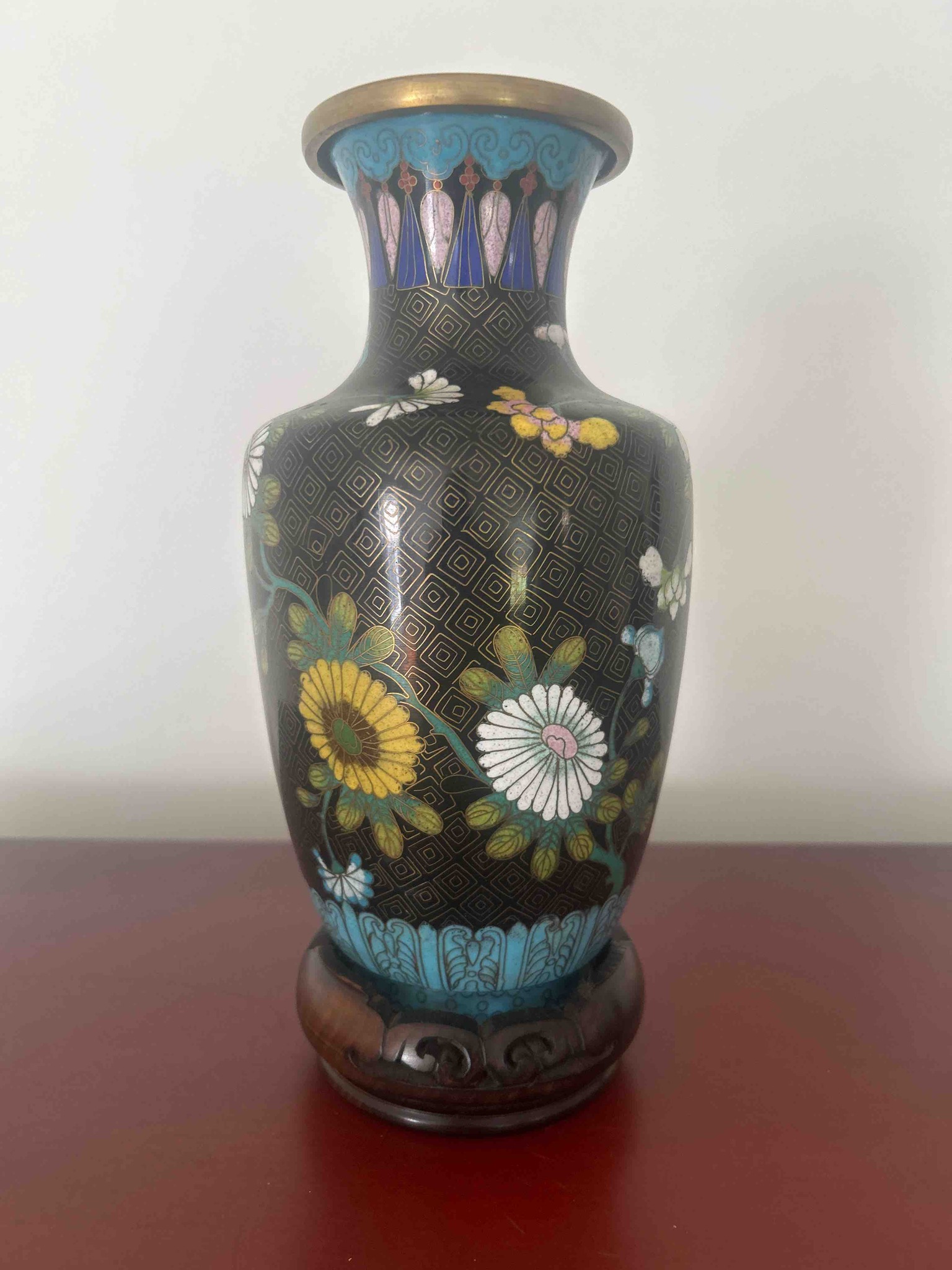
This is a mid-20th-century Chinese cloisonné enamel vase featuring a classic baluster shape with an elegant flared rim and a narrow neck. The piece is constructed on a brass base, visible at the rim and foot, and is decorated using the 'wire-cell' técnica. The primary background is a rich black enamel filled with a continuous gold-toned wire fret or 'diamond' geometric pattern. Over this background are meticulously detailed floral motifs, including large yellow and white chrysanthemums, blooming branches, and various leaf clusters in shades of green and light blue. The neck is adorned with a stylized fringe or tassel motif in shades of cobalt blue, lavender, and pink, topped with a ruyi-head cloud border under the rim. The base of the vase features a turquoise cloud-scroll border. The vase sits upon a carved dark wood stand, likely rosewood or similar hardwood, featuring openwork scrollwork. In terms of condition, the enamel appears largely intact with a glossy finish, though fine surface scratches and minor pitting typical of mid-century production are visible upon close inspection. The brass rim shows a soft aged patina. This style is characteristic of export wares produced in the Republic period or early People's Republic of China, demonstrating skilled craftsmanship through the complex layering of wires and vibrant mineral-based enamels.
AI Appraisal Report

·AI can make mistakes·Verify before acting
Based on my examination of the high-resolution images, this vase is a fine example of mid-20th-century Chinese export cloisonné. The baluster form is well-proportioned, and the use of the black 'wan' character pattern (thunder-cell motif) provides a sophisticated backdrop for the chrysanthemum and botanical motifs. The level of detail in the wirework—specifically the layering of green and blue enamels in the foliage—suggests a production date in the Republic period (1912-1949) or early PRC (1950s). The inclusion of the original carved wood openwork stand adds significant decorative value. From a condition standpoint, the piece shows minor pitting and typical manufacturing 'pinholes,' which are common in this period. The brass oxidation is consistent with natural aging. Market demand for high-quality export cloisonné remains stable; collectors prioritize these larger, more intricate examples over modern factory-made reproductions. Comparables for similar 10–12 inch vases with intricate floral designs typically realize between $400 and $700 at auction. Authenticity is assessed visually based on wire gauge and enamel saturation. However, image analysis has limitations. A definitive valuation would require an in-person physical inspection to check for 'invisible' restoration (such as epoxy fills), weight-bearing tests to verify the thickness of the brass substrate, and a review of provenance. Without a visible 'Jingfa' mark or other workshop stamp on the base, its attribution relies on stylistic analysis alone. Scientific testing, such as X-ray fluorescence (XRF) to analyze the metallurgical composition of the brass or mineral testing of the turquoise pigments, would be required to rule out late-20th-century revivals.

Get your items appraised

Instant estimates of your treasures with AI-powered appraisals

Browse More Appraisals