AI estimate as of September 27, 2026 · verify with a professional before acting
AI-Generated · Verify before acting
Everything on this page is generated by AI for informational purposes only. AI can make mistakes — the AI may misidentify items or misattribute them (artist, maker, brand, designer, origin, era). This is not an official valuation and should not be used for insurance, sale, tax, estate, legal, or lending purposes — or any decision requiring a certified appraisal. It is not an authoritative claim about any person, brand, or rights holder — do not share or rely on it as a factual statement about a third party. Always consult qualified professionals before making financial decisions.
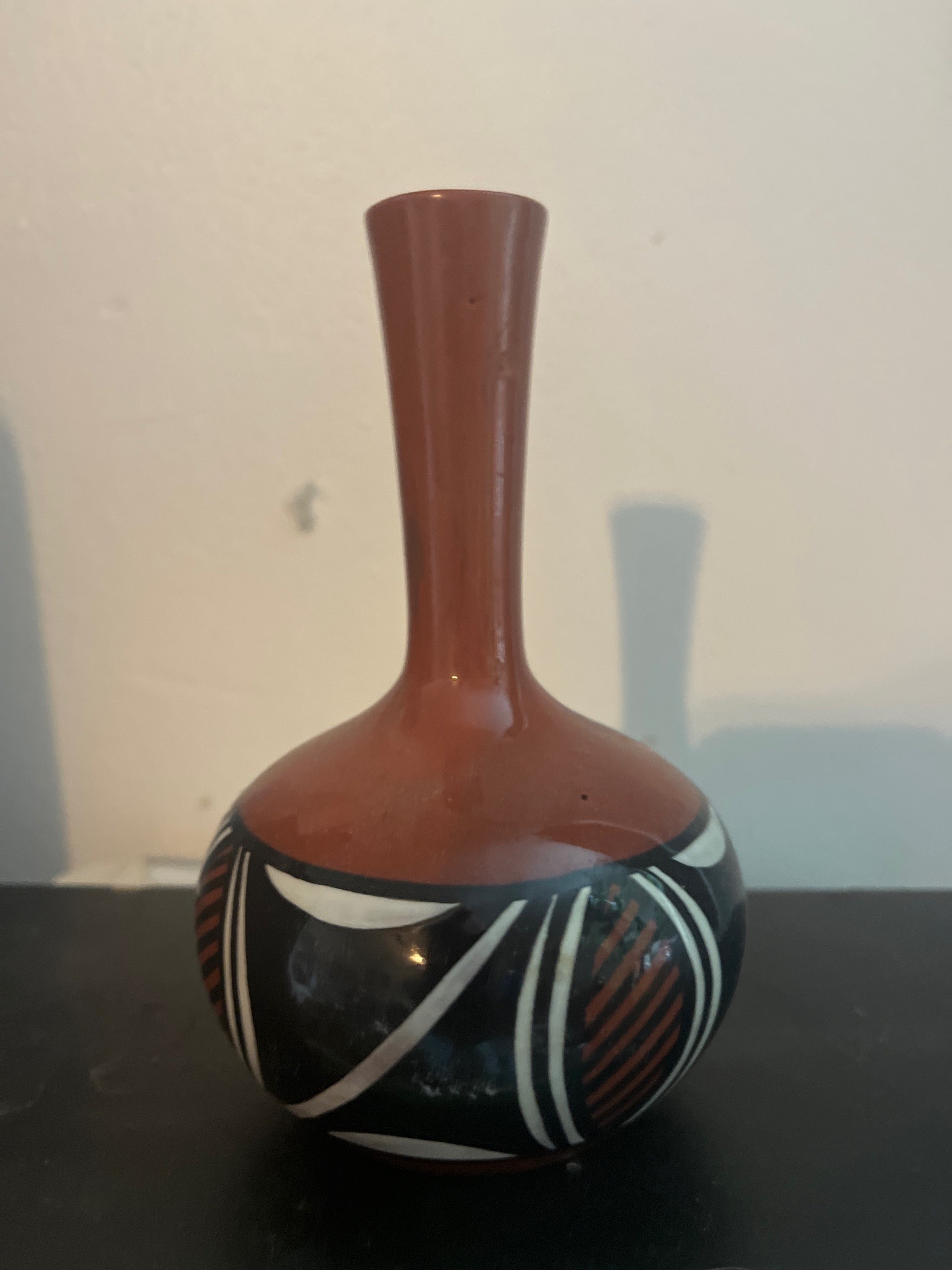
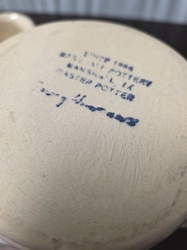
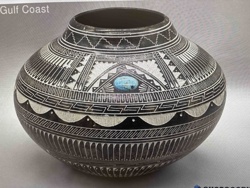
This is a hand-formed pottery vase featuring a bulbous, rounded body and a long, slender cylindrical neck with a slightly flared rim. The upper portion and neck of the vessel are coated in a smooth reddish-brown slip, while the lower body showcases a striking geometric design executed in a palette of black, white, and rust-colored linear patterns. The surface displays a polished or semi-gloss finish. There are minor surface blemishes and faint wear visible upon close inspection, consistent with handling over time. The identification of this object is strictly based on its visual characteristics as a decorative ceramic vessel, and no maker's mark, signature, or specific tribal attribution is directly readable in the provided image. The piece exhibits stylistic traits reminiscent of Southwestern Native American pottery traditions, though its exact origin, age, and method of manufacture remain unverified.
AI Appraisal Report
Based on what I can see in the provided image, this hand-formed pottery vase exhibits stylistic traits reminiscent of Southwestern Native American pottery traditions, featuring a bulbous body, a slender cylindrical neck, and geometric black, white, and rust-colored linear patterns. However, I can't verify from a photo whether the attribution is correct, as no maker's mark, signature, or specific tribal attribution is directly readable, and the exact origin, age, and method of manufacture remain unverified. I am treating the potential Southwestern style as a working hypothesis only. The surface displays minor blemishes and faint wear consistent with handling over time. For the purposes of this estimate, assuming the stylistic attribution is correct, an item of this type typically commands a market range of $300 to $600, driven by general collector demand for decorative ceramic vessels with this aesthetic. I would need physical inspection to confirm material composition, technique, and age. Furthermore, if this piece turns out to be a reproduction, modern replica, copy, or simply made in the style of Southwestern pottery rather than an authentic period piece, the value would be substantially lower, likely dropping to the $50-$150 decorative range. To move beyond an assumption and establish greater confidence in the item's nature, an in-person examination by a qualified specialist, detailed provenance documentation, and potential scientific testing or expert appraisal would be required.