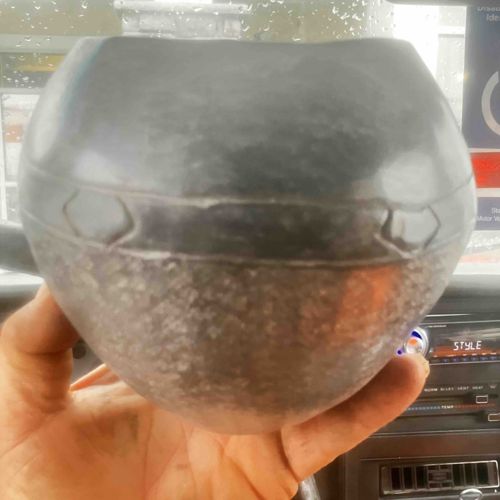
Pueblo Black-on-Black Polished Pottery Jar
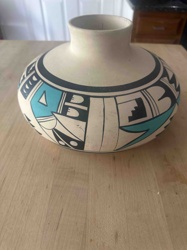
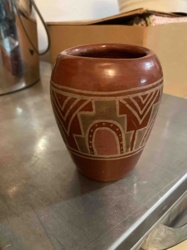
This is a hand-coiled, pit-fired blackware ceramic jar, characteristic of the San Ildefonso or Santa Clara Pueblo traditions of New Mexico. The vessel features a classic bulbous body with a tapered rim and a round base. It is constructed from indigenous clay and finished using two distinct surface techniques: a highly burnished, obsidian-like polished upper and lower section, divided by a matte, textured decorative band around the waist. This band is embellished with carved geometric motifs, including double-diamond or avian-inspired shapes, which are characteristic of 20th-century Native American pottery styles popularized by artists like Maria Martinez. The bottom half appears to have a stippled or textured finish, possibly achieved through dabbing or a specific slip application, creating a striking visual contrast with the smooth, mirror-like polish of the shoulder. The deep black color is the result of a reduction firing process where oxygen is smothered from the kiln, forcing carbon into the clay body. There is visible surface wear consistent with age, including minor scuffing and small abrasions to the burnished areas, though the overall structural integrity appears sound without major cracks or chips visible from the primary angle. This piece likely dates from the mid-to-late 20th century, showcasing high-level craftsmanship in the symmetry of the hand-built form and the depth of the finish.
AI-Generated Appraisal Disclaimer
Estimated Value
$1,200 - $1,800
Basic Information
Category
Native American Art & Pottery
Appraised On
March 8, 2026
Estimated Value
$1,200 - $1,800
Item Description
This is a hand-coiled, pit-fired blackware ceramic jar, characteristic of the San Ildefonso or Santa Clara Pueblo traditions of New Mexico. The vessel features a classic bulbous body with a tapered rim and a round base. It is constructed from indigenous clay and finished using two distinct surface techniques: a highly burnished, obsidian-like polished upper and lower section, divided by a matte, textured decorative band around the waist. This band is embellished with carved geometric motifs, including double-diamond or avian-inspired shapes, which are characteristic of 20th-century Native American pottery styles popularized by artists like Maria Martinez. The bottom half appears to have a stippled or textured finish, possibly achieved through dabbing or a specific slip application, creating a striking visual contrast with the smooth, mirror-like polish of the shoulder. The deep black color is the result of a reduction firing process where oxygen is smothered from the kiln, forcing carbon into the clay body. There is visible surface wear consistent with age, including minor scuffing and small abrasions to the burnished areas, though the overall structural integrity appears sound without major cracks or chips visible from the primary angle. This piece likely dates from the mid-to-late 20th century, showcasing high-level craftsmanship in the symmetry of the hand-built form and the depth of the finish.
Get Your Items Appraised
Instant estimates of your treasures with AI-powered instant appraisals