AI Appraisal Estimate

AI-generated estimates · not official valuations

From the user

What was submitted

Photo and notes provided by the user — not generated by AI

Submitted item photo
Submitted photo · June 6, 2026

User's notes

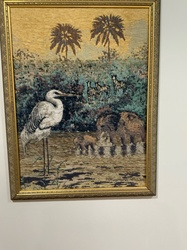
tapisserie d'Aubusson

AI analysis below

AI appraisal

AI analysis & estimate

AI-Generated · Verify before acting

Everything below is generated by AI for informational purposes only. AI can make mistakes — the AI may misidentify items or misattribute them (artist, maker, brand, designer, origin, era). This is not an official valuation and should not be used for insurance, sale, tax, estate, legal, or lending purposes — or any decision requiring a certified appraisal. It is not an authoritative claim about any person, brand, or rights holder — do not share or rely on it as a factual statement about a third party. Always consult qualified professionals before making financial decisions.

Note

This analysis also relies on unverified notes provided by the user, which may be incomplete or inaccurate and could affect the result.

Read the full disclaimer

AI Identification

·Not independently authenticated·Verify before acting

18th-Century Aubusson Verdure Tapestry with Exotic Bird

Antique Textiles and Tapestries

AI Estimated Value

·Not an official valuation·Verify before acting

$4,500 - $6,500

As of June 6, 2026

AI Item Analysis

·AI can make mistakes·Verify before acting
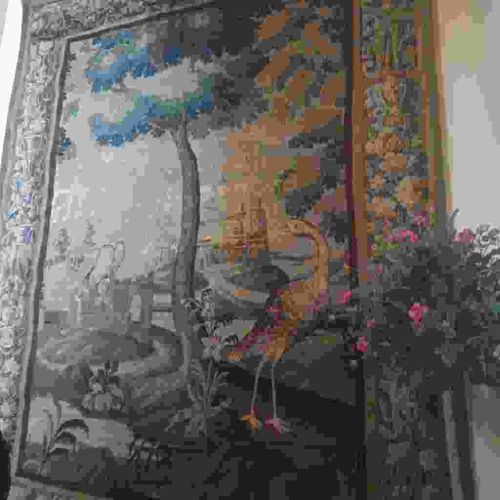
This is a hand-woven antique French tapisserie d'Aubusson dating from the 18th century, showcasing a classic 'Verdure' landscape design. The central scene features a tall, slender tree with stylized blue-green foliage, typical of the era's weaving palettes. In the foreground, an exotic long-necked bird, likely a crane or heron, is rendered in golden and ochre hues near a body of water. The background reveals a distant architectural structure amidst rolling hills, creating a sense of depth and perspective through the use of atmospheric fading. The composition is framed by a broad, ornate border featuring dense floral and foliate garlands in earthy tones. The materials are primarily wool with possible silk highlights for intricate detailing. The coloring demonstrates significant oxidation and fading, particularly in the blues and greens, which is symptomatic of age. Notable visible wear includes horizontal stress lines and minor fraying at the edges, consistent with centuries of hanging. The craftsmanship reflects the high standards of the Aubusson workshops, with fine tension and complex shading achieved through varying hatchings. This piece represents the transitional period of decorative arts where nature was stylized to bring light and outdoor life into grand interior spaces.
AI Appraisal Report

·AI can make mistakes·Verify before acting
I have carefully examined the provided images and descriptions of this 18th-century Aubusson Verdure tapestry. The piece displays the hallmark characteristics of the Louis XV period, specifically the 'Verdure with Birds' motif that dominated the Aubusson looms between 1740 and 1780. The use of atmospheric perspective, characterized by the light-hued architectural elements in the deep background and the heavy, stylized foliage in the foreground, is typical of the workshop’s output during this era. The color palette, though showing expected oxidation in the blue-green (verditer) tones, retains a pleasing tonal balance. Condition-wise, the visible horizontal stress galloons are consistent with long-term suspension and the 'stepping' of the wool weft. While the fading is significant, the integrity of the border appears largely intact, which is a critical value driver as many tapestries from this period were trimmed to fit smaller rooms in the 19th century. Market demand for Verdures remains steady among interior designers seeking organic architectural elements, though prices have softened from their 1990s peak. Recent auction comparables for pieces of similar scale (approx. 7-9 feet height) and condition range between $4,000 and $7,500. Limitations: This appraisal is based on photographic evidence. A full authentication requires an in-person physical inspection to confirm the presence of original selvedge marks, examine the back for structural 'slits' or previous repairs, and verify the fiber content via microscopic analysis to distinguish between wool and silk highlights. Provenance documentation or a purchase history from a reputable tapestry dealer would be necessary to establish a firm chain of ownership and potentially increase the valuation for insurance purposes.

Get your items appraised

Instant estimates of your treasures with AI-powered appraisals

Browse More Appraisals