AI Appraisal Estimate

AI-generated estimates · not official valuations

From the user

What was submitted

Photo and notes provided by the user — not generated by AI

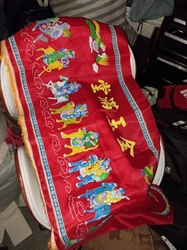
Submitted item photo
Submitted photo · May 28, 2026

User's notes

No additional notes provided.

AI analysis below

AI appraisal

AI analysis & estimate

AI-Generated · Verify before acting

Everything below is generated by AI for informational purposes only. AI can make mistakes — the AI may misidentify items or misattribute them (artist, maker, brand, designer, origin, era). This is not an official valuation and should not be used for insurance, sale, tax, estate, legal, or lending purposes — or any decision requiring a certified appraisal. It is not an authoritative claim about any person, brand, or rights holder — do not share or rely on it as a factual statement about a third party. Always consult qualified professionals before making financial decisions.

Read the full disclaimer

AI Identification

·Not independently authenticated·Verify before acting

Framed Burmese Kalaga Tapestry

Asian Art & Antiques / Textiles

AI Estimated Value

·Not an official valuation·Verify before acting

$400 - $600

As of May 28, 2026

AI Item Analysis

·AI can make mistakes·Verify before acting
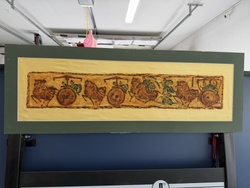
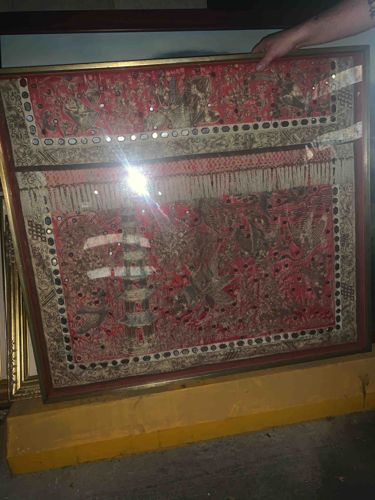
This is a large, rectangular Burmese 'Kalaga' tapestry, a traditional form of heavily embroidered textile art. The piece features a vibrant red velvet or felt background adorned with intricate gold-toned metallic thread (shwe chi doe), sequins, and small inset glass beads or 'gemstones'. The composition is divided into two main panels: a smaller upper horizontal band and a larger primary lower section, both enclosed within ornate borders featuring stylized geometric and floral motifs. Centrally positioned in the lower panel is a multi-tiered pagoda structure, flanked by dynamic figures likely depicting scenes from the Ramayana or Buddhist Jataka tales. The figures are rendered in high relief (sequins and padding), a hallmark of the kalaga technique. The textile is housed in a simple, gold-toned metal or wood frame under glass. Regarding condition, there is notable white adhesive tape applied directly to the exterior of the glass in several places, which obscures and reflects light. The textile itself shows signs of age-appropriate fading and some potential loose threads or sequins, though the red pigment remains relatively saturated. The metallic threads exhibit a darkened patina. This piece likely dates from the mid-to-late 20th century and represents labor-intensive Burmese craftsmanship.
AI Appraisal Report

·AI can make mistakes·Verify before acting
I have conducted a visual appraisal of this Burmese Kalaga tapestry, likely dating from the mid-to-late 20th century. This piece exhibits the classic 'shwe chi doe' style, characterized by high-relief padded figures and intricate metallic threadwork. The composition is aesthetically strong, featuring a multi-tiered pagoda and mythic figures that appear to be consistent with traditional Jataka narratives. The use of glass beads and sequins adds significant texture and visual interest, which is highly sought after by collectors of Southeast Asian textiles. Regarding condition, the tapestry shows minor fading and patina on the threadwork typical of its age. However, the presence of adhesive tape on the glass suggests the frame may be damaged or the glass is loose, which presents a risk of acid migration or mechanical damage to the textile if not addressed. The market for mid-century Kalagas remains stable, though value is often capped by the high volume of these pieces produced for the export and tourist markets in the 1970s and 80s. Significant limitations exist with this digital appraisal. I cannot verify the material of the 'gemstones' or the specific metal content of the threads (which can range from copper to silver-gilt). A full authentication would require an in-person inspection to evaluate the backing for historical inscriptions, the internal stuffing (traditionally human hair or cotton), and a fiber analysis to confirm the velvet's composition. Provenance documentation would be necessary to elevate this from a decorative craft piece to a fine art investment. The current value reflects its decorative appeal and traditional craftsmanship.

Get your items appraised

Instant estimates of your treasures with AI-powered appraisals

Browse More Appraisals