These notes were written by the person who submitted this item. Appraiser.AI has not verified them, and the AI's identification and estimate may rely on them.
AI Estimated Value
Not an official valuation
$150-250
AI estimate as of June 12, 2025 · verify with a professional before acting
AI-Generated · Verify before acting
Everything on this page is generated by AI for informational purposes only. AI can make mistakes — the AI may misidentify items or misattribute them (artist, maker, brand, designer, origin, era). This is not an official valuation and should not be used for insurance, sale, tax, estate, legal, or lending purposes — or any decision requiring a certified appraisal. It is not an authoritative claim about any person, brand, or rights holder — do not share or rely on it as a factual statement about a third party. Always consult qualified professionals before making financial decisions.
This analysis also relies on unverified notes provided by the user, which may be incomplete or inaccurate and could affect the result.
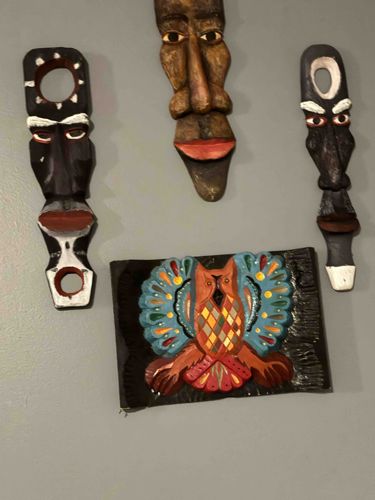
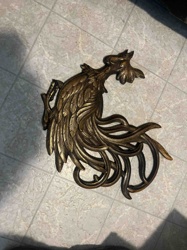
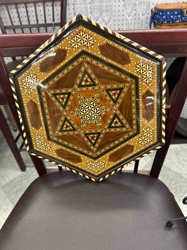
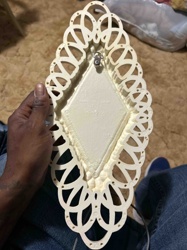
The item is a collection of three long, thin, carved wooden masks or figures and one rectangular piece with an owl motif, all intended for wall mounting. The masks are abstract and stylized, with exaggerated facial features, including prominent noses and lips. The central mask is a light brown wood tone with dark eyes and red lips. The masks on either side appear to be carved from a darker wood, painted black, with white and red accents. The far left mask has a circular opening near the top and white dots around it. All three masks show signs of wear and age, with some loss of paint and nicks in the wood, suggesting hand-carving. The rectangular piece below features a vibrantly painted owl with outstretched wings and tail feathers. The owl is rendered in shades of orange, red, and yellow with a diamond pattern on its chest. Its wings are stylized with layers of teal and blue feathers with yellow, red, and orange accents. The background is a textured black. This piece also appears to be painted wood. The overall style is folk art or tribal-inspired, likely handcrafted. The condition is consistent with display and age, showing a developed patina on the wood and visible paint wear.
AI Appraisal Report
I have examined the provided image of the Assorted Carved Wooden Wall Hangings, a collection of three carved masks and a rectangular owl motif piece. Based on the visual characteristics, the items appear to be handcrafted folk art or tribal-inspired pieces. The masks show wear consistent with age and handling, including nicks, paint loss, and a developed patina, suggesting authenticity as older, possibly vintage, handcrafted items rather than recent reproductions. The rectangular owl piece is more brightly painted but also exhibits the character of hand-painting and likely wood carving. The style is decorative and appealing to those interested in ethnic or folk art aesthetics.
The market for such decorative wooden folk art is modest but stable. Value is primarily driven by craftsmanship, aesthetic appeal, provenance (if known), and condition. Without maker's marks or a known artist/culture of origin, these pieces are generally valued as decorative objects. Comparables in online marketplaces for similar, unsigned carved wooden masks and folk art wall hangings suggest a moderate value range.
Demand is niche, primarily from collectors or individuals seeking unique decorative items. While handcrafted, these pieces don't appear to be rare museum-quality artifacts based on the image alone. Factors impacting value include their decorative appeal as a set, the age and patina supporting their vintage status, and the apparent handcraftsmanship.
Limitations in authenticity verification are significant from images alone. I cannot definitively determine the type of wood used, the age of the pieces, or confirm hand-carving versus machine assistance in fine details. In-person examination would allow for tactile assessment of the carving, wood grain, and paint application. Provenance documentation linking the items to a specific artist, culture, or region, or establishing their history, would significantly enhance their value and aid in authentication. Scientific testing, such as carbon dating or paint analysis, could provide further evidence of age and materials but is typically not cost-effective for items in this value range.