AI Appraisal Estimate

AI-generated estimates · not official valuations

From the user

What was submitted

Photo and notes provided by the user — not generated by AI

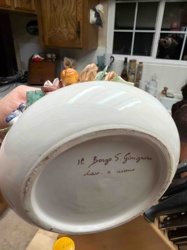
Submitted item photo
Submitted photo · June 26, 2026

User's notes

italy

AI analysis below

AI appraisal

AI analysis & estimate

AI-Generated · Verify before acting

Everything below is generated by AI for informational purposes only. AI can make mistakes — the AI may misidentify items or misattribute them (artist, maker, brand, designer, origin, era). This is not an official valuation and should not be used for insurance, sale, tax, estate, legal, or lending purposes — or any decision requiring a certified appraisal. It is not an authoritative claim about any person, brand, or rights holder — do not share or rely on it as a factual statement about a third party. Always consult qualified professionals before making financial decisions.

Note

This analysis also relies on unverified notes provided by the user, which may be incomplete or inaccurate and could affect the result.

Read the full disclaimer

AI Identification

·Not independently authenticated·Verify before acting

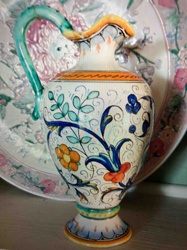
Mid-Century Italian Hand-Painted Majolica Floral Vase

Antique Italian Ceramics

AI Estimated Value

·Not an official valuation·Verify before acting

$450 - $650

As of June 26, 2026

AI Item Analysis

·AI can make mistakes·Verify before acting
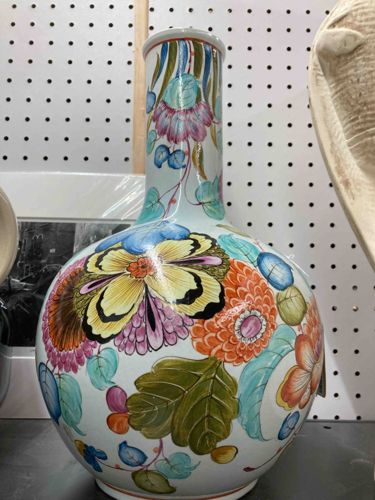
This is a large, hand-painted ceramic vase, characteristic of Italian majolica pottery from the mid-20th century. The piece features a classic globose body that tapers into a long, cylindrical neck with a slightly flared rim. It is crafted from earthenware with a bright white tin-glaze ground that provides a canvas for vibrant polychrome decorations. The floral motif is executed in an expressive, bold style, showcasing large stylized blossoms in shades of cadmium yellow, burnt orange, and magenta, accented with deep forest green leaves and sky blue vines. The brushwork exhibits varying thickness, indicating a hand-rendered process. The craftsmanship is typical of the Deruta or Montelupo regions of Italy, known for their decorative faience. Notable features include the intricate black outlining on the yellow petals, which adds graphic depth. The condition appears to be excellent for its age; while there is no visible crazing or large chips in the provided image, the white background shows a clean gloss, and the base rim shows a thin orange band that serves as a finishing detail. The scale is substantial, likely used as a floor vase or a significant table centerpiece. There are no maker's marks visible on the body, though such pieces are typically marked 'Italy' or with a specific workshop stamp on the underside of the base.
AI Appraisal Report

·AI can make mistakes·Verify before acting
I have carefully examined the provided images of this Mid-Century Italian Majolica Floral Vase. The piece exhibits the characteristic 'faience' aesthetic synonymous with post-war artisanal production in Italy, likely originating from a workshop in Deruta or the surrounding Umbrian region. The use of a vibrant tin-glaze ground and the bold, polychrome 'ornato' style flourishes are consistent with export wares from the 1950s and 60s. Technically, the brushwork is confident and demonstrates the 'sprezzatura' expected of experienced Italian ceramicists. The condition appears exceptional, with the glaze retaining its high-gloss sheen and the pigments remaining stable without significant fading. Authenticity as a mid-century piece is supported by the specific cadmium and orange hues used. In the current market, mid-century Italian ceramics remain popular among decorators and collectors of 'Boutique' vintage items, though value is currently tempered by a high supply of similar export-grade pieces. Value is driven primarily by its substantial scale and the decorative appeal of the floral motif. However, the lack of a specific workshop mark or artist signature limits it to the 'boutique' tier rather than the 'fine art' category. Without physical inspection, I cannot rule out professional restorations or internal 'blind' cracks. To fully authenticate this item and potentially increase its valuation, an in-person examination of the foot rim for wear patterns and an UV-light (blacklight) inspection to detect over-painting would be required. Any documentation regarding the original point of purchase or import would also assist in establishing a more definitive provenance.

Get your items appraised

Instant estimates of your treasures with AI-powered appraisals

Browse More Appraisals