Esperia Italian Ceramic Base
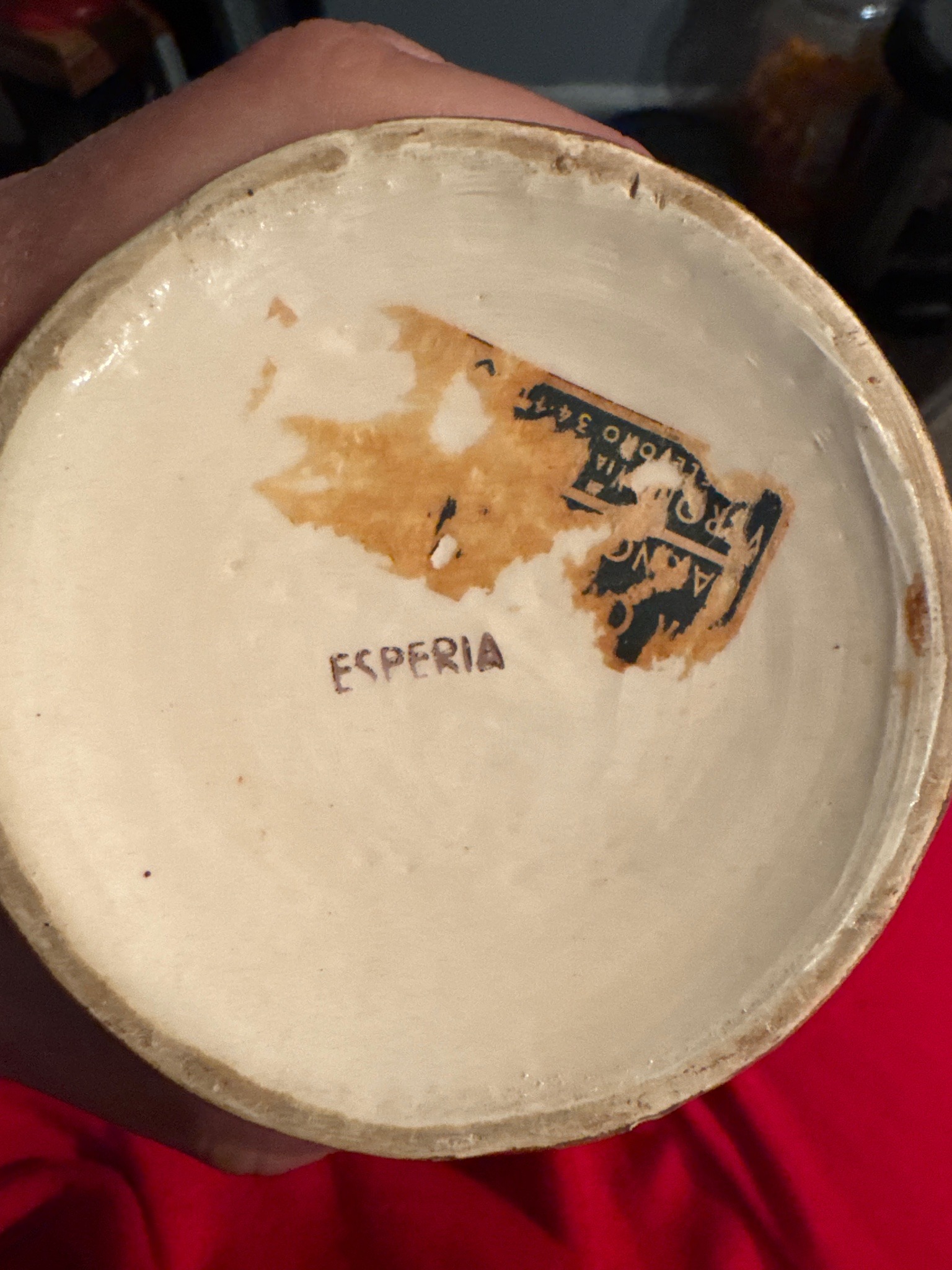
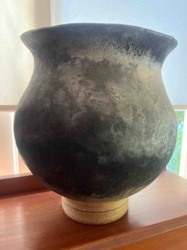
This is the underside of a ceramic item, likely a vase, pitcher, or bowl, featuring a recessed base with a partially glazed surface. The piece is marked with the word 'ESPERIA' in a dark, stamped or hand-painted block font, which indicates the item is part of the Esperia line of Italian art pottery, typically associated with Mid-Century Modern designs from the mid-20th century (circa 1950s-1960s). The ceramic body appears to be a light cream or off-white earthenware or stoneware. A significant feature is a largely damaged black and gold foil or paper label adhering to the center, which originally contained manufacturer and location details, specifically referencing 'ITALIA' and a location likely in the Tuscany region. The base shows visible signs of age and wear, including significant adhesive residue and paper loss from the labels, as well as typical shelf wear along the unglazed circular rim. The irregular texture of the glaze on the bottom suggests a handcrafted or semi-industrial production typical of Italian workshops of that era. The quality is indicative of decorative export ware that combined traditional Italian ceramic techniques with modern aesthetics.
AI-Generated Appraisal Disclaimer
Estimated Value
$45-85
Basic Information
Category
Art Pottery / Ceramics
Appraised On
May 6, 2026
Estimated Value
$45-85
Item Description
This is the underside of a ceramic item, likely a vase, pitcher, or bowl, featuring a recessed base with a partially glazed surface. The piece is marked with the word 'ESPERIA' in a dark, stamped or hand-painted block font, which indicates the item is part of the Esperia line of Italian art pottery, typically associated with Mid-Century Modern designs from the mid-20th century (circa 1950s-1960s). The ceramic body appears to be a light cream or off-white earthenware or stoneware. A significant feature is a largely damaged black and gold foil or paper label adhering to the center, which originally contained manufacturer and location details, specifically referencing 'ITALIA' and a location likely in the Tuscany region. The base shows visible signs of age and wear, including significant adhesive residue and paper loss from the labels, as well as typical shelf wear along the unglazed circular rim. The irregular texture of the glaze on the bottom suggests a handcrafted or semi-industrial production typical of Italian workshops of that era. The quality is indicative of decorative export ware that combined traditional Italian ceramic techniques with modern aesthetics.
Get Your Items Appraised
Instant estimates of your treasures with AI-powered instant appraisals