AI identification & appraisal estimate

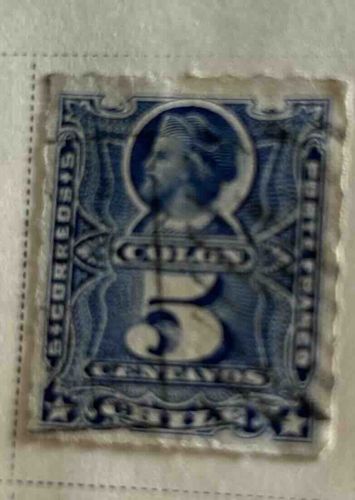
Spanish Colonies 5 Centavos Postage Stamp, depicting Christopher Columbus (Colon)

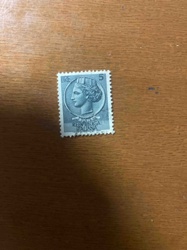
Submitted photo of Spanish Colonies 5 Centavos Postage Stamp, depicting Christopher Columbus (Colon)
Photo submitted by the user — not generated by AI

AI Estimated Value

Not an official valuation

$50 - $75

AI estimate as of November 9, 2025 · verify with a professional before acting

AI-Generated · Verify before acting

Everything on this page is generated by AI for informational purposes only. AI can make mistakes — the AI may misidentify items or misattribute them (artist, maker, brand, designer, origin, era). This is not an official valuation and should not be used for insurance, sale, tax, estate, legal, or lending purposes — or any decision requiring a certified appraisal. It is not an authoritative claim about any person, brand, or rights holder — do not share or rely on it as a factual statement about a third party. Always consult qualified professionals before making financial decisions.

Read the full disclaimer

AI Item Analysis

This item is a historical postage stamp, likely originating from one of the Spanish Colonies, given the visible text 'S+CORREOS' (presumably 'Correos' for postal service) and 'Colon' with '5 Centavos'. The stamp is predominantly blue, featuring a portrait in a circular frame of a figure, most likely Christopher Columbus (Cristobal Colon), facing left, with a distinct forehead and facial hair. Below the portrait, the word 'COLON' is prominently displayed, followed by a large numeral '5' and 'CENTAVOS'. The design is intricate, characterized by detailed scrollwork and decorative elements framing the central image and text. Along the left edge, the partial vertical inscription 'S+CORREOS' is visible, suggesting a postal service identifier. The right edge shows a similar ornate border, but the text is less discernible. The overall construction appears to be machine-printed on standard stamp paper. The condition of the stamp exhibits clear signs of age and wear. The edges are roughly perforated, with some perforations missing or torn, particularly on the right side. The impression is somewhat faded and unevenly inked in areas, contributing to a slightly blurry appearance, especially around the finer details and text. There is also evidence of what might be a hinge mark or a small adhesive residue on the upper right corner, indicating it may have been previously mounted in an album. The blue color, while dominant, shows variations in intensity. Based on the denomination and the depiction of 'Colon', this stamp likely dates to the late 19th or early 20th century, a period when many Spanish colonies issued stamps featuring historical figures and local currency.
AI Appraisal Report

I have examined the provided image of a Spanish Colonies 5 Centavos Postage Stamp, depicting Christopher Columbus (Colon). Based on my visual assessment, the stamp appears to be authentic, consistent with issues from Spanish colonial territories in the late 19th or early 20th century. The 'S+CORREOS' inscription and 'COLON' with '5 CENTAVOS' denomination align with known philatelic examples. The condition of this particular stamp is fair to good. I observe significant wear, including unevenly perforated edges with some tears and missing perforations, particularly on the right side. The impression is somewhat faded and unevenly inked, affecting the clarity of fine details. A possible hinge mark or adhesive residue on the upper right corner suggests it was once mounted. These elements detract from its overall aesthetic appeal and collector value. In terms of market conditions, stamps from Spanish Colonies depicting Christopher Columbus are common, and this specific denomination in such condition does not represent a significant rarity. While there is a steady demand from general philatelists and specialists in Spanish colonial issues, the demand for stamps in this condition is moderate. Comparable sales for similar stamps in fair to good condition typically fall within the $50-$75 range. Factors impacting its value negatively are the condition issues (perforations, fading, potential hinge mark) and its relatively common nature. Limitations in authenticity verification exist from images alone. A physical in-person examination would be required to definitively confirm authenticity, assess paper type, watermarks (if any), printing methods, and precisely identify any repairs or alterations. Provenance documentation, though unlikely for a stamp of this value, could also add to its certainty. Scientific testing such as UV light examination for paper quality or ink composition could confirm its age and authenticity with higher precision, but these are typically reserved for higher-value items.

Keep exploring

More postage stamp appraisals

Get your items appraised

Instant AI-powered appraisal estimates from a photo

Browse More Appraisals