These notes were written by the person who submitted this item. Appraiser.AI has not verified them, and the AI's identification and estimate may rely on them.
AI Estimated Value
Not an official valuation
$100-150
AI estimate as of July 14, 2025 · verify with a professional before acting
AI-Generated · Verify before acting
Everything on this page is generated by AI for informational purposes only. AI can make mistakes — the AI may misidentify items or misattribute them (artist, maker, brand, designer, origin, era). This is not an official valuation and should not be used for insurance, sale, tax, estate, legal, or lending purposes — or any decision requiring a certified appraisal. It is not an authoritative claim about any person, brand, or rights holder — do not share or rely on it as a factual statement about a third party. Always consult qualified professionals before making financial decisions.
This analysis also relies on unverified notes provided by the user, which may be incomplete or inaccurate and could affect the result.
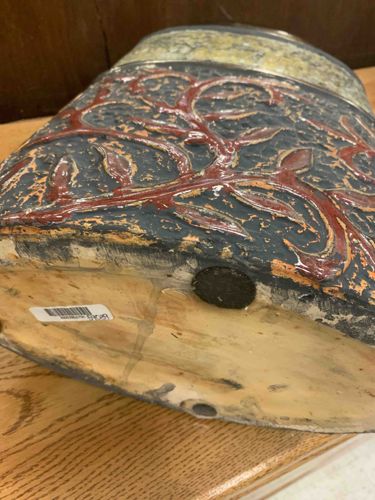
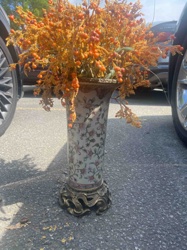
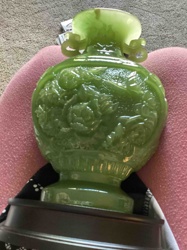
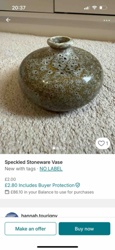
This is a ceramic vase, likely of a substantial size given the visible portion. The primary material is ceramic, with an aged and textured surface. The color palette observed in the image includes a dark, almost charcoal or black background that appears distressed, revealing hints of lighter, possibly ochre or natural ceramic tones beneath. Overlaid on this dark base is a striking decorative motif featuring organic, intertwining branches or vines with leaves, rendered in a bold, dark red or terracotta color. These decorative elements are raised, indicating an applied or molded relief work, enhancing the tactile quality of the piece. The top rim of the vase, visible at the far end, features a lighter, somewhat mottled greenish-yellow or aged gold glaze, contrasting with the body. There is significant wear and chipping visible along the base and edges, suggesting a notable patina from age and use, or possibly an intentional distressed finish to mimic antiquity. The exposed ceramic material at the base shows a natural, unglazed earthenware color, likely a light tan or cream. Two circular felt pads are adhered to the bottom for protection. A barcode sticker is also present on the base, likely from a resale or inventory system. The craftsmanship appears robust, though the visible wear indicates it has been handled over time. The style suggests an earthy, perhaps rustic or even an Arts and Crafts influence, potentially dating from the late 19th to mid-20th century, or a modern piece made to emulate that aesthetic.
AI Appraisal Report
Upon examining the provided image and description of this distressed ceramic vase, my assessment is as follows. The piece presents a visually compelling aesthetic, characterized by a dark, textured body contrasted with a bold red relief foliage motif. The form and decorative style are reminiscent of late 19th or early 20th-century Arts and Crafts pottery, or perhaps a later revival piece. The visible wear, including chipping and a significant patina, could be indicative of genuine age or an intentional distressed finish, a common technique in contemporary decorative arts. A key factor influencing value is the small barcode sticker visible on the base, which strongly suggests a retail or resale origin rather than a direct provenance from an artist or historical collection. This sticker, combined with the felt pads, often points to an item intended for the modern home decor market. Without a maker's mark or signature, attributing this vase to a specific, high-value studio like Grueby or Fulper is impossible. Therefore, it is most likely valued as a decorative object. Market comparables for well-made, unsigned decorative ceramic vases of this style and size from home decor retailers or contemporary artisans typically range from $75 to $200. The primary value lies in its decorative appeal rather than its historical or artistic rarity. For a definitive authentication, an in-person examination to identify any hidden maker's marks, material analysis to confirm age, and any provenance documentation would be required.