Carved Stone Vitarka Mudra Buddha Hand Sculpture
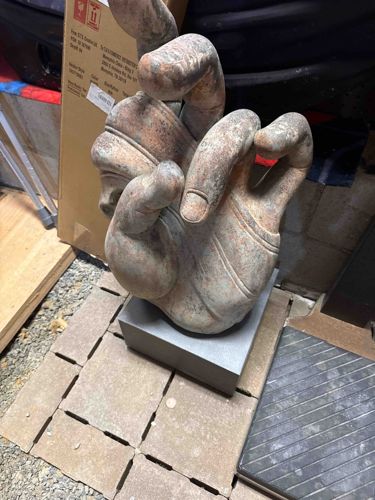
This is a large-scale sculptural representation of a Buddha's hand performing the Vitarka Mudra, symbolizing the transmission of knowledge and discussion. The sculpture is mounted on a solid, rectangular dark grey stone plinth. It appears to be carved from a natural stone, possibly a variegated limestone or sandstone, featuring a complex surface patina with shades of tan, terracotta, and soft grey. The craftsmanship is evident in the delicate rendering of the fingernails and the subtle anatomical folds at the joints and across the palm. The index finger and thumb meet to form a circle, while the other three fingers extend upward, though they show significant weathering and surface pitting. There is a visible horizontal line across the palm which may indicate a join or a structural reinforcement. The overall condition shows considerable age and outdoor exposure, evidenced by the mottled surface texture and erosion. Based on the stylistic cues and weathered appearance, this piece is likely a 20th-century garden or architectural element inspired by traditional Southeast Asian or Indian Buddhist iconography. The scale and weight suggest it was intended as a permanent decorative fixture.
AI-Generated Appraisal Disclaimer
Estimated Value
$450 - $700
Basic Information
Category
Art & Sculptures
Appraised On
January 10, 2026
Estimated Value
$450 - $700
Item Description
This is a large-scale sculptural representation of a Buddha's hand performing the Vitarka Mudra, symbolizing the transmission of knowledge and discussion. The sculpture is mounted on a solid, rectangular dark grey stone plinth. It appears to be carved from a natural stone, possibly a variegated limestone or sandstone, featuring a complex surface patina with shades of tan, terracotta, and soft grey. The craftsmanship is evident in the delicate rendering of the fingernails and the subtle anatomical folds at the joints and across the palm. The index finger and thumb meet to form a circle, while the other three fingers extend upward, though they show significant weathering and surface pitting. There is a visible horizontal line across the palm which may indicate a join or a structural reinforcement. The overall condition shows considerable age and outdoor exposure, evidenced by the mottled surface texture and erosion. Based on the stylistic cues and weathered appearance, this piece is likely a 20th-century garden or architectural element inspired by traditional Southeast Asian or Indian Buddhist iconography. The scale and weight suggest it was intended as a permanent decorative fixture.
Related Tags
Get Your Items Appraised
Instant estimates of your treasures with AI-powered instant appraisals