AI Appraisal Estimate

AI-generated estimates · not official valuations

From the user

What was submitted

Photo and notes provided by the user — not generated by AI

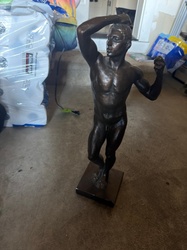
Submitted item photo
Submitted photo · June 10, 2026

User's notes

Unknown artist, unknown sculpture

AI analysis below

AI appraisal

AI analysis & estimate

AI-Generated · Verify before acting

Everything below is generated by AI for informational purposes only. AI can make mistakes — the AI may misidentify items or misattribute them (artist, maker, brand, designer, origin, era). This is not an official valuation and should not be used for insurance, sale, tax, estate, legal, or lending purposes — or any decision requiring a certified appraisal. It is not an authoritative claim about any person, brand, or rights holder — do not share or rely on it as a factual statement about a third party. Always consult qualified professionals before making financial decisions.

Note

This analysis also relies on unverified notes provided by the user, which may be incomplete or inaccurate and could affect the result.

Read the full disclaimer

AI Identification

·Not independently authenticated·Verify before acting

Mid-Century Modern Abstract Biomorphic Sculpture

Fine Art - Sculpture

AI Estimated Value

·Not an official valuation·Verify before acting

$450 - $700

As of June 10, 2026

AI Item Analysis

·AI can make mistakes·Verify before acting
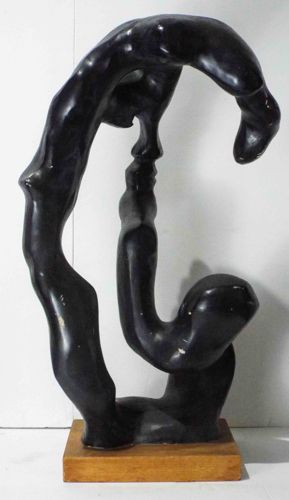
This item is an abstract, mid-century modern biomorphic sculpture mounted on a rectangular wooden base. The piece is characterized by its organic, fluid forms that evoke natural shapes without representing specific figures, a style popularized by artists like Henry Moore and Barbara Hepworth. Built from a dark material that appears to be cast resin, plaster with a dark patina, or potentially bronze-finished composite, it features monochromatic charcoal or deep black hues with a matte to slight satin finish. The construction utilizes negative space extensively, with a large central void enclosed by undulating, vine-like or anatomical appendages that rise and curve back toward the center. Physically, the sculpture exhibits a textured, slightly irregular surface that suggests it was hand-molded or hand-finished from a clay model. There are visible condition issues including several small nicks, light-colored scuffs, and chips along the outer edges of the dark material, particularly on the left vertical arm and the rounded 'head' shape on the lower right, revealing a lighter substrate beneath. These signs of wear suggest an age consistent with the mid-20th century (1950s-1970s). The wooden base shows mild darkening and a dry patina typical of aged oak or pine. No visible maker’s marks, signatures, or foundry stamps are discernible in the image, categorizing it as an unknown modernist work of decent craft quality, emphasizing balance and aesthetic tension through its complex silhouette.
AI Appraisal Report

·AI can make mistakes·Verify before acting
Based on my examination of this mid-century modern biomorphic sculpture, I have assessed it as an unattributed work from the mid-20th century (circa 1950–1970). The piece successfully captures the organic abstraction popularized by the Moore and Hepworth schools, utilizing negative space and fluid, 'bone-like' silhouettes that remain highly desirable in contemporary interior design markets. The dark patina and matte finish give it a sophisticated, architectural presence. Condition-wise, the visible scuffs and chips on the appendages reveal a lighter substrate, suggesting a cast plaster or resin-based composite rather than solid bronze. This significantly impacts the valuation, as composite works of unknown authorship typically command lower prices than cast metal. The absence of a signature or foundry mark further categorizes this as a 'decorative' rather than 'fine art' investment, though the quality of the form suggests a skilled hand. Comparables for unsigned modernist sculptures of this material and size typically range from $300 to $950 at auction, depending on the venue and buyer interest. Limitations: My assessment is based solely on digital imagery. A definitive appraisal would require a physical inspection to determine the material density and weight, which would clarify if the substrate is an exotic polymer or a traditional plaster. Furthermore, an in-person search for a faint signature under the base or within the crevices could potentially link this to a known regional modernist, which would triple its value. Provenance documentation, such as original gallery receipts or estate records, would be necessary to elevate this piece from an anonymous decorative object to a cataloged work of art. Without such evidence, the value remains centered on its aesthetic appeal and period-correct style.

Get your items appraised

Instant estimates of your treasures with AI-powered appraisals

Browse More Appraisals