AI Appraisal Estimate

AI-generated estimates · not official valuations

From the user

What was submitted

Photo and notes provided by the user — not generated by AI

Submitted item photo
Submitted photo · June 17, 2026

User's notes

No additional notes provided.

AI analysis below

AI appraisal

AI analysis & estimate

AI-Generated · Verify before acting

Everything below is generated by AI for informational purposes only. AI can make mistakes — the AI may misidentify items or misattribute them (artist, maker, brand, designer, origin, era). This is not an official valuation and should not be used for insurance, sale, tax, estate, legal, or lending purposes — or any decision requiring a certified appraisal. It is not an authoritative claim about any person, brand, or rights holder — do not share or rely on it as a factual statement about a third party. Always consult qualified professionals before making financial decisions.

Read the full disclaimer

AI Identification

·Not independently authenticated·Verify before acting

Late Victorian Rococo Revival Cast Gilt Metal Vanity Mirror

Antique Furniture and Decor

AI Estimated Value

·Not an official valuation·Verify before acting

$250 - $400

As of June 17, 2026

AI Item Analysis

·AI can make mistakes·Verify before acting
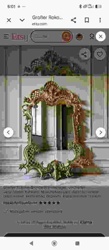
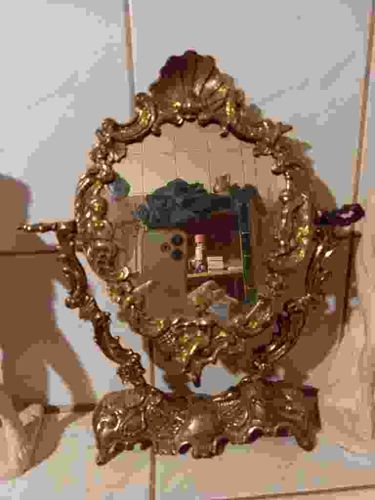
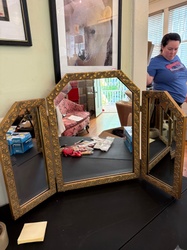
This is an ornate tabletop vanity mirror, frequently referred to as a cheval-style or psychedelic mirror, featuring a pivoting oval glass plate suspended between two decorative uprights. The frame is constructed from a heavy cast metal, likely brass or gilt zinc (spelter), exhibiting a deep gold or brassy finish. The design is heavily influenced by the Rococo Revival style, characterized by a prominent scallop-shell crest at the top, scrolling acanthus leaves, and elaborate open-work filigree. The oval mirror plate is held in place by two side-mount screws, allowing for vertical tilting. The base is equally decorative, featuring a wide, scalloped horizontal support with matching foliate motifs and small scroll-topped feet. In terms of condition, there appears to be significant oxidation and some loss of the original plating or gilding, resulting in a dark, aged patina in recessed areas. The mirror glass itself shows signs of desilvering or foxing around the edges, consistent with age. Based on the ornate casting and assembly style, this piece likely dates from the late 19th to early 20th century. The craftsmanship indicates a mass-produced but high-quality decorative object for the period, intended for an upper-class boudoir or dressing table.
AI Appraisal Report

·AI can make mistakes·Verify before acting
I have carefully examined the provided images of this Late Victorian Rococo Revival vanity mirror. The piece displays characteristic traits of late 19th-century mass-produced luxury, likely manufactured between 1880 and 1910. The heavy oxidation and desilvering of the mirror plate are consistent with its age and suggest the glass is original. While the casting is intricate, the visible wear to the gilt/spelter finish indicates it was a consumer-grade item for the emerging middle-to-upper class of the era rather than a custom-commissioned bronze. The market for Victorian tabletop mirrors remains steady, though values have softened compared to decades past. Comparables for cast metal mirrors of this size and condition typically realize between $200 and $450 at boutique antique auctions or high-end retail galleries. The presence of the scroll-topped feet and shell cresting adds to its decorative appeal, which is currently favored by collectors of 'maximalist' or 'shabby chic' aesthetics. However, the foxing on the glass, while lending character, may necessitate replacement for functional use, which slightly suppresses the technical value. Critically, this appraisal is based solely on digital imagery. Verification of the base metal (brass vs. spelter/zinc) requires a physical weight check or surface scratch test. I cannot definitively confirm if the mounting screws are original or later replacements without manual inspection of the threading. Full authentication would require an in-person search for maker's marks or foundry stamps, often hidden on the underside of the base or behind the mirror backing, as well as an examination of the glass's beveling and thickness.

Get your items appraised

Instant estimates of your treasures with AI-powered appraisals

Browse More Appraisals