Art Deco Beveled Sectional Wall Mirror
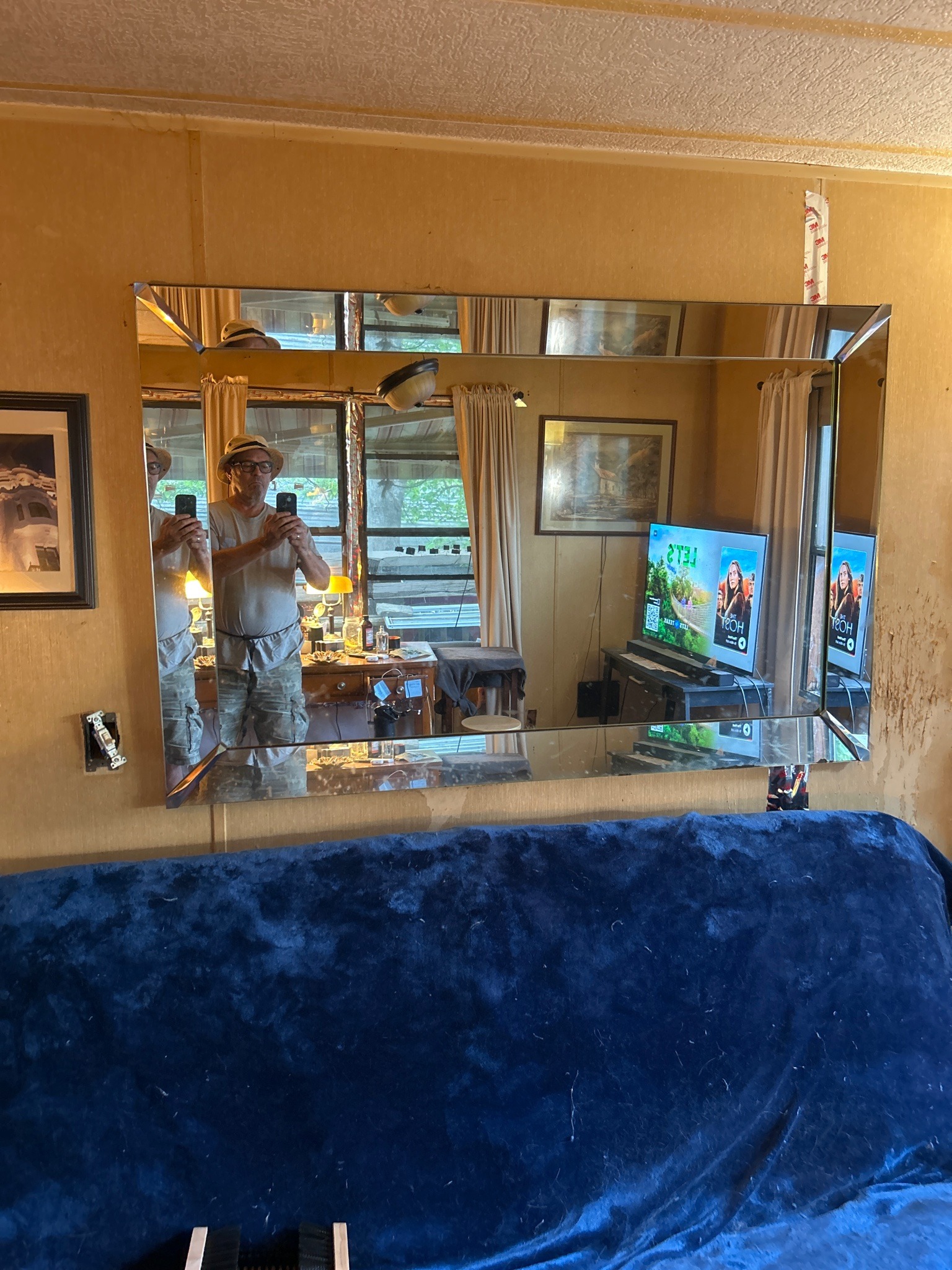
This is a rectangular wall-mounted mirror featuring an Art Deco design characteristic of the late 1920s to early 1930s. The piece is constructed with a large central mirror pane surrounded by four outer mirrored panels that are mitered at the corners. Each transition between the central pane and the peripheral panels features wide, prominent beveling, which creates a multi-faceted frame effect and adds depth to the reflection. The construction appears to be a 'mirror on mirror' style or a panelled configuration typical of the jazz age. The glass quality suggests a high silver content, although slight foxing or desilvering can be observed near the lower edges and mitered joints, which is expected for an authentic antique of this age. There are no visible maker's marks from the front, but the precision of the mitering and the heft of the glass indicate professional craftsmanship. The condition shows minor surface wear and some light oxidation under the glass surface, particularly in the corners, providing a true period patina. Its geometric simplicity and lack of an ornate wood frame define it as a prime example of the Machine Age aesthetic, where the reflective material itself serves as the decorative element.
AI-Generated Appraisal Disclaimer
Estimated Value
$1,200 - $1,850
Basic Information
Category
Antique Furniture & Home Decor
Appraised On
April 15, 2026
Estimated Value
$1,200 - $1,850
Additional Details Provided By Owner
User Provided Information
1920's
Item Description
This is a rectangular wall-mounted mirror featuring an Art Deco design characteristic of the late 1920s to early 1930s. The piece is constructed with a large central mirror pane surrounded by four outer mirrored panels that are mitered at the corners. Each transition between the central pane and the peripheral panels features wide, prominent beveling, which creates a multi-faceted frame effect and adds depth to the reflection. The construction appears to be a 'mirror on mirror' style or a panelled configuration typical of the jazz age. The glass quality suggests a high silver content, although slight foxing or desilvering can be observed near the lower edges and mitered joints, which is expected for an authentic antique of this age. There are no visible maker's marks from the front, but the precision of the mitering and the heft of the glass indicate professional craftsmanship. The condition shows minor surface wear and some light oxidation under the glass surface, particularly in the corners, providing a true period patina. Its geometric simplicity and lack of an ornate wood frame define it as a prime example of the Machine Age aesthetic, where the reflective material itself serves as the decorative element.
Get Your Items Appraised
Instant estimates of your treasures with AI-powered instant appraisals