AI Appraisal Estimate

AI-generated estimates · not official valuations

From the user

What was submitted

Photo and notes provided by the user — not generated by AI

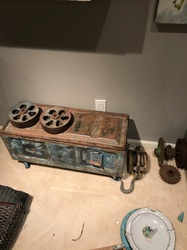
Submitted item photo
Submitted photo · May 18, 2026

User's notes

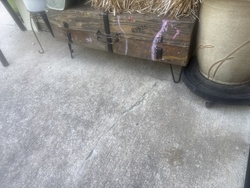
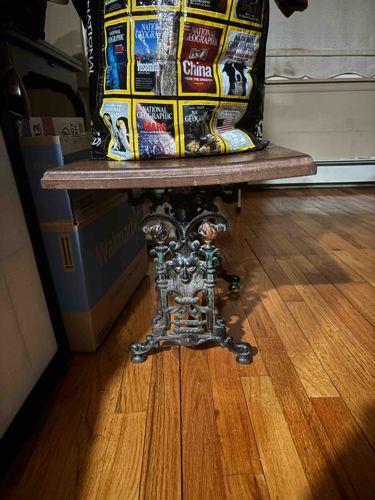
Cast iron short table with a top replaced by my grandfather faces on both sides twisty bar in the middle

AI analysis below

AI appraisal

AI analysis & estimate

AI-Generated · Verify before acting

Everything below is generated by AI for informational purposes only. AI can make mistakes — the AI may misidentify items or misattribute them (artist, maker, brand, designer, origin, era). This is not an official valuation and should not be used for insurance, sale, tax, estate, legal, or lending purposes — or any decision requiring a certified appraisal. It is not an authoritative claim about any person, brand, or rights holder — do not share or rely on it as a factual statement about a third party. Always consult qualified professionals before making financial decisions.

Note

This analysis also relies on unverified notes provided by the user, which may be incomplete or inaccurate and could affect the result.

Read the full disclaimer

AI Identification

·Not independently authenticated·Verify before acting

Victorian Cast Iron Pier Table Base with Replacement Wood Top

Antique Furniture / Repurposed Decor

AI Estimated Value

·Not an official valuation·Verify before acting

$175 - $250

As of May 18, 2026

AI Item Analysis

·AI can make mistakes·Verify before acting
This item is a short accent table composed of a historical cast iron base and a secondary wood surface. The base is an ornate Victorian-style cast iron assembly, likely originating from a late 19th or early 20th-century pier table or sewing stand. It features highly decorative openwork casting with prominent neoclassical 'North Wind' or grotesque faces on both opposing sides, flanked by scrolling foliated elements and acanthus leaves. The central structure includes a 'twisty' or rope-turned bar that provides stability between the two decorative end panels. The base terminates in four small cabriole-style feet that suggest high-quality craftsmanship typical of the industrial cast iron era. The finish of the iron shows a dark, aged patina with visible traces of verdigris or surface oxidation, particularly near the top of the metal motifs. The original top has been replaced with a thick, beveled-edge wooden board, likely made of stained pine or oak, which shows significant wear, scratches, and finish loss along the edges. The hybrid nature of the piece—combining a refined, antique structural base with a DIY replacement top—gives it a unique folk-art or repurposed aesthetic. While the base is sturdy, the overall condition is reflective of its utilitarian second life, with the character of the cast iron being the primary value driver.
AI Appraisal Report

·AI can make mistakes·Verify before acting
Upon examination of this hybrid accent piece, I have evaluated it as a repurposed decorative object. The primary value lies in the Victorian cast iron base, which dates to approximately 1880–1910. The 'North Wind' or grotesque face motifs and rope-turned crossbar are indicative of high-Victorian industrial casting, likely originally serving as the foundation for a pier table or a premium treadle stand. The casting remains crisp, though the visible surface oxidation and verdigris suggest the piece has been exposed to varying humidity levels, which is common for iron of this age. The replacement wood top, while providing functional utility and sentimental 'folk-art' value due to its family provenance, unfortunately detracts from the market value for serious furniture collectors. In the current secondary market, 'married' pieces—where a refined antique base is paired with a non-original, utilitarian surface—are sought after more for interior design and 'shabby chic' aesthetics rather than as historical specimens. Comparable Victorian cast iron bases typically sell in the $150 to $300 range depending on the intricacy of the casting. Limitations: This appraisal is based on visual evidence alone. For a definitive authentication, I would require an in-person inspection to look for manufacturer foundry marks (such as 'J.L. Mott' or 'Adams & Westlake') often hidden on the inner leg. Scientific testing of the metal's carbon content or a microscopic analysis of the wood grain would be necessary to confirm the exact species and age of the replacement top. Without physical access, I cannot verify the structural integrity of the fasteners connecting the metal to the wood, which significantly impacts its safety and utility as a functional table.

Get your items appraised

Instant estimates of your treasures with AI-powered appraisals

Browse More Appraisals