AI Appraisal Estimate

AI-generated estimates · not official valuations

From the user

What was submitted

Photo and notes provided by the user — not generated by AI

Submitted item photo
Submitted photo · June 25, 2026

User's notes

No additional notes provided.

AI analysis below

AI appraisal

AI analysis & estimate

AI-Generated · Verify before acting

Everything below is generated by AI for informational purposes only. AI can make mistakes — the AI may misidentify items or misattribute them (artist, maker, brand, designer, origin, era). This is not an official valuation and should not be used for insurance, sale, tax, estate, legal, or lending purposes — or any decision requiring a certified appraisal. It is not an authoritative claim about any person, brand, or rights holder — do not share or rely on it as a factual statement about a third party. Always consult qualified professionals before making financial decisions.

Read the full disclaimer

AI Identification

·Not independently authenticated·Verify before acting

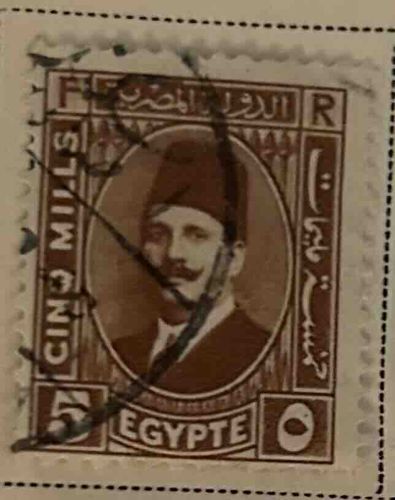
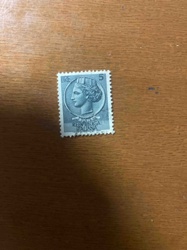
Egyptian King Fuad I Postage Stamp, 5 Mills Denomination

Postage Stamp

AI Estimated Value

·Not an official valuation·Verify before acting

$5 - $15

As of June 25, 2026

AI Item Analysis

·AI can make mistakes·Verify before acting
This item is an Egyptian postage stamp, likely from the early 20th century, featuring a portrait of King Fuad I. The stamp is rectangular with perforated edges, indicative of typical postage stamp production. The primary colors are a monochromatic palette of brown and off-white/cream, with the portrait and frame rendered in brown against a lighter background. The central design element is an oval-framed portrait of King Fuad I, depicted in a fez and what appears to be a suit or uniform, facing slightly to his right. He has a distinct mustache. The stamp's border is ornate, featuring decorative elements and text. Vertically along the left side, the word 'MILLS' is printed, and below the portrait, 'EGYPTE' is clearly visible. On the right side, there's text in Arabic script. The denomination '5' is visible in the lower left corner, and a circular Arabic numeral, likely also representing '5', is in the lower right. The upper part of the stamp also contains Arabic text and a prominent 'R' in the upper right. There are clear indications of usage and cancellation, with bold black cancellation marks diagonally across the stamp. These marks obscure parts of the portrait and text but confirm its postal use. The condition shows wear consistent with its age and use, including the cancellation marks and what appears to be minor dirt or discoloration on the surface. The perforations appear largely intact, though the exact quality cannot be fully assessed from the image. The style is typical of early to mid-20th-century philately, emphasizing national leaders and classical designs.
AI Appraisal Report

·AI can make mistakes·Verify before acting
This Egyptian King Fuad I 5 Mills postage stamp, from visual examination, appears authentic, consistent with typical designs from the early 20th century. The portrait of Fuad I, perforation style, and bilingual text (Arabic and 'EGYPTE', 'MILLS') align with known issues. The primary limiting factor regarding value is its condition. The stamp shows significant cancellation marks, obscuring key design elements including parts of the portrait and text. There's also visible discoloration and minor wear, consistent with postal use and age. Although the perforations seem largely intact, minor faults or creasing are difficult to ascertain from an image alone. These condition issues place its market value at the lower end for this common stamp. King Fuad I stamps are not particularly rare; many were issued, and higher-grade examples are readily available. Demand is moderate, primarily from collectors specializing in Egyptian philately. In mint, uncancelled condition, this stamp might fetch $20-$40, but this used example significantly lowers its appeal. For full authentication and a definitive condition assessment, an in-person examination is crucial to detect subtle flaws (e.g., thinning, repairs, specific perforations issues, or watermarks) not visible in the image. Provenance documentation would further solidify its history.

Get your items appraised

Instant estimates of your treasures with AI-powered appraisals

Browse More Appraisals