AI Appraisal Estimate

AI-generated estimates · not official valuations

From the user

What was submitted

Photo and notes provided by the user — not generated by AI

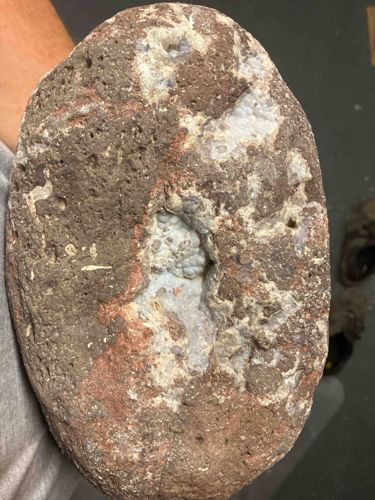
Submitted item photo
Submitted photo · May 30, 2026

User's notes

No additional notes provided.

AI analysis below

AI appraisal

AI analysis & estimate

AI-Generated · Verify before acting

Everything below is generated by AI for informational purposes only. AI can make mistakes — the AI may misidentify items or misattribute them (artist, maker, brand, designer, origin, era). This is not an official valuation and should not be used for insurance, sale, tax, estate, legal, or lending purposes — or any decision requiring a certified appraisal. It is not an authoritative claim about any person, brand, or rights holder — do not share or rely on it as a factual statement about a third party. Always consult qualified professionals before making financial decisions.

Read the full disclaimer

AI Identification

·Not independently authenticated·Verify before acting

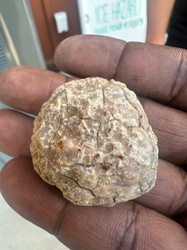
Unpolished Chalcedony Geode (Thunderegg)

Geological Specimen

AI Estimated Value

·Not an official valuation·Verify before acting

$25-45

As of May 30, 2026

AI Item Analysis

·AI can make mistakes·Verify before acting
This item is an unpolished geode, likely a Thunderegg given its external appearance, characterized by an irregular oval to slightly flattened shape. Its exterior, which serves as the host rock or matrix, is a rough, reddish-brown to dark gray volcanic rock, exhibiting a porous and granular texture with visible small holes and pits indicating a basaltic or Rhyolitic origin. The item measures approximately the size of a human hand, suggesting a moderate weight. There are several natural fractures and openings on the surface, revealing the internal chalcedony formation. The exposed interior is primarily an opaque to translucent gray-blue botryoidal chalcedony, with some areas showing a lighter white mineralization. The botryoidal clusters are distinct, appearing as rounded, grape-like structures varying in size from pinhead to pea-sized. Some areas show a clearer, more crystalline quartz growth within the chalcedony, suggesting potential druzy formations, although the image does not provide sufficient clarity for precise identification of crystal habits. There are no discernible manufacturing details, maker's marks, or signatures, as it is a natural geological formation. The condition appears to be natural and untouched, with no visible signs of repair or artificial modification; the 'wear' observed is natural weathering and erosion that shaped its exterior. Its age is geological, dating back millions of years. The overall quality is characteristic of a naturally formed geode, showcasing a typical infilling of chalcedony.

AI Appraisal Report

·AI can make mistakes·Verify before acting
I have carefully examined the provided image of this Unpolished Chalcedony Geode, likely a Thunderegg. This geological specimen exhibits an irregular oval to slightly flattened shape, characteristic of a natural thunderegg. Its exterior is a distinct reddish-brown to dark gray volcanic rock, porous and granular, consistent with basaltic or rhyolitic origins. The internal chalcedony formation, revealed through natural fractures, is primarily opaque to translucent gray-blue botryoidal chalcedony with lighter white mineralization. The grape-like botryoidal clusters are clearly visible. Its condition appears entirely natural and untouched, exhibiting natural weathering and erosion, which is expected for such an item. Authenticity is supported by its natural form and geological characteristics; there are no signs of artificial modification. Given the general market for unpolished geodes and thundereggs, typical specimens of this size and quality range from $20 to $50. This piece, while showcasing good botryoidal formations, does not exhibit exceptional coloration, crystal clarity, or rare mineral inclusions that would significantly elevate its value. Demand for common unpolished geodes is steady, but not high enough to command premium prices for average specimens. The moderate size and visible botryoidal chalcedony are positive factors, but the unpolished state and lack of striking visual appeal keep the value in the lower range. A key limitation in authenticity verification from an image alone is the inability to perform a physical inspection: I cannot assess its precise weight, internal density, or the tactile qualities of the host rock and internal mineralization. In-person examination would allow for definitive identification of the host rock type through touch and a more precise assessment of the internal structures, including any potential druzy formations, as well as a more accurate valuation of its overall aesthetic appeal.

Get your items appraised

Instant estimates of your treasures with AI-powered appraisals

Browse More Appraisals