AI Appraisal Estimate

AI-generated estimates · not official valuations

From the user

What was submitted

Photo and notes provided by the user — not generated by AI

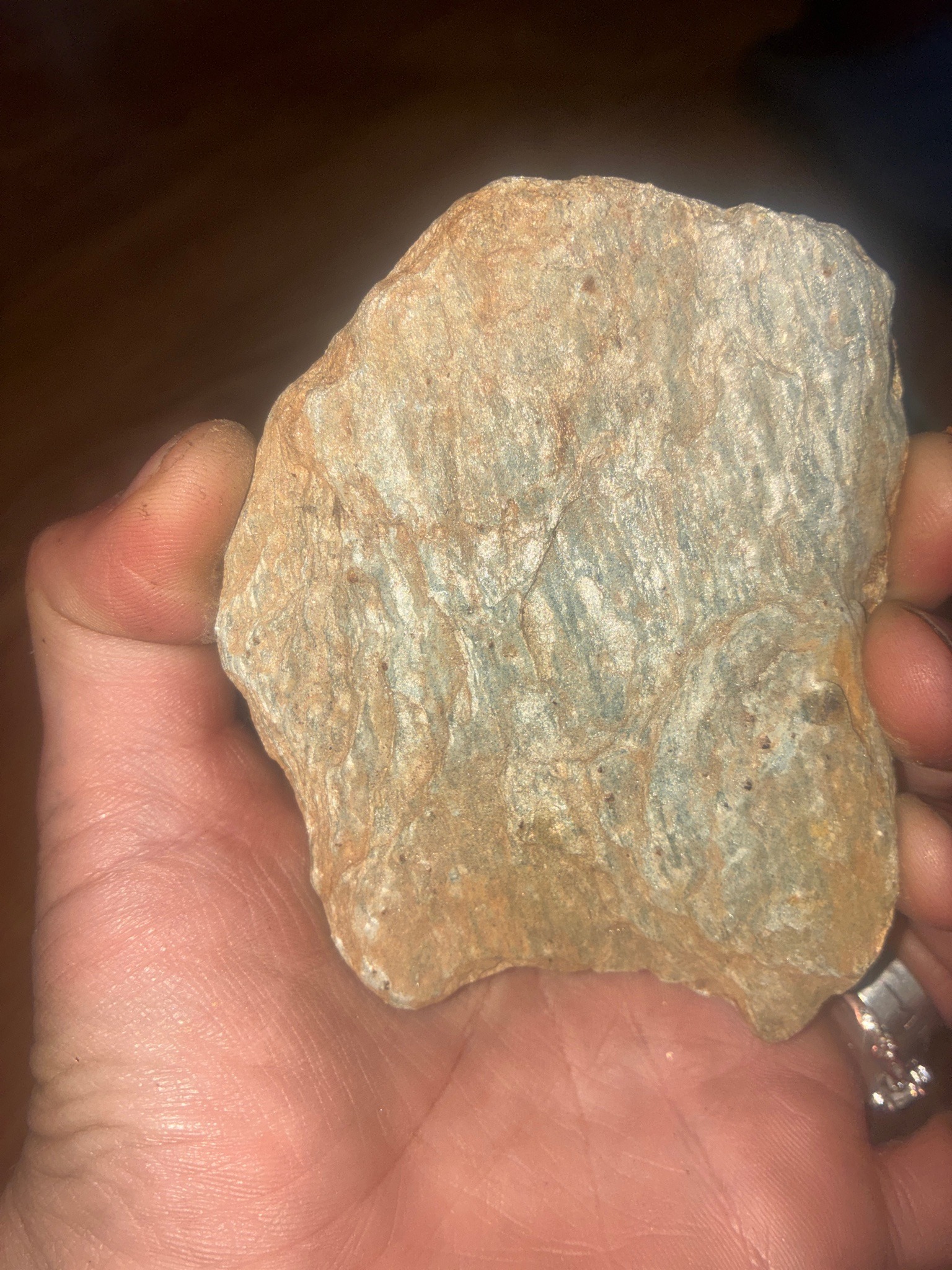
Submitted item photo
Submitted photo · June 28, 2026

User's notes

No additional notes provided.

AI analysis below

AI appraisal

AI analysis & estimate

AI-Generated · Verify before acting

Everything below is generated by AI for informational purposes only. AI can make mistakes — the AI may misidentify items or misattribute them (artist, maker, brand, designer, origin, era). This is not an official valuation and should not be used for insurance, sale, tax, estate, legal, or lending purposes — or any decision requiring a certified appraisal. It is not an authoritative claim about any person, brand, or rights holder — do not share or rely on it as a factual statement about a third party. Always consult qualified professionals before making financial decisions.

Read the full disclaimer

AI Identification

·Not independently authenticated·Verify before acting

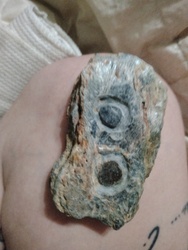
Foliated Metamorphic Rock (Schist/Gneiss)

Geological Specimens / Rocks and Minerals

AI Estimated Value

·Not an official valuation·Verify before acting

$10.00 - $25.00

As of June 28, 2026

AI Item Analysis

·AI can make mistakes·Verify before acting
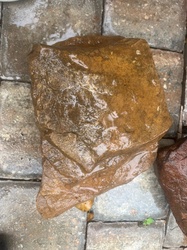
This is a hand-sized specimen of a foliated metamorphic rock, likely a schist or a low-grade gneiss. The piece exhibits a distinct, wavy surface texture characteristic of foliation, where minerals have aligned under heat and pressure. Physically, the item is approximately 3 to 4 inches in width, featuring a predominantly silvery-grey to bluish-grey primary color with significant iron-oxide staining across the surface, giving it a rusty or tan-colored patina in several areas. The construction is entirely natural, showing parallel alignment of platy or elongated minerals that create a slightly shimmering, micaceous luster visible under direct light. The shape is irregular and angular, appearing as a fragmented piece rather than a weathered river stone, with several jagged edges and a concave break at the bottom. There are no man-made markings, signatures, or stamps, as this is a geologic specimen. Distinctive features include the 'crenulated' or rippled texture on the face of the specimen and several small dark inclusions or mineral spots scattered throughout. The condition is raw and unpolished, with natural weathering products like clay and iron oxides present in the crevices. In terms of age, this rock likely formed hundreds of millions of years ago during a regional metamorphic event. Its quality is utilitarian as a geologic sample, demonstrating typical tectonic deformation patterns.
AI Appraisal Report

·AI can make mistakes·Verify before acting
I have examined the provided description and image of this foliated metamorphic specimen, which exhibits characteristic features of mica schist or low-grade gneiss. The specimen displays prominent crenulation cleavage and secondary iron-oxide staining. From a physical standpoint, the rock appears authentic to regional metamorphic environments, showing natural mineral alignment and weathering typical of surface-collected samples. As an appraiser, I must note that while the foliation is aesthetically interesting, this is a common geological material found in abundance across numerous orogenic belts globally. Market demand for such raw, unpolished specimens is generally limited to basic educational use or hobbyist 'rockhound' collections. Comparables for unpolished, hand-sized metamorphic samples without rare mineral inclusions (such as garnet, staurolite, or precious metals) typically sell at low price points in museum gift shops or online mineral marketplaces. The primary value lies in its use as a teaching tool for tectonic deformation. Limitations of this appraisal include the inability to perform hardness testing, chemical analysis, or thin-section petrography to identify specific mineral compositions or potential trace elements that might slightly alter its value. A physical inspection would be required to confirm the absence of brittle fractures not visible in the image and to verify the exact mineralogy of the dark inclusions. For professional authentication, geographic provenance (exact GPS coordinates or stratigraphic data) would be necessary to establish its specific geologic context and age.

Get your items appraised

Instant estimates of your treasures with AI-powered appraisals

Browse More Appraisals