AI Appraisal Estimate

AI-generated estimates · not official valuations

From the user

What was submitted

Photo and notes provided by the user — not generated by AI

Submitted item photo
Submitted photo · June 1, 2026

User's notes

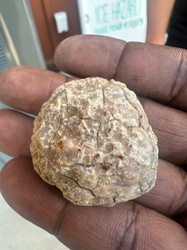
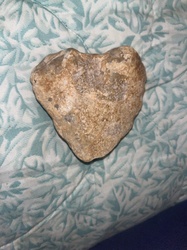
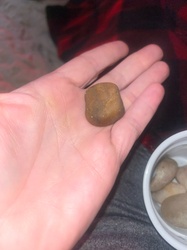
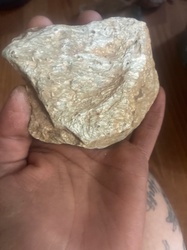
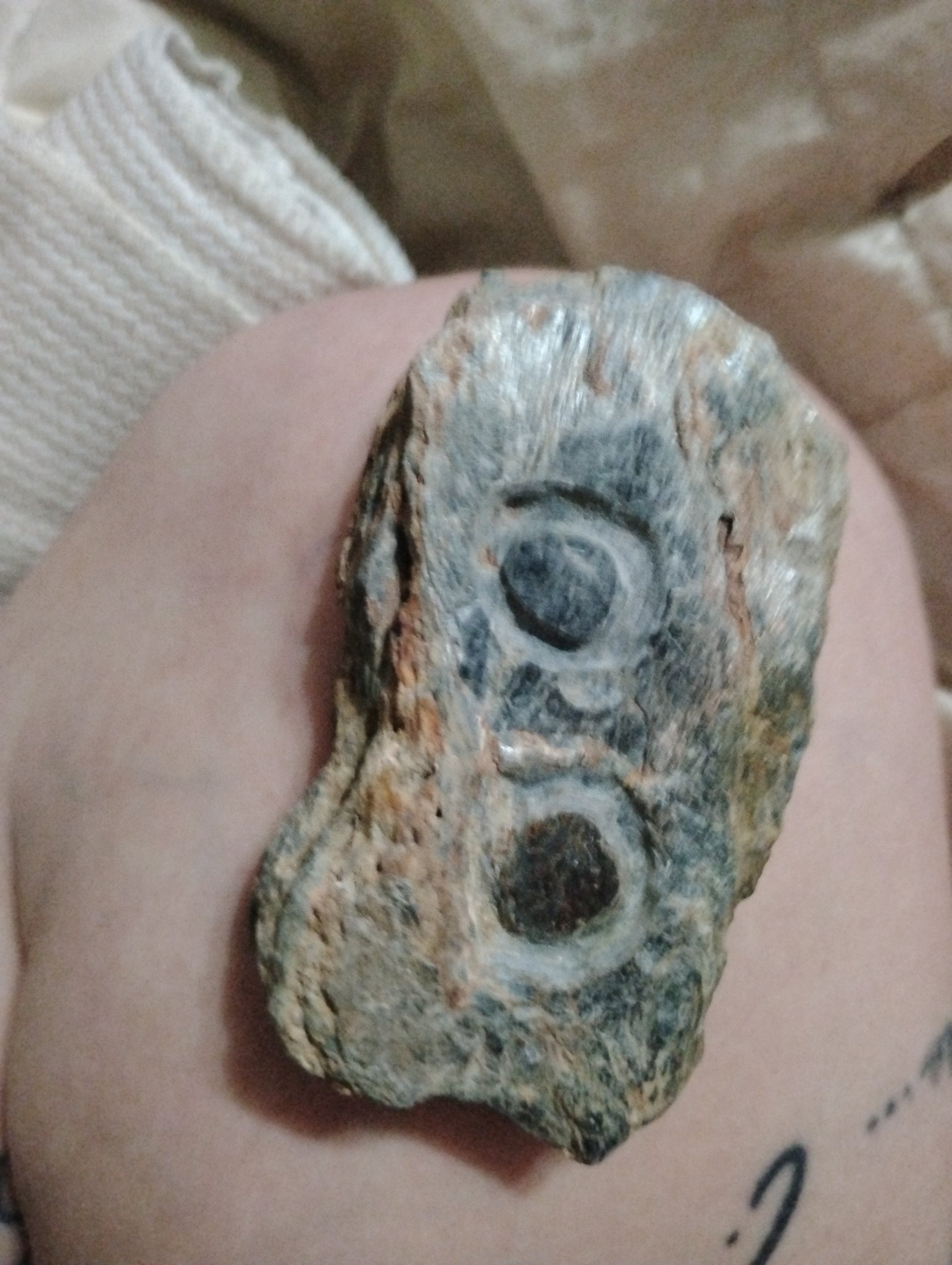
Category: Other I believe this is a fossil of some kind. I found it while mining in northeast Georgia around the Yorkville area. On one side there are the 2 circular groves and on the other side there is one also

AI analysis below

AI appraisal

AI analysis & estimate

AI-Generated · Verify before acting

Everything below is generated by AI for informational purposes only. AI can make mistakes — the AI may misidentify items or misattribute them (artist, maker, brand, designer, origin, era). This is not an official valuation and should not be used for insurance, sale, tax, estate, legal, or lending purposes — or any decision requiring a certified appraisal. It is not an authoritative claim about any person, brand, or rights holder — do not share or rely on it as a factual statement about a third party. Always consult qualified professionals before making financial decisions.

Note

This analysis also relies on unverified notes provided by the user, which may be incomplete or inaccurate and could affect the result.

Read the full disclaimer

AI Identification

·Not independently authenticated·Verify before acting

Mineral specimen with concretionary or orbicular structures

Geological Specimens

AI Estimated Value

·Not an official valuation·Verify before acting

$10 - $35

As of June 1, 2026

AI Item Analysis

·AI can make mistakes·Verify before acting
This item is a small, irregularly shaped rock specimen featuring two distinct, circular, concentric 'grooves' or eye-like patterns on its primary visible surface. The specimen exhibits a mix of dark gray, charcoal, and lighter silvery-white mineral fibers, suggesting a possible schistose or metamorphic composition. Faint ochre or rust-colored staining is present, likely due to iron oxidation. The texture appears fibrous in some sections and coarse in others. The user identifies this as a potential fossil found while mining in Yorkville, Georgia (northeast Georgia). However, from a visual inspection, these structures are consistent with geological phenomena such as mineral concretions, orbs, or porphyroblasts rather than a biological fossil. Without physical cross-sectioning and laboratory testing, it is impossible to verify if these are trace fossils or purely mineralogical formations. The circles could also be consistent with 'muller' or 'bulls-eye' weathering patterns. The edges appear naturally weathered and fractured. Because geological formations can mimic biological ones (pseudofossils), this identification remains a hypothesis subject to in-person geological analysis.

AI Appraisal Report

·AI can make mistakes·Verify before acting
Based on my visual examination of the provided images, I have analyzed this geological specimen characterized by its fibrous, possibly schistose matrix and circular concentric patterns. The owner identifies this as a potential fossil found near Yorkville, Georgia; however, I must treat this as a hypothesis. From a visual standpoint, these 'eye' structures are consistent with mineralogical phenomena such as porphyroblast growth, mineral concretions, or 'bulls-eye' weathering patterns rather than biological fossilization. I cannot verify the internal composition or the specific mineral species from a photograph alone. The value estimate of $10-$35 is based on the item as a decorative geological curiosity. If the specimen were subject to in-person analysis by a paleontologist and found to be a rare trace fossil or a significant 'pseudofossil' example, the interest from niche collectors might increase, though it would likely remain in a moderate price bracket due to its small size and weathered condition. Conversely, if it is confirmed to be a common metamorphic rock with typical mineral clustering, the value would be at the lower end of the range. Scientific testing, such as thin-sectioning or X-ray diffraction, would be required to identify the minerals and the exact origin of the circular structures. The market for unclassified geological finds is generally broad but low-value, driven primarily by aesthetic appeal and novelty rather than rarity. This estimate assumes the specimen is a natural occurrence; if the markings were ever determined to be man-made or significantly altered, the value as a natural specimen would be negligible.

Get your items appraised

Instant estimates of your treasures with AI-powered appraisals

Browse More Appraisals