AI Appraisal Estimate

AI-generated estimates · not official valuations

From the user

What was submitted

Photo and notes provided by the user — not generated by AI

Submitted item photo
Submitted photo · July 7, 2026

User's notes

No additional notes provided.

AI analysis below

AI appraisal

AI analysis & estimate

AI-Generated · Verify before acting

Everything below is generated by AI for informational purposes only. AI can make mistakes — the AI may misidentify items or misattribute them (artist, maker, brand, designer, origin, era). This is not an official valuation and should not be used for insurance, sale, tax, estate, legal, or lending purposes — or any decision requiring a certified appraisal. It is not an authoritative claim about any person, brand, or rights holder — do not share or rely on it as a factual statement about a third party. Always consult qualified professionals before making financial decisions.

Read the full disclaimer

AI Identification

·Not independently authenticated·Verify before acting

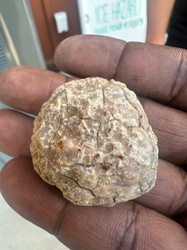
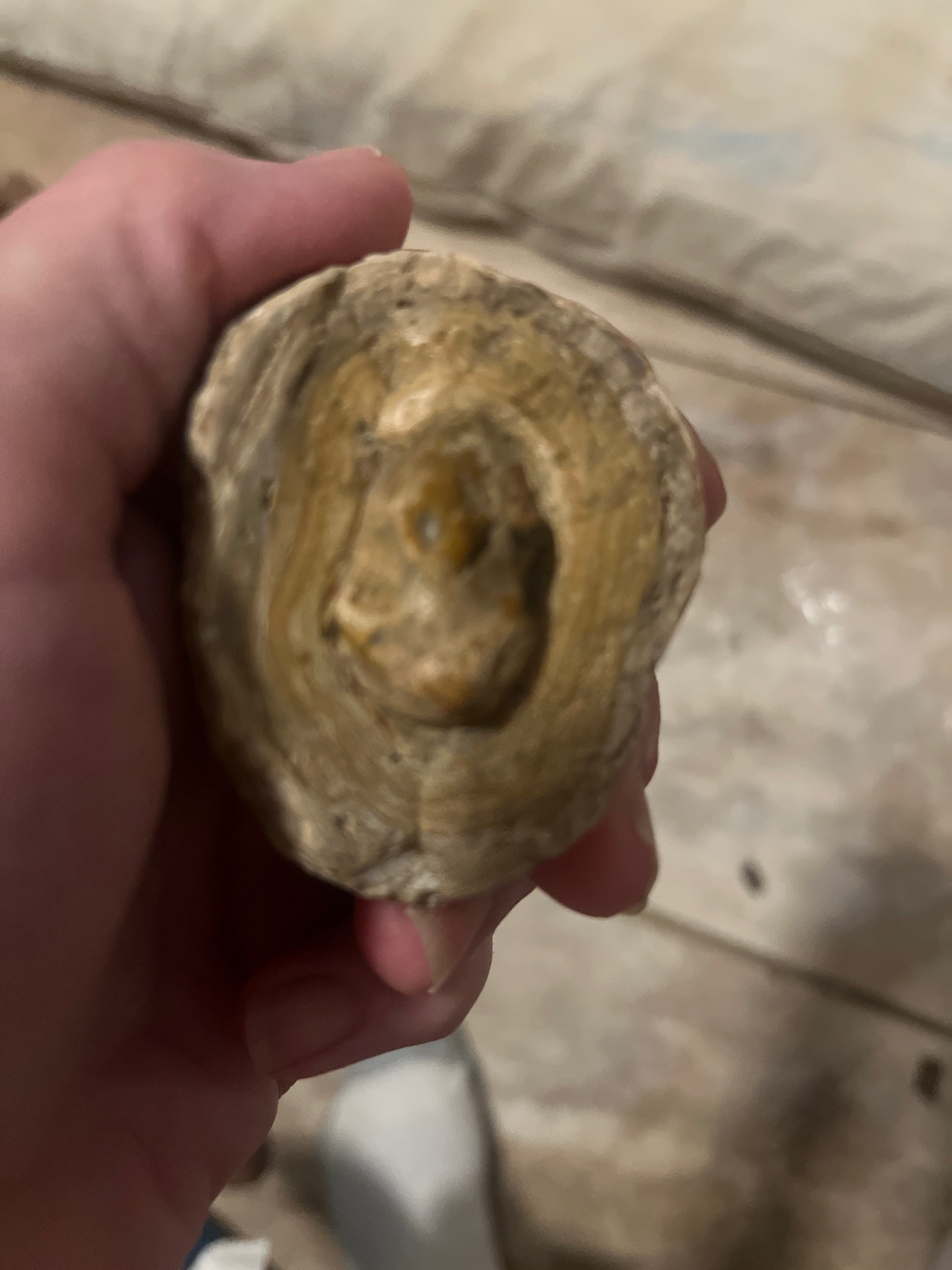
Oval Geological Specimen with Banded Accretions

Geological Specimens

AI Estimated Value

·Not an official valuation·Verify before acting

$15.00 - $45.00

As of July 7, 2026

AI Item Analysis

·AI can make mistakes·Verify before acting
This appears to be a small, hand-sized geological specimen, possibly a concretion, nodule, or a weathered fossil fragment. It measures approximately 2 to 3 inches in diameter based on scale against the hand. The object features a roughly circular to oval shape with distinct concentric banding in shades of tan, ochre, and light brown, suggesting mineral deposition or organic growth layers over time. The center possesses a raised, somewhat irregular protrusion with a smoother, slightly translucent amber-like appearance. The outer edges exhibit a rougher, more porous texture consistent with sedimentary rock or calcified material. There are no visible maker's marks, signatures, or inscriptions, indicating this is a natural formation or a found object rather than a manufactured item. Condition-wise, it shows significant surface wear, pitting, and irregular fracturing along the periphery, which is typical for weathered specimens found in nature. The craftsmanship is naturally occurring, and the identification is qualitative based on visual stratification patterns without physical hardness or chemical testing. Potential identifications include a partially fossilized bivalve or a chert-like nodule, subject to in-person expert geological verification.

AI Appraisal Report

·AI can make mistakes·Verify before acting
Based on my visual examination of the provided image, this specimen appears to be a natural geological formation, likely a concretion, nodule, or a weathered fossil fragment. In my professional opinion, the concentric banding and surface morphology suggest a naturally occurring mineral deposition or organic growth, such as a chert nodule or a partially fossilized bivalve byproduct. From the photo, I can see distinct stratifications and a weathered surface, but I cannot determine the exact mineral composition or hardness without physical testing. I am treating the identification as a hypothesis; a physical inspection would be required to rule out man-made composition or modern composites. The value estimate of $15.00 to $45.00 is based on the assumption that this is a common geological specimen. Natural objects of this size and type generally trade within this range for educational or decorative purposes. Because there are no signatures or rare anatomical details visible that would suggest a high-value museum-grade fossil, the market demand remains modest. The condition, which includes surface pitting and peripheral fracturing, is consistent with a found object and does not significantly detract from its value as a natural curiosity. If this item were to be identified through scientific testing as a rare species of fossil or a unique mineral variant, its value could increase. Conversely, if it is discovered to be a weathered fragment of modern masonry or a synthetic cast, its market value would be negligible. To confirm its origins, I would recommend consultation with a paleontologist or geologist for a physical hardness test and cross-section analysis.

Get your items appraised

Instant estimates of your treasures with AI-powered appraisals

Browse More Appraisals