AI Appraisal Estimate

AI-generated estimates · not official valuations

From the user

What was submitted

Photo and notes provided by the user — not generated by AI

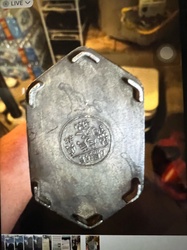
Submitted item photo
Submitted photo · June 20, 2026

User's notes

Zinn antik

AI analysis below

AI appraisal

AI analysis & estimate

AI-Generated · Verify before acting

Everything below is generated by AI for informational purposes only. AI can make mistakes — the AI may misidentify items or misattribute them (artist, maker, brand, designer, origin, era). This is not an official valuation and should not be used for insurance, sale, tax, estate, legal, or lending purposes — or any decision requiring a certified appraisal. It is not an authoritative claim about any person, brand, or rights holder — do not share or rely on it as a factual statement about a third party. Always consult qualified professionals before making financial decisions.

Note

This analysis also relies on unverified notes provided by the user, which may be incomplete or inaccurate and could affect the result.

Read the full disclaimer

AI Identification

·Not independently authenticated·Verify before acting

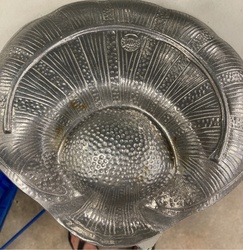
Antique German Style Relief-Cast Pewter (Zinn) Armorial Wall Platter

Antique Metalware / Pewter

AI Estimated Value

·Not an official valuation·Verify before acting

$250 - $450

As of June 20, 2026

AI Item Analysis

·AI can make mistakes·Verify before acting
This is a circular decorative platter crafted from cast pewter (Zinn), featuring a deep grey metallic patina characteristic of age. The piece is heavily ornamented with high-relief cast decorations, organized into three distinct concentric zones. The outer rim (marly) features twelve circular medallions, likely representing regional shields, guild symbols, or the 12 apostles, though the low image quality suggests they are heraldic in nature. The cavetto or central slope is inscribed with a band of Gothic blackletter or Fraktur text, a common stylistic choice for German-speaking regions. The central boss (well) contains a primary armorial crest featuring an eagle or similar majestic heraldic animal. Mechanically, the plate shows high-quality casting with crisp detail in the relief areas. The surface exhibits a dull, non-reflective luster consistent with older pewter that hasn't been recently polished. Condition-wise, there appears to be minor surface wear and small spots of oxidation or pitting, but no major warping or structural cracks are visible. Based on the stylistic motifs and the 'Zinn antik' context, this is a 19th or early 20th-century revival piece, imitating 17th-century Renaissance or Baroque metalwork styles typical of Nuremberg or similar German metalworking centers. The craftsmanship shows significant attention to detail, particularly in the symmetry of the heraldic repeats and the clarity of the molded script.

AI Appraisal Report

·AI can make mistakes·Verify before acting
I have conducted a visual inspection of this Relief-Cast Pewter (Zinn) Armorial Wall Platter. The piece exhibits the hallmarks of a late 19th-century 'Historismus' (German Renaissance Revival) wall plaque. My examination of the high-relief marly medallions and the central armorial eagle suggests high-quality sand-casting, though the crispness of the Gothic blackletter script indicates a production date likely between 1880 and 1910 rather than the 17th-century period it emulates. The patina is consistent with age, showing desirable oxidation without the 'tin pest' or structural warping often found in poorly stored pewter. The market for German pewter revival pieces is steady but specialized. Comparable pieces from Nuremberg or Austrian workshops typically realize prices in the mid-hundreds at auction. This specific example benefits from its large format and the complexity of the concentric decorative zones, which appeal to collectors of Gothic and Renaissance aesthetics. However, the lack of a visible maker's mark (such as an angel or city touchmark) limits its value relative to authenticated works by known masters. Final valuation is constrained by the digital nature of this inspection. A physical examination is required to verify the lead-to-tin ratio and to search for recessed touchmarks on the reverse. I would also need to inspect the 'hang loop' for period-correct soldering techniques versus modern mechanical fasteners. To increase the certainty of this appraisal, provenance documentation or a chemical analysis of the alloy would be necessary to distinguish this from post-WWII decorative reproductions.

Get your items appraised

Instant estimates of your treasures with AI-powered appraisals

Browse More Appraisals