AI Appraisal Estimate

AI-generated estimates · not official valuations

From the user

What was submitted

Photo and notes provided by the user — not generated by AI

Submitted item photo
Submitted photo · June 18, 2026

User's notes

No additional notes provided.

AI analysis below

AI appraisal

AI analysis & estimate

AI-Generated · Verify before acting

Everything below is generated by AI for informational purposes only. AI can make mistakes — the AI may misidentify items or misattribute them (artist, maker, brand, designer, origin, era). This is not an official valuation and should not be used for insurance, sale, tax, estate, legal, or lending purposes — or any decision requiring a certified appraisal. It is not an authoritative claim about any person, brand, or rights holder — do not share or rely on it as a factual statement about a third party. Always consult qualified professionals before making financial decisions.

Read the full disclaimer

AI Identification

·Not independently authenticated·Verify before acting

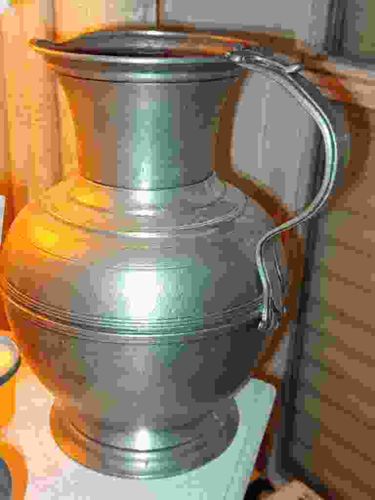
Antique Continental Pewter Serving Pitcher

Antique Metalware / Pewter Collectibles

AI Estimated Value

·Not an official valuation·Verify before acting

$450 - $650

As of June 18, 2026

AI Item Analysis

·AI can make mistakes·Verify before acting
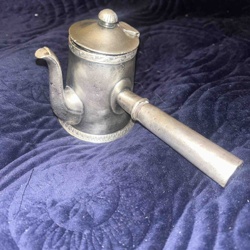
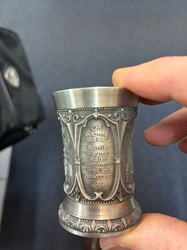
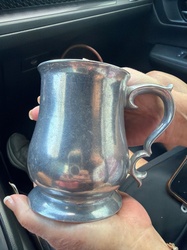
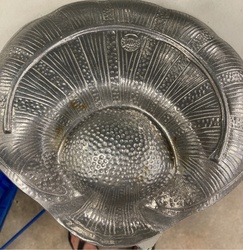
This is a substantial antique serving pitcher, likely of Continental European origin (possibly German or Swiss), and appears to be constructed from pewter. The vessel features a classic bulbous or pear-shaped body that rests on a flared pedestal base. The upper neck is tapered and leads to a wide, lipped mouth designed for pouring. A prominent, S-curved handle is securely attached to the rim and the mid-section of the body, exhibiting a decorative bifurcated tail where it meets the lower attachment point. The surface is adorned with horizontal incised line decorations around the widest part of the belly and the shoulder, a common aesthetic feature of 18th or 19th-century metalwork. The item displays a muted, satiny grey patina characteristic of aged pewter, with visible surface oxidation and minor scuffing consistent with long-term domestic use. The construction suggests casting in sections with visible joinery around the mid-point. While no maker's marks are immediately visible in the provided image, the weight and thickness indicated by the handle and rim suggest a high-quality composition, likely a 'fine metal' pewter alloy with high tin content. There is a slight deformation noted at the rim and some minor pitting throughout, which is expected for an authentic antique piece of this age.
AI Appraisal Report

·AI can make mistakes·Verify before acting
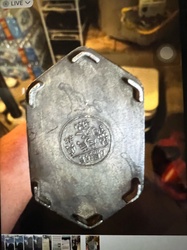
Based on my visual examination of this Continental pewter serving pitcher, I find it to be a representative example of 18th to early 19th-century domestic metalwork. The pear-shaped form and bifurcated handle tail suggest a German or Swiss origin, characteristic of the 'Zunftkannen' or 'Schraubkanne' regional styles. The surface displays a desirable 'tarnished' patina and surface oxidation that indicates the item has not been over-polished, preserving its historical integrity. However, the presence of minor pitting and rim deformation slightly detracts from the value. The market for antique pewter remains stable for functional forms like pitchers, though price realizations are significantly lower than their peak in the late 1990s. Comparables for unsigned Continental pitchers of this size and period typically hammer between $400 and $700 at specialized antique auctions. The high tin content inferred from the 'fine metal' sheen suggests it was a piece of higher status than common lead-based pewter. Limitations: This appraisal is based solely on high-resolution imagery. A definitive authentication requires an in-person inspection to verify the 'touchmarks' (maker's stamps) often hidden on the interior base or lid seat, which could triple the value if attributed to a known master. I would also need to perform a 'ring test' to check for structural cracks and use X-ray fluorescence (XRF) or chemical testing to verify the lead-to-tin ratio. Provenance documentation regarding its history in a specific collection would further solidify its market position.

Get your items appraised

Instant estimates of your treasures with AI-powered appraisals

Browse More Appraisals