AI Appraisal Estimate

AI-generated estimates · not official valuations

From the user

What was submitted

Photo and notes provided by the user — not generated by AI

Submitted item photo
Submitted photo · June 22, 2026

User's notes

Category: Collectible Weight: 5kg Dimensions: 55cm

AI analysis below

AI appraisal

AI analysis & estimate

AI-Generated · Verify before acting

Everything below is generated by AI for informational purposes only. AI can make mistakes — the AI may misidentify items or misattribute them (artist, maker, brand, designer, origin, era). This is not an official valuation and should not be used for insurance, sale, tax, estate, legal, or lending purposes — or any decision requiring a certified appraisal. It is not an authoritative claim about any person, brand, or rights holder — do not share or rely on it as a factual statement about a third party. Always consult qualified professionals before making financial decisions.

Note

This analysis also relies on unverified notes provided by the user, which may be incomplete or inaccurate and could affect the result.

Read the full disclaimer

AI Identification

·Not independently authenticated·Verify before acting

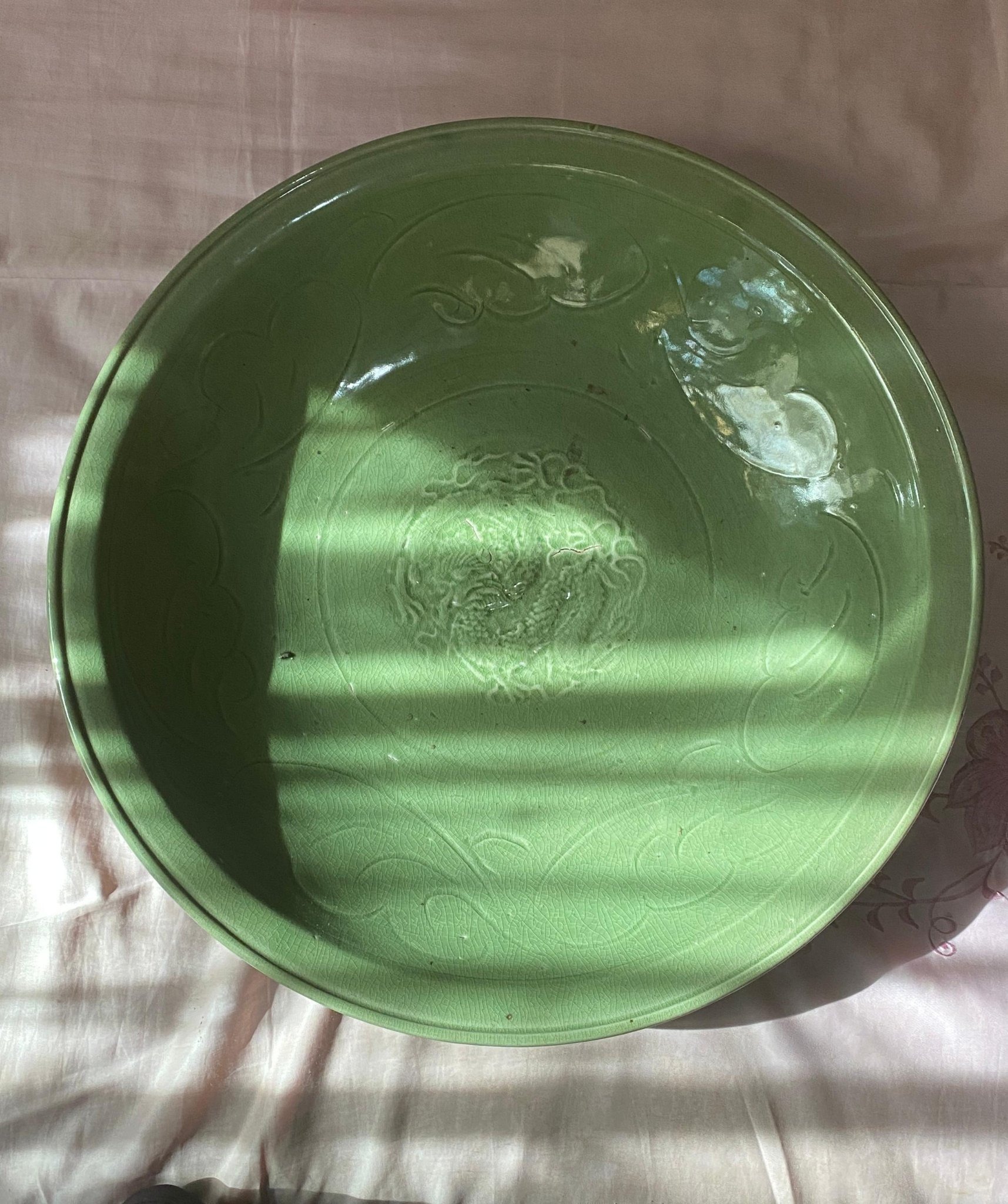
Large Chinese Celadon Glazed Dragon Basin

Collectible Asian Antiques

AI Estimated Value

·Not an official valuation·Verify before acting

$800 - $1,200

As of June 22, 2026

AI Item Analysis

·AI can make mistakes·Verify before acting
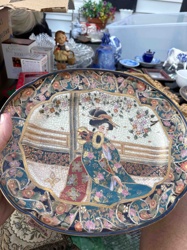
This is a substantial Chinese ceramic basin, measuring 55cm in diameter and weighing approximately 5kg, displaying a classical celadon green glaze. The piece is characterized by its deep, olive-toned green glaze which features a fine networks of crackle (crazing) across the entire surface, an aesthetic choice often associated with Longquan or Yaozhou kilns. The interior center is decorated with an incised or molded medallion of a coiled five-clawed imperial dragon surrounded by swirling clouds. The cavetto (inner walls) features broad, fluidly rendered floral or foliate scroll motifs. The glaze is thick and lustrous, showing some pooling in the recessed areas of the decoration. Regarding condition, there are visible surface imperfections including small kiln pits, minor glaze abrasions, and a notable horizontal line/crack near the central dragon medallion which appears to be a stress fracture rather than a surface scratch. The style is reminiscent of the Yuan or early Ming dynasties (14th-15th century), though many 19th and 20th-century revivals exist. The heavy stoneware construction and traditional slip-decorated motifs suggest a high level of craftsmanship intended for a prestigious household or ceremonial use.

AI Appraisal Report

·AI can make mistakes·Verify before acting
Based on the provided images and description, I have examined this large Chinese celadon glazed basin. The piece, measuring 55cm in diameter, exhibits a deep olive-toned celadon glaze with an allover crackle network, characteristic of Longquan wares. The interior features a molded five-clawed dragon amid clouds, surrounded by foliate scrolls. The heavy stoneware potting and glaze pooling suggest a piece styled after Yuan to early Ming dynasty examples. Condition notes indicate surface imperfections including kiln pitting, minor abrasions, and a significant stress fracture near the central medallion. While the style and motifs are traditional and point toward prestigious origins, the potting and glaze characteristics strongly suggest a 19th or 20th-century revival rather than an original 14th-15th century piece. The crack also impacts its overall market value. In the current market, large decorative celadon basins of this period and quality are desirable but relatively common. The estimated value reflects its status as a decorative antique or vintage reproduction rather than an early imperial piece. Please note that this appraisal is based solely on photographic evidence and description. A definitive authentication and precise dating would require an in-person physical examination to assess the unglazed foot rim, firing techniques, and potentially thermoluminescence (TL) testing if early Ming origins were suspected to confirm antiquity.

Get your items appraised

Instant estimates of your treasures with AI-powered appraisals

Browse More Appraisals