AI Appraisal Estimate

AI-generated estimates · not official valuations

From the user

What was submitted

Photo and notes provided by the user — not generated by AI

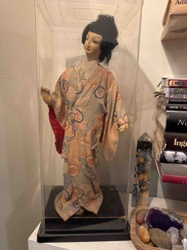
Submitted item photo
Submitted photo · June 4, 2026

User's notes

No additional notes provided.

AI analysis below

AI appraisal

AI analysis & estimate

AI-Generated · Verify before acting

Everything below is generated by AI for informational purposes only. AI can make mistakes — the AI may misidentify items or misattribute them (artist, maker, brand, designer, origin, era). This is not an official valuation and should not be used for insurance, sale, tax, estate, legal, or lending purposes — or any decision requiring a certified appraisal. It is not an authoritative claim about any person, brand, or rights holder — do not share or rely on it as a factual statement about a third party. Always consult qualified professionals before making financial decisions.

Read the full disclaimer

AI Identification

·Not independently authenticated·Verify before acting

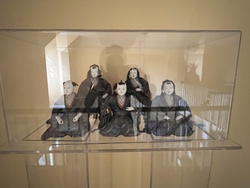
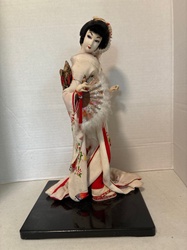
Japanese Gofun Oyama Ningyo Doll in Glass Case

Collectibles - Asian Antiques & Japanese Dolls

AI Estimated Value

·Not an official valuation·Verify before acting

$350.00 - $550.00

As of June 4, 2026

AI Item Analysis

·AI can make mistakes·Verify before acting
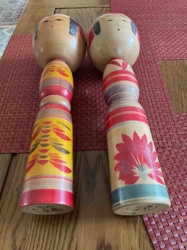
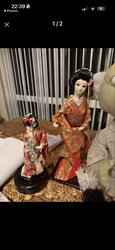
This is a vintage Japanese Oyama Ningyo (performer doll) depicting a seated refined woman participating in a tea ceremony or social gathering. The doll features a head made of traditional gofun (crushed oyster shell paste over wood or clay), resulting in a smooth, matte white complexion. She is dressed in an elaborate multi-layered kimono made of silk brocade with woven floral patterns in shades of sage green, pink, and gold. A deep purple obi with a bow is tied at her back, and she holds a vibrant red cloth accessory. Her hair is styled in a traditional nihongami fashion, adorned with intricate kanzashi (hair ornaments) including gold-tone clips and dangling silver-tone tassels. She is seated on a red cloth-covered platform with a small black lacquered teacup nearby. A wooden plaque (kifuda) with Japanese calligraphy identifies the maker or style. The doll appears to be from the mid-20th century (Showa period, circa 1950s-1970s). The craftsmanship is of high quality, evidenced by the delicate facial features and the precision of the textile draping. The doll is housed in its original glass display case with a gold paper background. Condition appears excellent with no visible fading, shattering of the silk, or cracking of the gofun, suggesting it has been well-protected from UV light and moisture.
AI Appraisal Report

·AI can make mistakes·Verify before acting
Based on my visual examination of this Oyama Ningyo, I find it to be a high-quality example of mid-20th century Showa period craftsmanship. The use of traditional gofun is evident in the porcelain-like finish of the face, which shows no signs of the typical 'crazing' or cracking that often plagues dolls of this age. The multilayered silk brocade is exceptionally well-preserved; the vibrancy of the sage green and gold threads suggests it has been shielded from ultraviolet light. The presence of the original kifuda (wooden plaque) and the black lacquer ware accessories enhances its collectibility. Market demand for these dolls is currently stable, though values fluctuate based on the intricacy of the hair ornaments and the condition of the glass case. Comparable sales for dolls in this pristine state range from $300 to $600. The primary value driver here is the immaculate textile preservation and the completeness of the ensemble within its original housing. However, as this appraisal is based on digital imagery, there are limitations. I cannot verify the internal structure of the doll or the exact composition of the hair ornaments (which could be gold-plated or base metal). A physical inspection would be required to ensure there is no hidden moth damage in the lower kimono layers or moisture damage to the wooden base. For a definitive authentication of the maker listed on the kifuda, I would recommend a translation by a linguistic specialist or verification against the registries of known Showa-era doll artisans.

Get your items appraised

Instant estimates of your treasures with AI-powered appraisals

Browse More Appraisals