Japanese Gofun Gosho Ningyo Doll
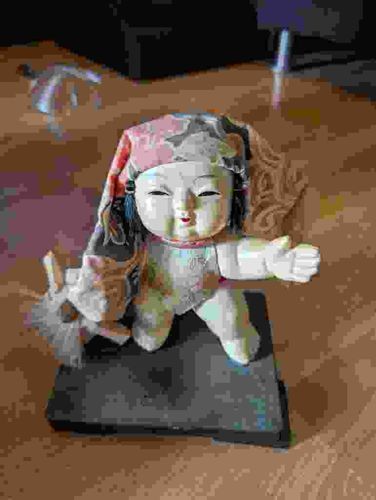
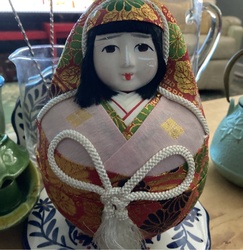
A vintage Japanese Gosho Ningyo 'palace doll' depicting a stout, cherubic child. The doll is traditionally constructed with a carved wood or composition core coated in multiple layers of 'gofun'—a white pigment made from pulverized oyster shells mixed with glue, resulting in a smooth, porcelain-like finish. The figure is shown seated on a dark square base, wearing a decorative floral textile headscarf and a patterned bib or 'haragake'. Notable features include the characteristic round face, slit-like eyes, and small red lips associated with early to mid-20th-century craftsmanship. To the figure's right appears to be a smaller secondary figure or toy attachment, though the image quality makes specific identification difficult. The doll exhibits signs of aging, including overall surface grime, minor cracking or desiccation typical of gofun over time, and fading of the textile elements. The proportions are classic for the Gosho style, which traditionally symbolizes health and fertility. This piece likely dates from the late Shōwa period (mid-20th century). The craftsmanship is indicated by the hand-painted facial features and the layering of the gofun finish.
AI-Generated Appraisal Disclaimer
Estimated Value
$450 - $650
Basic Information
Category
Collectibles - Asian Antiques & Dolls
Appraised On
April 7, 2026
Estimated Value
$450 - $650
Item Description
A vintage Japanese Gosho Ningyo 'palace doll' depicting a stout, cherubic child. The doll is traditionally constructed with a carved wood or composition core coated in multiple layers of 'gofun'—a white pigment made from pulverized oyster shells mixed with glue, resulting in a smooth, porcelain-like finish. The figure is shown seated on a dark square base, wearing a decorative floral textile headscarf and a patterned bib or 'haragake'. Notable features include the characteristic round face, slit-like eyes, and small red lips associated with early to mid-20th-century craftsmanship. To the figure's right appears to be a smaller secondary figure or toy attachment, though the image quality makes specific identification difficult. The doll exhibits signs of aging, including overall surface grime, minor cracking or desiccation typical of gofun over time, and fading of the textile elements. The proportions are classic for the Gosho style, which traditionally symbolizes health and fertility. This piece likely dates from the late Shōwa period (mid-20th century). The craftsmanship is indicated by the hand-painted facial features and the layering of the gofun finish.
Related Tags
Get Your Items Appraised
Instant estimates of your treasures with AI-powered instant appraisals