AI Appraisal Estimate

AI-generated estimates · not official valuations

From the user

What was submitted

Photo and notes provided by the user — not generated by AI

Submitted item photo
Submitted photo · June 17, 2026

User's notes

Japan

AI analysis below

AI appraisal

AI analysis & estimate

AI-Generated · Verify before acting

Everything below is generated by AI for informational purposes only. AI can make mistakes — the AI may misidentify items or misattribute them (artist, maker, brand, designer, origin, era). This is not an official valuation and should not be used for insurance, sale, tax, estate, legal, or lending purposes — or any decision requiring a certified appraisal. It is not an authoritative claim about any person, brand, or rights holder — do not share or rely on it as a factual statement about a third party. Always consult qualified professionals before making financial decisions.

Note

This analysis also relies on unverified notes provided by the user, which may be incomplete or inaccurate and could affect the result.

Read the full disclaimer

AI Identification

·Not independently authenticated·Verify before acting

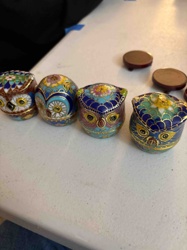
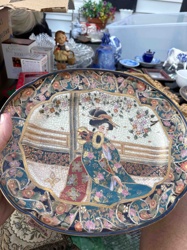
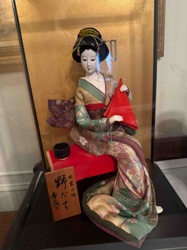
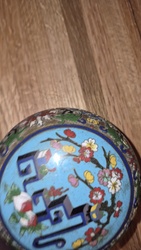
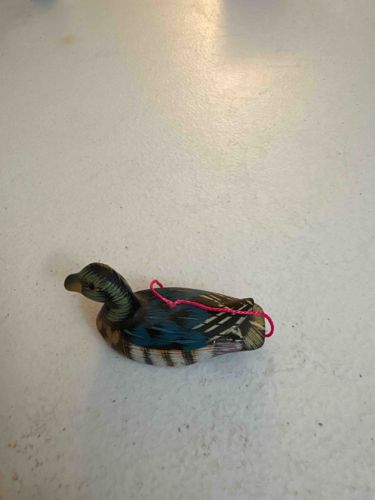
Japanese Hand-Painted Miniature Ceramic Duck Figurine

Collectibles / Asian Antiques

AI Estimated Value

·Not an official valuation·Verify before acting

$10.00-$15.00

As of June 17, 2026

AI Item Analysis

·AI can make mistakes·Verify before acting
This item is a small, hand-painted ceramic figurine of a waterfowl, likely a mallard or similar species of duck. Measuring approximately 2 to 3 inches in length, the piece is constructed from a lightweight ceramic or porcelain material. The surface features intricate hand-applied decoration with visible brushstrokes creating a feather-like texture. The color palette includes highlights of vibrant cerulean blue on the wings, contrasted with olive green on the head and neck, and earth tones such as brown and buff on the body. A distinctive banded or 'zebra' pattern is visible along the lower flanks in black and white stripes. A bright pink nylon or cotton string is looped through a small hole in the back, suggesting its use as a hanging ornament. The style is characteristic of Japanese novelty ceramics exported during the mid-20th century (circa 1950s-1970s). The condition appears good with no visible chips or cracks, though some minor paint thinning or 'cold paint' wear is typical for this age and type of export ware. There are no visible maker's marks from this angle, but such pieces often originally bore 'Made in Japan' paper labels or stamps on the underside. The craftsmanship is expressive and focuses on folk-art charm rather than anatomical hyper-realism.
AI Appraisal Report

·AI can make mistakes·Verify before acting
I have carefully examined the provided images and description of this miniature ceramic duck figurine. Based on my visual analysis, the piece is a classic example of Japanese 'mid-century novelty' export ware, likely dating from the 1950s or 1960s. The 'cold paint' technique (paint applied over the glaze) and the characteristic cerulean highlights are hallmarks of mass-produced Japanese folk-art pieces from this era. The condition is consistent with its age; while no structural fractures are visible, the slight thinning of the pigment is typical for these decorative items. The market for mid-century Japanese miniature animals is robust but highly accessible, with thousands of these figurines currently in circulation. Current market values are driven primarily by collectors of 'Made in Japan' ceramics or waterfowl enthusiasts rather than high-end antique investors. This piece represents a sentimental or 'shelf-filler' collectible rather than a rare specimen. Factors limiting the value include the high volume of production and the lack of a specific designer mark or prestigious kiln attribution. While the string suggests utility as an ornament, it is likely a later addition or part of a gift-set presentation. Limitations: This appraisal is based solely on digital images. A physical inspection is required to confirm the density of the ceramic body and to inspect the underside for faded 'Made in Japan' stamps which would confirm provenance. Scientific testing such as X-ray fluorescence is not warranted given the item's market tier, but provenance documentation—such as an original box or invoice—would be necessary to command the higher end of the estimated price range.

Get your items appraised

Instant estimates of your treasures with AI-powered appraisals

Browse More Appraisals